CYS is the core token of Cysic, a decentralized compute network. It connects ZK proof generation and AI computing demand with compute supply through three key functions: governance rights, compute access rights, and financial reward rights. As the ComputeFi ecosystem evolves, CYS is becoming a critical value carrier for verifiable on-chain computation markets.
2026-04-03 13:24:37
This article provides an in-depth look at KAITO's veToken model, the way AI algorithms measure KOL (Key Opinion Leader) influence, and its unique systems for voting and staking. It highlights how KAITO achieves its goals by managing dissemination nodes and shaping public opinion.
2026-04-03 12:12:46
In our previous series, we explored based rollups, booster rollups and native rollups. In this article, we will examine gigagas rollups by looking at what they are trying to solve and how they work
2026-04-03 12:05:56
In this article, we’ll examine how Rewards V2 improves upon the MVP, its core innovations, and the broader impact it has on enhancing decentralization and security within the EigenLayer ecosystem.
2026-04-03 12:00:11
Explore the concept of "Preconfirmation" in blockchain technology and how it enhances transaction efficiency by addressing delays and ordering issues. This article delves into the innovative application of preconfirmation in the Taiko project, highlighting its breakthroughs in decentralization and scalability.
2026-04-03 11:24:25
BOB is creating a hybrid solution that lets users withdraw assets via Bitcoin transactions without relying on Ethereum. It uses Ethereum for data availability and Bitcoin for censorship resistance. Users store withdrawal data in Bitcoin’s Taproot outputs and complete transactions with a two-phase commit/reveal process.
2026-04-03 11:05:29
Story Protocol's white paper outlines a vision where all types of intellectual property can exist on a "programmable ledger," allowing seamless collaboration, transactions, and automated revenue sharing through smart contracts.
2026-04-03 10:23:57
Native Rollups advance Ethereum's Rollup-Centric roadmap by using the EXECUTE precompile to simplify governance and enhance security. Despite EVM implementation challenges, they improve the ecosystem's security and reduce fragmentation. Future GigaGas Rollups will further boost Ethereum's scalability and resilience.
2026-04-03 10:15:31
This article examines Ethereum's Pectra upgrade (Prague/Electra) coming in March 2025. The upgrade introduces key changes: raising the maximum validator stake to 2048 ETH, enhancing execution and consensus layer interactions, adding BLS12-381 curve support, optimizing blob transactions, and enabling EOA account code settings. These changes will reshape staking distribution, validator operations, cross-chain functionality, and user experience.
2026-04-03 09:25:49
Gate Research (2025.2.8-2025.2.14): On February 9, Etherscan launched an on-chain address credit scoring feature. On February 10, Bitcoin financial services company Fold expanded its partnership with Visa to launch a Bitcoin rewards card. On February 12, Plume partnered with Superstate to advance multi-chain RWA finance expansion. Sahara AI launched its Studio platform to accelerate decentralized AI development. On February 13, Plume Network partnered with Mercado Bitcoin to tokenize $40 million of Brazilian RWA assets.
2026-04-03 08:09:27
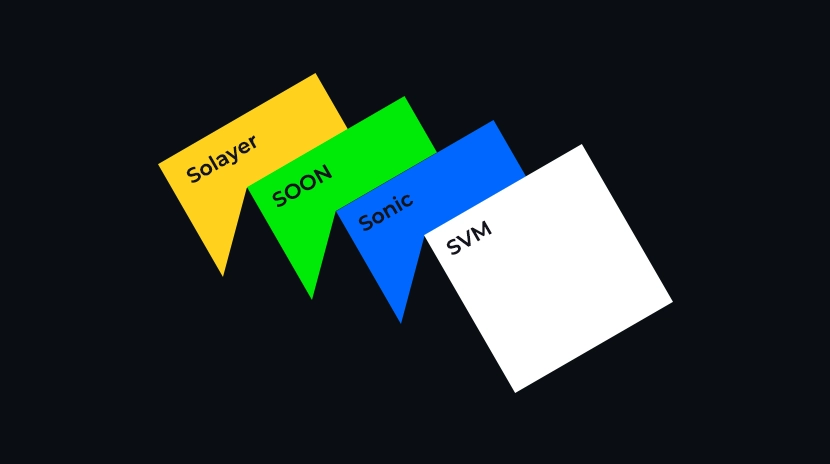
Against the background that Solana's new narrative is in urgent need of succession, Sonic, SOON, and Solayer of the SVM ecosystem are using differentiated technical paths to try to answer the ultimate industry proposition of "high concurrency, low latency, and cross-chain compatibility." This article will also dismantle the deep logic of this SVM arms race from the three dimensions of underlying architecture, ecological strategy, and market position.
2026-04-03 07:12:51
This article delves into the rise of the intersection between artificial intelligence (AI) and cryptocurrency, focusing on the rapid development of AI agents and their profound impact on the crypto market. It analyzes the origins, development, and classification of AI agents, and explores in detail the fusion of AI agents with Memecoin culture, as well as how this fusion has accelerated the rapid expansion of the AI agent field.
2026-04-03 05:19:32
We the Cypherpunks are dedicated to building anonymous systems. We are defending our privacy with cryptography, with anonymous mail forwarding systems, with digital signatures, and with electronic money.
2026-04-03 05:06:47
Fluid not only saves users millions of dollars through its efficient settlement mechanisms but also enhances the security and user experience of the lending market by introducing Fluid DEX. The article provides a detailed analysis of the main threats faced by the lending market during liquidation events, including bad debt and asset utilization issues caused by the failure to liquidate in a timely manner, and explains how Fluid effectively avoids liquidity crises through its DEX mechanism.
2026-04-03 05:03:43
This article explores the intersection of quantum computing and blockchain technology—two revolutionary innovations shaping the future of digital security, cryptography, and decentralized systems. It also discusses how quantum algorithms can enhance blockchain efficiency, scalability, and resilience while addressing cryptographic challenges in the digital age.
2026-04-03 04:59:31