ShizukaKazu

vip
Age 3.4 Year
Peak Tier 5
No content yet
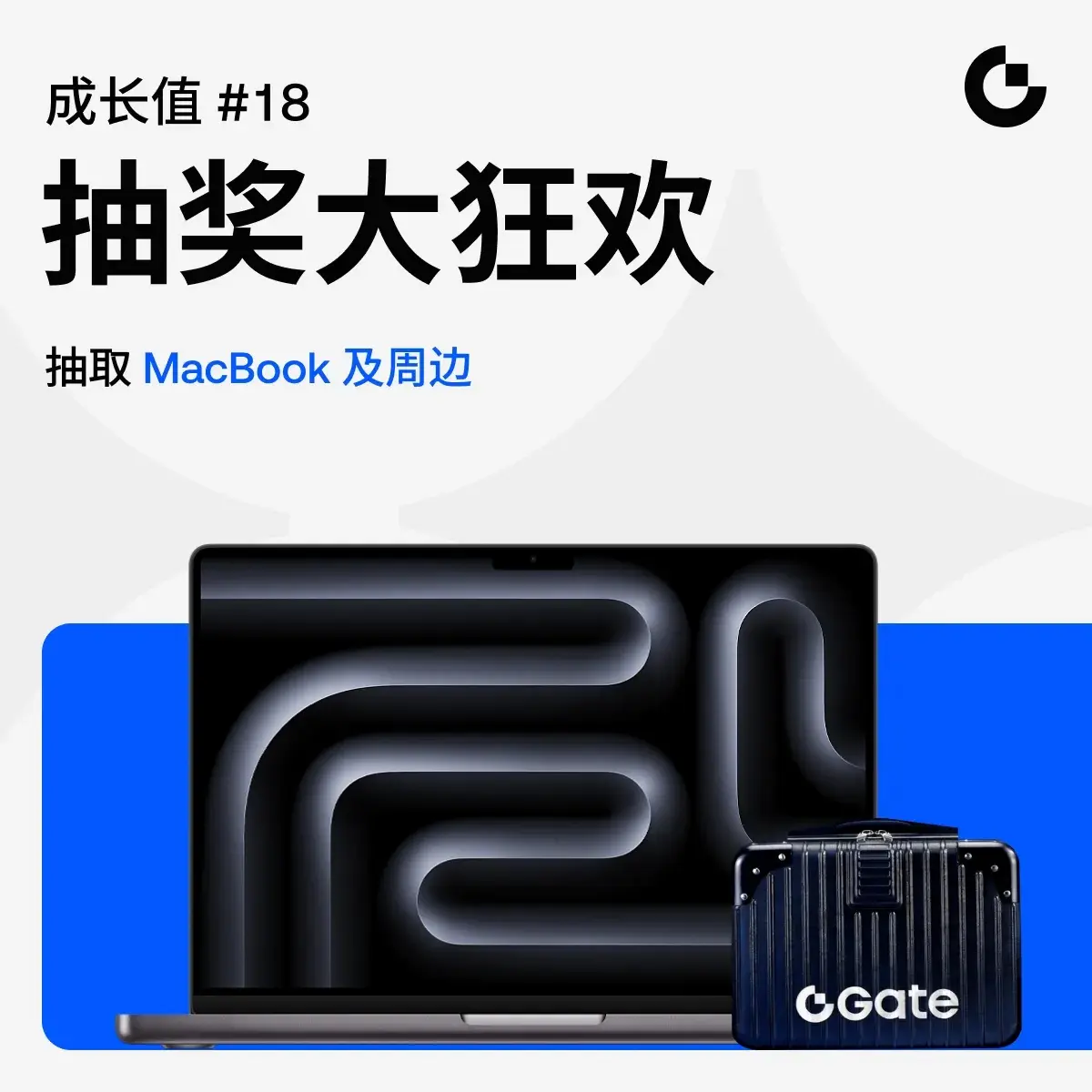
💰 Win a MacBook Air! New users have a 100% chance to win, so join now!
Gate Plaza Growth Points, 18th session grand celebration, increased prize pool, full of sincerity!
Start drawing now 👉
Why must you participate?
1️⃣ Very low threshold: just refresh posts and reply to comments to earn points.
2️⃣ Guaranteed for newcomers: new friends complete tasks, 100% winning rate!
3️⃣ Hardcore prizes: MacBook Air, Gate’s 13th anniversary gift box, VIP cards waiting for you to “grab”.
Details: https://www.gate.com/announcements/article/50854
View Original
post-image
  • Reward
  • 20
  • Repost
  • Share
Ryakpanda:
The bull quickly returns 🐂
View More
🚨 Breaking news! Gate's new expansion of US stock CFDs is now live!
52 hardcore US stock assets are fully available!
✅ Full coverage of the four major golden tracks: AI computing power, nuclear energy revival, biomedicine, and financial infrastructure
✅ 4x unified leverage to amplify market opportunities
✅ Supermicro, MongoDB, Thermo Fisher... Hot industry leaders, one-click setup
No need to bother with US stock account opening, all-in-one for multi-asset trading!
👇 Jump on now and seize the new US stock trend!
https://www.gate.com/tradfi/trade/CCJ
View Original
Ryakpanda
🚨 Major news! Gate’s expanded US stock CFD offering is now live!
52 hard-core US stock assets—fully loaded!
✅ Full coverage of the four golden sectors: AI computing power, nuclear energy revival, biopharmaceuticals, and financial infrastructure
✅ 4x unified leverage to amplify trading opportunities
✅ Supermicro, MongoDB, Thermo Fisher… popular leading stocks—set up in one click
No need to go through the hassle of opening a US stock account—done in one stop for multi-asset trading!
👇 Get on board now and seize the new US stock opportunity!
https://www.gate.com/tradfi/trade/CCJ
repost-content-media
  • Reward
  • 14
  • Repost
  • Share
Ryakpanda:
Steadfast HODL💎
View More
192837465657.48T range sideways accumulation, funds lying flat waiting for a decision
In terms of market, after yesterday's surge and pullback, BTC repeatedly tested the bottom in the 76,500–77k range, ETH moved in tandem between 2,280–2,320, with extremely diminished volume, a typical "weekend + news vacuum period" characteristic.
Last night, there was indeed a pulse reaching 79,400, which was institutions testing the selling pressure at the 80k level, and casually harvesting a wave of high leverage.
The early morning 77,000 was just the residual warmth from last night's market, not a n
BTC-1.1%
ETH-0.33%
View Original
Ryakpanda
#加密市场小幅下跌 77,000 to 77k sideways consolidation at the bottom, funds lying flat, waiting for a decision
In terms of market, after yesterday’s surge and pullback, BTC repeatedly tested the bottom in the 76,500–77,000 range, with ETH moving in tandem between 2,280–2,320, with extremely diminished volume, a typical “weekend + news vacuum period” characteristic.
Last night, there was indeed a pulse reaching 79,400, which was institutions testing the selling pressure at the 80k level, and taking the opportunity to harvest a wave of high-leverage gains. The early morning 77,000 was just the residual warmth from last night’s market, not a new offensive. And the 77,000–78k zone is a strong resistance area.
ETF funds just shifted to net outflows yesterday, institutions are retreating, retail investors dare not buy in, naturally unable to hold.
What’s the outlook going forward?
Continue to watch for a sideways, slightly weak trend. Before the FOMC meeting on Wednesday (April 30), big money is all pretending to be dead. If the Federal Reserve continues its hawkish stance (maintaining high interest rates longer), this rebound will be the last escape route for short-term investors, with support at $75,000, and if broken, then $72,000.
On-chain data side
Bitcoin ETF net outflow of $263 million indicates institutions are temporarily retreating. Based on today’s on-chain signals, all are risk warnings. The market has not established its own trend, but is heavily influenced by news. After all, a single-day net outflow of $263 million is a signal from the data we should pay attention to. Yesterday, the US spot Bitcoin ETF had a total net outflow of $263 million. This is the first time turning negative after nine consecutive days of net inflow, a very poor signal.
Fidelity (FBTC) net outflow of $150 million, Grayscale (GBTC) net outflow of $46.63 million. These major institutions chose to take profits before the 80k level.
Of course, data can also be misleading; some data might be manipulated to look good for the market. What will happen exactly? As long as these ETFs do not experience panic selling, we can rest easy. Addresses holding 1,000+ BTC have not moved, but short-term holders are selling heavily in the $78,000–$80,100 range. Whales are not stepping in to buy, chips are just transferring between wallets, indicating big money is also watching and not planning to push hard at this level.
Perpetual contract funding rates have been negative for several days, and shorts are still holding on stubbornly. This structure can easily trigger a short squeeze surge, but also means that if longs weaken, a liquidation cascade could be very brutal. The market is holding on to “geopolitical expectations,” but the real test is the Wednesday Federal Reserve decision. If an extreme scenario occurs, the market will face a storm. The probability is small, but we must prepare for low-probability events.
News and updates
Yesterday’s “phone gate” was all the rage, but today it was cooled down. Reuters reports that Trump is “dissatisfied” with Iran’s new proposal, believing it does not touch the core nuclear issues. The US insists that nuclear issues must be addressed early in negotiations, while Iran wants to delay them. This structural contradiction is unresolved, and the so-called “de-escalation” is all talk. The blockade of the Strait of Hormuz continues, Iran still insists on tolls for passage, and geopolitical risks remain unresolved.
This kind of “emotional rebound” is the most dangerous; institutions have quickly entered and exited, pocketing profits. Once negotiations collapse, the fall will be faster than anyone.
This Wednesday (April 30), the FOMC meeting, market odds favor maintaining interest rates in the 3.50%–3.75% range with a 99% probability. The focus is not on rate hikes but on no rate cuts.
More importantly, this could be Powell’s last rate decision as Fed Chair, with his term ending on May 15.
In the context of oil prices still above $100 and complex inflation prospects, Powell is likely to continue hawkish rhetoric about “maintaining high interest rates longer,” which will directly shatter liquidity expectations.
The current volatility is testing true long-term investors; those retail traders who can’t hold on will exit, leaving the remaining to share more of the cake in the bull market. Don’t worry about short-term ups and downs, don’t envy others’ short-term gains, hold your main coins, keep enough cash, and wait for the Fed decision to land and the market to give a clear direction.
The above is for informational exchange only and does not constitute any investment advice!
repost-content-media
  • Reward
  • 18
  • Repost
  • Share
Ryakpanda:
The Bull Returns Quickly 🐂
View More
#原油价格上涨 Is the oil market storm not over? Analysts warn: if Middle East conflicts drag on, oil prices could surge to $150
Since the outbreak of the US-Iran war, international oil prices have fluctuated dramatically with the Middle East situation: rising to nearly $120 per barrel at one point, then sharply retreating, recently stabilizing around $100. Analyst Tamas Varga from crude oil broker PVM Oil Associates recently stated that a rise in oil prices far beyond current levels cannot be ruled out. “If the conflict continues, we cannot exclude the possibility of oil prices breaking through $1
View Original
Ryakpanda
#原油价格上涨 Is the oil market storm not over? Analysts warn: if Middle East conflicts drag on, oil prices could surge to $150
Since the outbreak of the US-Iran war, international oil prices have fluctuated dramatically with the Middle East situation: rising to nearly $120 per barrel at one point, then sharply retreating, and recently stabilizing around $100. Analyst Tamas Varga from crude oil broker PVM Oil Associates recently stated that the possibility of oil prices rising far above current levels cannot be ruled out. “If the conflict continues, we cannot exclude the possibility of oil prices breaking through $150,” Varga told the media, adding that if the interruption lasts longer, supply losses will exceed demand reductions. “Alternative energy sources cannot be supplied in large quantities in a short period to make up for shortages. Therefore, consumers will have no choice but to accept higher oil prices,” he said.
On Monday, oil prices rose more than 2%, reaching a two-week high, due to deadlock in US-Iran talks and continued restrictions on oil transportation through the Strait of Hormuz, leading to ongoing tight global oil supply. Brent crude futures rose $2.90 or 2.8%, closing at $108.23 per barrel; US crude futures increased $1.97 or 2.1%, closing at $96.37 per barrel. Currently, the US-Iran situation remains deadlocked. Investors are closely watching a new proposal submitted by Iran aimed at reopening the Strait of Hormuz and ending the war. The proposal primarily focuses on resolving the Strait of Hormuz crisis and the US maritime blockade of Iran, and suggests delaying discussions on Iran’s nuclear program.
According to reports, a US official stated that President Trump was dissatisfied with Iran’s latest proposal, believing it did not address the core issue of Iran’s nuclear program. Trump canceled plans for US officials to go to Pakistan for Iran negotiations last weekend, shortly after Iranian officials had just left Islamabad. Previously, he extended the ceasefire agreement with Iran indefinitely, but significant differences remain between the two sides.
Iran has called for the US to lift the maritime blockade on Iranian ports, while the US insists that the Strait of Hormuz must be reopened before any substantive peace negotiations begin. Varga warned that even if the conflict is resolved, market anxiety will not ease immediately. “Even if the conflict ends today, risk premiums will remain high for a long time, even if the oil supply and demand balance relax significantly,” he said. He added that the fragile Israel-Lebanon ceasefire agreement has already unsettled investors, and if hostilities escalate again, the risk of new strikes on regional oil infrastructure remains a real concern.
JPMorgan oil strategist also believes that the recent stability in oil prices could change soon because “there are issues in some parts of the market calculations.” The bank believes the market has underestimated the supply-demand gap, and oil prices could continue to surge. Citibank also predicts that oil prices could rise further, noting that if oil supply remains interrupted until June, Brent crude could reach $150 per barrel, with an average price in the fourth quarter possibly reaching $100.
repost-content-media
  • Reward
  • 11
  • Repost
  • Share
Ryakpanda:
Steadfast HODL💎
View More
#GateCard一拍即付 Gate Card is a crypto credit/debit card product launched by the Gate platform, designed to make cryptocurrency services part of everyday life. Users can transact by recharging with cryptocurrencies or directly spending encrypted assets through trading accounts, while also enjoying various benefits both inside and outside the platform. GateCard supports online and offline spending as well as ATM withdrawals, usable in over 100 countries and regions worldwide, covering approximately 130 million Visa-supported merchants.
Users can spend directly with crypto assets, such as buying
View Original
Ryakpanda
#GateCard一拍即付 Gate Card is a crypto credit/debit card product launched by the Gate platform, designed to make cryptocurrency services part of daily life. Users can transact by recharging with cryptocurrencies or directly spending crypto assets through trading accounts, while also enjoying various benefits both inside and outside the platform. GateCard supports online and offline spending as well as ATM withdrawals, usable in over 100 countries and regions worldwide, covering approximately 130 million Visa-supported merchants.
Users can spend directly with crypto assets, such as buying coffee, shopping at supermarkets, taking the subway, and other scenarios, enabling convenient integration of crypto assets with real-world consumption.
Gate Card is more than just a Visa debit card; it offers users a streamlined crypto payment experience, expanding the use cases of digital assets into all aspects of daily life. With generous cashback rewards, diverse payment application scenarios, and high spending limits, Gate Card is gradually becoming the ultimate payment solution for crypto enthusiasts, making the transition between Web2 and Web3 worlds smoother for users.
repost-content-media
  • Reward
  • 10
  • Repost
  • Share
Ryakpanda:
The bull quickly returns 🐂
View More
#加密市场小幅下跌 Our ultimate hypothesis about Bitcoin: Will it fall back to $10k or surge to $200k? Bull vs. bear debate, which side do you stand on?
Since 2024, Bitcoin's price movements have been gripping countless investors' nerves. From over $40k at the start of the year to a historic high of $73k in March, then slipping into volatility and correction.
In the market, two completely different voices are growing louder: "Bitcoin will fall back to $10k" and "This bull run will push it to $200k." Two directions, worlds apart. Which prediction is more likely to become reality?
Bearish camp: Thr
BTC-1.1%
View Original
post-image
post-image
  • Reward
  • 8
  • Repost
  • Share
Ryakpanda:
坚定HODL💎
View More
As of the end of April 2026, I believe the second-largest company by market value globally is A—Alphabet (Google's parent company). Here is a detailed analysis:
1 Market value data
According to the latest market data, Nvidia ranks first globally with a market value of approximately $5.06 trillion, followed by Alphabet with about $4.14 trillion. Companies like Apple, Microsoft, and Amazon all have market values below Alphabet.
2 Alphabet's business advantages
Alphabet's core businesses include Google Search, advertising, cloud computing (Google Cloud), and artificial intelligence (AI) researc
View Original
post-image
  • Reward
  • 8
  • Repost
  • Share
Ryakpanda:
坚定HODL💎
View More
#Solana发布量子路线图 Forbes: Does Quantum Technology Threaten the Encryption Industry? But More Likely an Opportunity
Currently, the encryption industry is already preoccupied with public opinion storms, geopolitical conflicts, and financial turbulence, and Google's latest research has brought new challenges to this field: the timeline for practical quantum computing is continually moving forward. For years, the potential threats posed by quantum computing have been discussed, debated, and studied in articles within the industry, and blockchain developers have long been working on quantum-resistant
SOL-0.95%
BTC-1.1%
ETH-0.33%
View Original
post-image
post-image
  • Reward
  • 1
  • Repost
  • Share
HighAmbition:
good information 👍👍
#加密市场小幅下跌 The Bank of Japan's 3 votes to oust, BTC falls below 77,000
BTC falls below 77,000, with the total market capitalization at $2.56 trillion, fear and greed index at 41, neutral leaning bearish. Today's decline is not caused by a single reason but by several events stacking together.
1 The Bank of Japan's three votes to oust, June rate hike expectations have entered the market
The Bank of Japan finished its policy meeting today, announcing to keep the benchmark interest rate unchanged, remaining at 0.75%. The voting result was 6 to 3, with three members voting for an immediate rate hi
BTC-1.1%
ETH-0.33%
AAVE-1.1%
ARB-1.51%
View Original
post-image
post-image
  • Reward
  • 2
  • Repost
  • Share
MrFlower_XingChen:
To The Moon 🌕
View More
#加密市场小幅下跌 The eight most noteworthy changes in the crypto market these days: Bitcoin is starting to weaken, but stablecoins and on-chain finance continue to push forward
If you only look at the price movements in recent crypto news, you might feel that market sentiment isn't very good: Bitcoin's attempt to break $80k has been blocked, oil prices and geopolitical risks are rising, and macro uncertainties are pushing the market back into cautious mode.
But if you look at all the news together, you'll find a more accurate picture: prices are fluctuating, but on-chain finance and institutionaliza
BTC-1.1%
ETH-0.33%
ONDO-0.49%
View Original
post-image
post-image
  • Reward
  • 8
  • Repost
  • Share
HighAmbition:
2026 GOGOGO 👊
View More
#原油价格上涨 Gold and Crude Oil: The Capital Flow Logic in Asset Allocation
Within the framework of macro asset allocation, gold and crude oil serve distinctly different functional roles. Gold, as a traditional safe-haven asset and inflation hedge, derives its allocation value mainly from hedging systemic risks and replacing fiat currency credit; whereas crude oil is more of a cyclical risk asset, with its price movements closely related to global economic growth, industrial production, and transportation demand. When investors consider shifting funds from gold allocations to the crude oil indust
View Original
Ryakpanda
#原油价格上涨 Gold and Crude Oil: The Logic of Capital Flows in Large-Category Asset Allocation
Within the framework of large-category asset allocation, gold and crude oil each play distinctly different roles. Gold, as a traditional safe-haven asset and an inflation-hedging tool, derives most of its allocation value from hedging systemic risks and substituting for fiat-credit exposure; crude oil, in contrast, is more of a cyclical risk asset, with its price movements closely tied to global economic growth, industrial production, and transportation demand. When investors consider shifting funds from gold allocation to the crude oil industry chain, they are essentially making a structural adjustment within an asset-allocation framework—one that necessarily involves systematic changes behind the scenes in the macroeconomic environment, risk appetite, and relative-value judgments.
From the perspective of the drivers of capital flows, the relationship between gold and crude oil prices is not a simple one of substitution. Historically, their price correlation tends to appear in phases when inflation expectations heat up sharply: when inflation rises rapidly, gold is sought after for its value-preserving characteristics, while crude oil—an essential energy source for industrial production and transportation—often becomes a core factor pushing up the CPI through its price increase. However, this “together rising” does not mean that capital directly flows between the two. More commonly, when the economy enters a recovery or overheating cycle and risk appetite rebounds meaningfully, investors systematically reduce their safe-haven positions in gold while increasing their exposure to cyclical assets, including crude oil. At this point, the reduction in gold holdings and the increase in crude oil holdings are more like parallel actions under the same macro judgment rather than direct capital migration between the two sectors.
When examining the crude oil industry chain’s capacity to absorb capital, structural differences from the gold market become evident. The gold market has a large capacity but a relatively shorter industry chain: allocations through gold ETFs, futures, and physical gold are mainly concentrated in the metal itself, while the share of downstream mining company stocks extending downward is relatively limited. The crude oil industry chain, however, spans multiple links—upstream exploration and production, midstream storage, transport and refining, downstream sales of refined oil products, and petrochemical product manufacturing—along with substantial market capitalizations of listed companies, financing needs, and capital expenditure levels. This means that if capital flows out of the gold market and into the crude oil industry chain, it is not limited to crude oil futures; it can be allocated across a range of segments, including upstream shale oil producers, midstream pipeline transport enterprises, and leading downstream refining-and-chemicals integrated companies, and even into niche areas such as oilfield services equipment and LNG liquefaction units. This multi-layered capital-absorption capability gives the crude oil industry chain a natural advantage in capturing cross-asset-allocation funds.
However, whether capital can effectively flow from gold allocations to the crude oil industry chain also depends on changes in their relative valuations and risk-return characteristics. When a gold real interest rate pricing model indicates that gold’s valuation is supported by fundamentals but is deviating or is overvalued, allocative capital has incentives to reduce gold weight. Meanwhile, if the crude oil market is in an OPEC+ production cut cycle, global inventories are low, and the forward curve is in a backwardation structure (trading at a discount), then both the spot returns and the roll/forward (deferred) returns of the crude oil industry chain are attractive. In this situation, institutional investors often rebalance their portfolios during large-category asset rebalancing windows: they reduce gold-related positions (such as gold ETFs and gold mining stocks) and increase holdings in targets within the crude oil industry chain that feature stable cash flows and lower valuations. It should be noted that such rebalancing more often occurs at the level of long-term allocation funds like sovereign funds and pension funds, whereas hedge funds and CTA strategies tend to rotate frequently among different assets; their flows tend to impact prices more in the short term and are easier to reverse.
Overall, the flow of funds from gold allocations into the crude oil industry chain is not an unconditional inevitability, but a rational choice under specific combinations of macro conditions, relative valuations, and risk appetite. When the economy is in the later stage of an expansion cycle, with inflationary pressures gradually becoming visible but not yet triggering aggressive rate hikes, the cost of holding gold as a non-interest-bearing asset increases, while the crude oil industry chain benefits from resilient terminal demand and supply-side constraints. Under such circumstances, the relative change in their allocation values is most likely to drive capital to complete this structural shift. For investors, rather than simply judging whether “funds are flowing from gold to crude oil,” it is better to establish a dynamic cross-asset relative valuation framework—continuously tracking the trend of the gold-crude oil ratio as a classic indicator, and making comprehensive judgments in combination with real interest rates, inventory cycles, and geopolitical risk. In practice, when the gold-crude oil ratio is at a historical high and begins to decline systematically, it is often the period when the portfolio shifts—reducing allocation to gold and increasing allocation to the crude oil industry chain.
repost-content-media
  • Reward
  • 15
  • Repost
  • Share
MrFlower_XingChen:
To The Moon 🌕
View More
#美伊谈判陷入僵局 The US-Iran negotiations have collapsed! Global inflation alerts sound the alarm, and the world economy faces a critical turning point
The Strait of Hormuz is once again turbulent; what will happen to oil prices, stock markets, and supply chains?
According to the latest official news, the negotiations between the US and Iran scheduled for this weekend have been officially canceled. This high-stakes Middle East game that has captured global attention has once again fallen into a deadlock.
As of Beijing time April 26, 2026, this round of US-Iran conflict has lasted nearly two mon
View Original
Ryakpanda
#美伊谈判陷入僵局 The US-Iran negotiations have collapsed! Global inflation alerts have sounded, and the world economy is entering a critical turning point
The storm in the Strait of Hormuz is reigniting. What will happen to oil prices, stock markets, and supply chains?
According to the latest official news, negotiations between the US and Iran scheduled for this weekend have been officially canceled. This high-stakes game in the Middle East, which has been gripping global nerves, has once again fallen into a deadlock.
As of Beijing time April 26, 2026, this round of US-Iran conflict has lasted nearly two months. The blockade of shipping in the Strait of Hormuz and the continuous surge in energy prices are transmitting through the global industrial chain layer by layer. A profound shift concerning inflation, growth, and the global economic order has already begun.
Negotiations have completely cooled off, core conflicts remain unresolved, and both sides are stuck in a dilemma
On Saturday local time, US President Trump explicitly announced the cancellation of the scheduled trip of Special Envoy Witkov and his son-in-law Kushner to Pakistan for negotiations with Iran. Earlier that day, Iranian Foreign Minister Araghchi had finished his visit to Pakistan and headed to Oman. Iran explicitly stated that Araghchi’s trip was never arranged for talks with the US side. From the outset, this negotiation was doomed to fail, rooted in a severe lack of mutual trust and three major irreconcilable core disagreements: control of the Strait of Hormuz, the direction of Iran’s nuclear program, and the conditions for lifting sanctions on Iran. More pragmatic difficulties have pushed this game into a deadlock where “neither side can afford to step back.”
For the US, soaring oil prices have triggered domestic inflation backlash, compounded by political pressure from mid-term elections, making it unwilling to allow the conflict to escalate indefinitely or make substantial concessions in negotiations; for Iran, two months of ongoing conflict have caused damage to domestic infrastructure and significant consumption of strategic resources, yet it remains unwilling to compromise on core sovereignty and interests.
Under this tug-of-war, global market uncertainty is being amplified infinitely.
Energy prices surge, igniting inflation. The IMF warns: global inflation rate will rise to 4.4%. The most immediate impact of the conflict has been in the energy market. As a key passage for nearly one-third of global crude oil shipping, the blockade of the Strait of Hormuz has directly caused a global crude oil supply shortage, with Brent crude approaching $120 per barrel.
The surge in energy prices is transmitting through the industrial chain without dead ends:
At the consumer level, in March, the US CPI energy component increased by 12.6% year-on-year, and the Eurozone Harmonized Consumer Price Index (HICP) energy component rose to 4.9% year-on-year, putting pressure on transportation, chemicals, and daily consumer goods prices;
At the production level, rising oil and gas prices have directly increased costs for fertilizers, agricultural products, and industrial goods. Urea prices in the Middle East surged 19%-28% in March. If the conflict continues, global fertilizer prices could rise another 15%-20%, directly threatening agricultural output in emerging markets and increasing global food security risks;
At the cross-border transmission level, imported inflation is spreading globally. Energy-importing countries in Asia like Japan and South Korea, and European industrial nations like Germany, are facing unprecedented cost pressures, eroding manufacturing competitiveness.
The latest IMF forecast issues a clear warning: in 2026, the global inflation rate will rise to 4.4%, up 0.3 percentage points from 2025. The global fight against inflation faces a major setback. The global economy is slowing down, with multiple risks intensifying. On the other hand, high inflation continues to exert pressure on economic growth. The IMF has sharply downgraded its 2026 global growth forecast from 3.3% to 3.1%. This conflict is exerting comprehensive pressure on the global economy through a “physical shock → price transmission → policy constraints” three-layer pathway.
The first layer, shipping blockade directly impacts trade flow. The blockade of the Strait of Hormuz has driven the Baltic Dry Index (BDTI) higher, systematically raising global logistics costs and severely damaging supply chain efficiency;
The second layer, cost diffusion, is squeezing economic vitality. Rising energy prices continue to spread to manufacturing and consumption, compressing corporate profits and weakening residents’ purchasing power, leading to synchronized declines in supply and demand;
The third layer, inflation constraints, is locking in monetary policy space. Under high inflation, global central banks are forced to delay rate cuts. Market expectations suggest the Fed may only be able to cut rates once in 2026. The absence of easing policies deprives the global economy of an important growth support.
More concerning is that behind the slowdown in growth, the fragility of the global economy is rapidly exposing itself: current account deficits in Japan, Southeast Asia, and other energy-importing countries are worsening; sovereign debt default risks in sub-Saharan Africa and other vulnerable economies are rising sharply; capital outflows from emerging markets are intensifying. The resilience of the global economy is under severe test.
Behind the V-shaped rebound in US stocks, market logic has completely changed
Amid the conflict, global capital markets have experienced highly dramatic swings. Since the outbreak of the US-Iran conflict, the US stock market has shown a V-shaped pattern: the S&P 500 initially fell more than 15%, but by mid-April 2026, it had fully recovered and hit a new all-time high, surpassing 7,000 points. This countertrend rally is not due to market ignoring risks but a complete shift in trading logic. Trump’s “maximum pressure — compromise” game, with his social media statements as the core “trigger,” has created arbitrage opportunities for algorithmic trading, but has not changed the resilience of the US stock market. Currently, the market has shifted from initial panic mode to a “risk re-pricing” phase.
For investors, two core directions are becoming clearer:
If subsequent ceasefire agreements are reached and oil prices stabilize, technology stocks and AI-related sectors are likely to lead a structural market rally again;
Be highly alert to the recurrence of geopolitical policies, avoiding overbetting on short-term news, especially guarding against the risk of deep corrections in high-valuation sectors like AI and tech in the US stock market if the conflict continues to escalate. The long-term shift has already begun. The global order is undergoing a profound reconstruction. The US-Iran conflict is not just about short-term oil price fluctuations and market volatility but also about a deep restructuring of global economic and political order, with three major long-term trends now irreversible.
First, the fundamental logic of the global supply chain has shifted from “efficiency first” over the past thirty years to “security first,” leading to a long-term rise in energy and logistics costs, and a complete rewriting of corporate globalization strategies;
Second, the hollowing out of US hegemony is further exposed. The foundation of the petrodollar is weakening, and Middle Eastern countries are accelerating the exploration of diversified energy settlement paths. The process of diversifying the global monetary system is gaining speed;
Third, global financial risks are continuously accumulating. Geopolitical uncertainties, high inflation and monetary policy constraints, and the correction pressures on overvalued assets are stacking up. Any loss of control in one link could trigger a chain reaction in global financial markets.
The storm in the Strait of Hormuz is not over, and the direction of the global economy is at a critical crossroads. Between growth, inflation, and security, policymakers worldwide need to find new balances. For us caught in this upheaval, understanding the trends and respecting risks are the keys to navigating the cycle.
repost-content-media
  • Reward
  • 12
  • Repost
  • Share
ybaser:
2026 GOGOGO 👊
View More
#伊朗提出霍尔木兹海峡重开协议条件 Based on current information, Iran's Foreign Minister Araghchi's conditions for a ceasefire submitted to the U.S. indeed involve demands related to the reopening of the Strait of Hormuz, but the specific details of the agreement are still under negotiation. The game over the Strait of Hormuz is heating up! If the situation eases, the Strait of Hormuz reopens, and crude oil prices fall, the impact on inflation expectations in the crypto market is multifaceted:
1. Direct inflation transmission mechanism
A decline in crude oil prices will reduce global energy costs, decreasing
BTC-1.1%
View Original
Ryakpanda
#伊朗提出霍尔木兹海峡重开协议条件 Based on current information, Iran's Foreign Minister Araghchi's conditions for a ceasefire submitted to the U.S. indeed involve demands related to the reopening of the Strait of Hormuz, but the specific details of the agreement are still under negotiation. The game over the Strait of Hormuz is heating up! If the situation eases, the Strait of Hormuz reopens, and oil prices fall, the impact on inflation expectations in the crypto market is multifaceted:
1. Direct inflation transmission mechanism
A decline in oil prices will reduce global energy costs, decreasing inflation pressures in production, transportation, and other links. Although the crypto market is not perfectly synchronized with traditional financial markets, overall inflation expectations are influenced by the macroeconomic environment. If traditional inflation expectations decline, crypto market participants will adjust their long-term inflation expectations, especially for crypto assets related to inflation hedging (such as Bitcoin), which may weaken demand and thus suppress the upward price movement driven by rising inflation expectations.
2. Market sentiment and risk appetite
A situation of easing tensions and falling oil prices is generally seen as a sign of economic stability, which may boost market risk appetite. As a high-risk asset class, the crypto market could attract more capital inflows due to improved overall market sentiment, partially offsetting the dampening effect of declining inflation expectations on the crypto market.
3. Policy and regulatory expectations
If falling oil prices ease inflationary pressures, central banks in various countries might adjust their monetary policy expectations, such as slowing the pace of interest rate hikes or maintaining an accommodative stance. This is positive for the crypto market because loose monetary policy typically benefits risk assets, potentially further influencing inflation expectations in the crypto market.
In summary, a decline in oil prices tends to suppress inflation expectations in the crypto market itself, but the actual effect depends on a combination of factors, including market sentiment and policy expectations, which require dynamic assessment.
repost-content-media
  • Reward
  • 12
  • Repost
  • Share
ybaser:
To The Moon 🌕
View More
#白宫记协晚宴发生枪击事件 Trump "Almost Attacked"? The Market Is More Nervous Than Him!
Political Risks Are Coming, Where Should Your Money Hide!
Did you see the news? A security incident occurred at the White House Correspondents' Dinner, suspected gunman threat.
Trump said at the press conference: "This (being the President of the United States) is a dangerous job." He also joked: "If Rubio had told me there was a risk of violence, I might not have run for president." It sounds nonchalant. But the market, they shouldn’t be smiling.
📰 On-site at the White House press conference, political risks continue
View Original
Ryakpanda
#白宫记协晚宴发生枪击事件 Trump "Almost Attacked"? The Market Is More Nervous Than Him!
Political risks are here, where should your money hide!
Did you see the news? A security incident occurred at the White House Correspondents' Dinner, suspected of a gunman threat.
Trump said at the press conference: "This (being the U.S. President) is a dangerous job." He also joked: "If Rubio had told me there was a risk of violence, I might not have run for president." It sounds casual. But the market, they shouldn’t be laughing.
📰 On-site at the White House press conference, political risks continue to escalate
01. First, understand what happened
According to The New York Times: On the 25th local time, a security incident occurred at the White House Correspondents' Dinner. Suspected of an attempt by a gunman to enter. Trump immediately held a press conference in the White House briefing room. He emphasized: The gunman never got close to him, nor broke into the main banquet hall.
Conclusion: The incident itself did not cause actual harm. But it sent a signal: the U.S. political environment is becoming increasingly "unstable."
02. Why is the market nervous? You might think: the gunman failed, Trump is fine, why is the market still tense? Because the market is not "looking at the outcome," but "watching the trend."
Trend 1: U.S. political risk is rising
This is not the first time. In July 2024, Trump was shot while giving a speech in Pennsylvania, injuring his ear. In 2025, another security incident occurred. Two incidents, less than a year apart. Whether successful or not, the frequency itself is increasing. Rising frequency means "political risk" is becoming a normalized variable.
Trend 2: The continuity of Trump’s policies is being questioned
Trump’s policies have a huge impact on the U.S. market—tariff policies, trade negotiations, interest rate stance, China policy—each directly affects global markets. But if Trump’s "personal safety" becomes an uncertain variable—markets will start asking: How long can his policies be implemented?
Trend 3: U.S. political division is intensifying
The White House Correspondents' Dinner was originally a "relaxed" occasion—reporters and officials dining together, a relatively mellow atmosphere. But now, even such occasions have security incidents. The "division" in the U.S. political environment has penetrated every corner. Markets dislike division. Because division means: policies could shift at any time, society could become turbulent, the economy could be jolted at any moment.
Wall Street trading floor, market anxiety is spreading.
03. What impact might various investments have?
Stock Market
Short-term: After the news, U.S. stocks may decline sharply. Investors will "sell first, ask questions later."
Long-term: Depends on subsequent developments. If impact is confirmed to be "limited," the market will rebound.
Focus on: Tech stocks (policy-sensitive), defense stocks (increased security spending)
🟢 Bond Market
Bonds are "safe-haven assets." When markets panic, investors withdraw from stocks and buy bonds. Especially U.S. Treasuries—considered "the safest asset globally." If the incident continues to ferment, U.S. bond yields may decline.
🟡 Gold Market
In times of panic, gold usually rises. Especially when "U.S. political risk" increases—gold is not only a safe haven but also a "substitute for the dollar."
💵 U.S. Dollar
The strength of the dollar largely depends on "the stability of the U.S. economy." If U.S. political risk rises, the dollar may come under pressure. But the dollar itself is also a "safe-haven currency," and its trend depends on whether "U.S. risk" or "global risk" is greater.
₿ Cryptocurrency
Cryptocurrencies are "high-risk assets." During market panic, they are often sold first. But some see them as "hedging against government risk." Their movement depends on investor positioning.
04. How might the global markets be affected?
The U.S. is the center of the global economy—if the U.S. has issues, the world trembles.
🌏 Asia-Pacific markets may follow suit, depending on U.S. exports
🇪🇺 European markets may face short-term shocks, but long-term will depend on their own policies
🇨🇳 Chinese markets may have opportunities or pressures. China’s market is relatively independent—if U.S. political risk rises, it may be viewed as a "relatively stable" alternative. Especially Chinese bonds and some A-shares might attract safe-haven funds. But at the same time, tensions in China-U.S. relations could pressure Chinese markets, as Trump’s incident might make China-U.S. policies even more uncertain.
05. How should you respond? This isn’t about telling you to sell all your stocks immediately—it's about "understanding this signal."
1. Know that political risk can affect your money
Many think "politics has nothing to do with me." But political events directly influence market volatility. Your stocks, funds, savings—all can be affected by political events. ⚠ You may not care about politics, but politics will impact your money.
2. Don’t react impulsively when news first breaks
Markets fear "panic selling." When news first comes out, many rush to sell—yet often, after the news is digested, markets rebound. Selling impulsively means you lose money.
✅ Correct approach: observe first, then decide.
3. Properly increase safe-haven assets
Allocate gold, bonds, cash—these are "safe assets." If you’re worried about rising political risk, consider increasing these assets in your portfolio. Not to switch everything to safe assets—but to keep some "hedging against political risk" in your mix.
06. A deeper truth
This incident itself has limited impact—gunman failed, Trump is safe. But the market’s nervousness isn’t because of "this incident"—it’s because of the "trend" it represents. U.S. political risk is rising, and this trend is more important than any single event. As an investor, you shouldn’t just look at "single events"—you need to see the "trend." When the trend rises, risks gradually become normalized. When risks become normal, your investment strategy must adjust—add more hedging, reduce high-risk assets, stay flexible.
👁 Seeing the trend is a hundred times more important than just seeing the event.
Trump "Almost Attacked," the incident itself is limited— but it signals that U.S. political risk is rising. The market’s nervousness isn’t because of "this," but because of the "trend." Political risk will affect your money. You may not care about politics, but politics cares about your wallet. If you have safe assets, consider adding a bit more. If not, observe first, then decide—don’t act impulsively.
repost-content-media
  • Reward
  • 10
  • Repost
  • Share
ybaser:
LFG 🔥
View More
#以太坊基金会解质押约4890万美元ETH Ethereum Foundation's recent unbonding of $48.9 million worth of ETH currently appears to be more of a routine operation rather than a clear warning of position reduction. The specific analysis is as follows:
1. Basis for routine operation
Past operational patterns: The Ethereum Foundation has previously conducted similar-scale ETH unbonding and selling activities, such as in October 2025 when it reduced holdings by 1,000 ETH (approximately $4.5 million) to ensure operational funds. Its fiscal policy includes the principle of “periodic, counter-cyclical sales,” aiming to
ETH-0.33%
View Original
Ryakpanda
#以太坊基金会解质押约4890万美元ETH Ethereum Foundation's recent unbonding of $48.9 million worth of ETH currently appears to be more of a routine operation rather than a clear warning of position reduction. The detailed analysis is as follows:
1. Basis for routine operation
Historical operation patterns: The Ethereum Foundation has previously conducted similar-scale ETH unbonding and selling activities, such as in October 2025 when it reduced holdings by 1,000 ETH (approximately $4.5 million) to ensure operational funds. Its fiscal policy includes the principle of “periodic, counter-cyclical sales,” aiming to adjust asset structure at relatively high market points to ensure long-term financial stability.
Rationale for fund use: As a non-profit organization, the Foundation needs to maintain daily operations, support R&D, and ecosystem development. The ETH being unbonded may be used for paying team salaries, funding project development, participating in ecosystem collaborations, and other routine expenses, which are normal fund management activities.
2. Consideration of position reduction warning
Market sentiment impact: On-chain data shows that the unbonded ETH has been deposited into Lido’s unlock contract. Market observers are watching whether it will be sold off later. If the Foundation later sells a large amount of the unbonded ETH, it could signal a reduction of positions, affecting market sentiment.
High-price context: Currently, ETH is trading at a relatively high level (around $2,400). Some investors may interpret this move as profit-taking to lock in gains and avoid future price volatility risks, similar to “selling at the high point.”
Overall judgment
At present, the unbonding action alone cannot determine its intent. It is necessary to monitor whether the Foundation will publicly clarify the purpose of the funds and whether the unbonded ETH enters market circulation. If the Foundation explicitly states that the unbonding is for internal fund allocation rather than sale, it is more likely to be a routine operation; if there are signs of large-scale selling, it could be viewed as a warning of position reduction. Investors are advised to pay attention to official Foundation announcements and market dynamics, and to view such events’ impact on the market rationally.
repost-content-media
  • Reward
  • 11
  • Repost
  • Share
ybaser:
To The Moon 🌕
View More
🤔 At this very moment, is there still anyone in the world who hasn't participated in the lottery yet?
Stop staring at the market chart, come to #Gate广场 and draw a computer to calm your nerves!
The 18th Growth Value Lottery is ongoing, especially for new friends, with a 100% winning rate, are you really not planning to come and "free ride"?
🎁 Lucky List: MacBook Air M5, Gate 13th Anniversary Limited Gift Box, Large Experience Coupons...
🚀 Fast Entry: Post or like on the square to earn 300 points and you can start drawing!
👇 Click here to test your luck today: https://www.gate.com
View Original
post-image
post-image
  • Reward
  • 13
  • Repost
  • Share
ybaser:
2026 GOGOGO 👊
View More
🎁 Multiple ways to play, easily participate
WCTC S8 Global Trading Competition is now open.
Individual, team, and king PK competitions run concurrently, allowing different trading styles to find their suitable track.
🏆 2,000,000 USDT prize pool for individual competition
⚔️ King PK competition with prizes for everyone
Join now and win your exclusive rewards!
https://www.gate.com/competition/wctc-s8
#WCTCS8
View Original
  • Reward
  • 7
  • Repost
  • Share
ybaser:
Just charge forward 👊
View More
Based on the market conditions and technical analysis as of April 27, 2026, the highest possible price today
From a technical perspective, Bitcoin surged to around 79,500 this morning but experienced a slight pullback near the previous high.
If market sentiment remains optimistic and breaks through key resistance levels, it could theoretically push into the 8,000-8,200 range, but caution is needed as the 8,000 integer level and the densely traded zone around 8,200 present strong resistance.
If market volatility intensifies or is affected by unexpected news, a sharp rise followed by a pullback
BTC-1.1%
View Original
post-image
post-image
  • Reward
  • 12
  • Repost
  • Share
ybaser:
2026 GOGOGO 👊
View More
Gold holds the 4660 level, crude oil fluctuates with a slightly strong trend
Spot Gold: News: Today, Monday, April 27, ( during the Asian trading session, US-Iran peace negotiations have stalled, the flow of energy through the Strait of Hormuz remains obstructed, and gold prices are under significant pressure. Gold briefly fell to $4,672 per ounce, continuing last week’s 2.5% decline. Trump has canceled plans to send a special envoy to Islamabad to resume negotiations, and Tehran has firmly stated that they will not negotiate under threat, causing geopolitical risk premiums to quickly diminish
View Original
  • Reward
  • 10
  • Repost
  • Share
ybaser:
2026 GOGOGO 👊
View More
#比特币突破7.9万美元 Bernstein: The crypto market structure is strengthening, and Bitcoin is expected to enter a longer-term bull market
On April 27, according to The Block, research firm Bernstein analysts stated in their latest report that the fundamentals of the crypto market are continuously improving. Bitcoin's recent low of $60,000 has clearly formed a bottom, and with prices approaching $80,000, a longer cycle of structural bull market is likely driven by institutional demand.
Bernstein analyst Gautam Chhugani pointed out four core driving factors:
First, the expansion of institutional c
BTC-1.1%
ETH-0.33%
View Original
post-image
post-image
  • Reward
  • 11
  • Repost
  • Share
ybaser:
To The Moon 🌕
View More