ForgotEverythingAfterMinting

vip
Age 0.1 Year
Peak Tier 0
Every time after minting, I say I won't FOMO again, but next time I still rush in. NFTs are more about narrative and community vibe; discipline relies on reminders.
When the funding rate hits an extreme, I start to get itchy, with two little voices fighting in my mind: one says "Go against the order book, grab it for free," and the other says "You said you wouldn't FOMO after your last mint?" Basically, during these times, the market swings wildly out of control. Going against the order book isn't impossible, but you need to think carefully about whether you can withstand that sudden spike. Otherwise, if you get hit with high fees and your position gets wiped out first, that's pretty awkward. Anyway, I now prefer to stay back, reduce my position, and if I
View Original
  • Reward
  • Comment
  • Repost
  • Share
The liquidation line in lending, when I'm three steps away from the red line, I usually stop myself first and avoid being stubborn... Basically, it's about reducing leverage first: pay off what you can, or add some margin to create more room. Don't expect "just a little more and it won't crash," the market specifically targets these moments to teach people a lesson.
And also, don't operate aggressively when the chain is most congested. Recently, there's been complaints about miners/validators being overfed and MEV making transaction ordering very mysterious. You think clicking a button will se
View Original
  • Reward
  • Comment
  • Repost
  • Share
Today it was raining and the traffic was so bad I doubted my life, and the coffee I bought was already half cold... I casually looked at the treasury expenditures of a certain project, and honestly, now I judge whether they are "seriously working" by focusing on two things: whether the money spent corresponds to milestones, and whether those milestones can be verified on the chain or within the product.
I'm most afraid of those "budget plans that look full but are actually empty" or the occasional "ecosystem incentive launch," followed by old users complaining about mining and selling while si
View Original
  • Reward
  • Comment
  • Repost
  • Share
41% of the supply is directly gone; the burning mechanism is really not just for show.
View Original
CryptoFrontier
Shiba Inu Burn Transactions Exceed 20,000, Supply Cut 41%
Shiba Inu has completed over 20,000 burn transactions, removing 410.8 trillion SHIB tokens, reducing its total supply by 41.08%. Recent burn activity shows a drop in daily burns, but weekly totals remain stable. Ethereum's Vitalik Buterin previously burned 90% of his SHIB holdings, creating a significant impact on the token's supply.
  • Reward
  • Comment
  • Repost
  • Share
Today I was educated again by the “oracle price feed delay”… Normally my positions look rock solid, but over on the chain the price has already slipped down—because the price feed is delayed by half a beat. By the time it updates, that one moment directly triggers a liquidation, not even giving me a chance to say, “I’ll add a bit more margin first.” Basically, it’s like you think you’re walking, but you’re actually falling off a treadmill. What’s even more annoying is that I’ll go check the labels and tips on blockchain data tools too—haven’t people also been complaining lately that those thin
View Original
  • Reward
  • Comment
  • Repost
  • Share
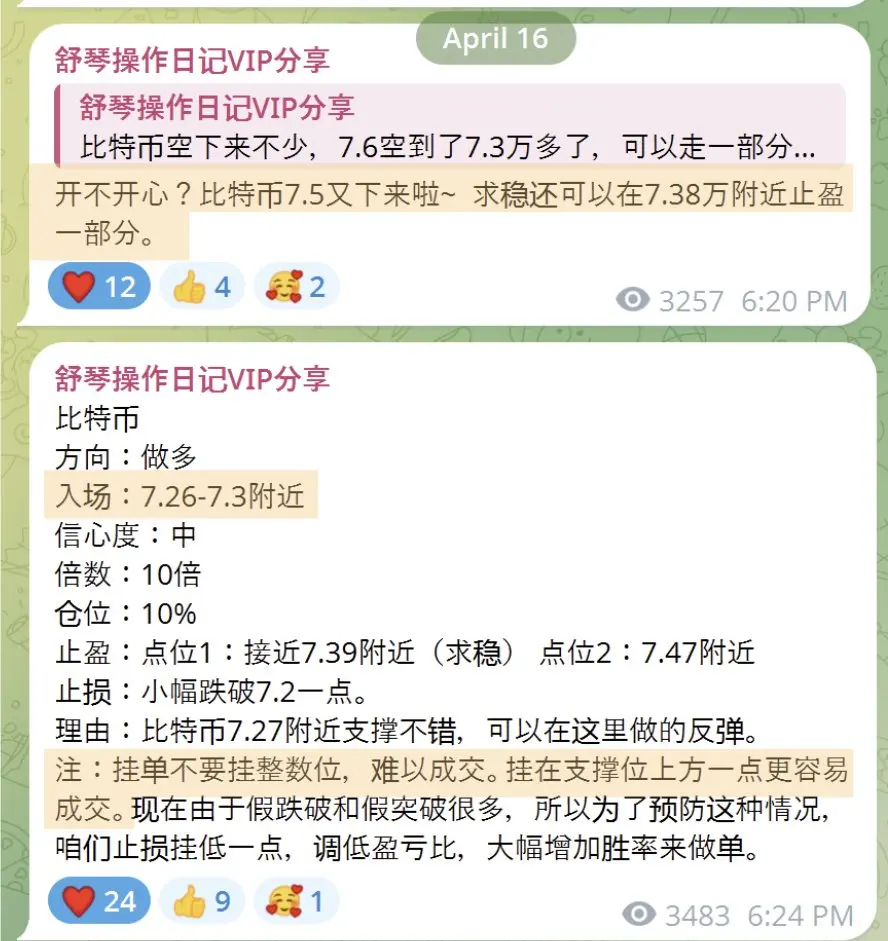
My strategy here is more inclined: don't chase the upward move, buy in stages on pullbacks, and wait until around 7.8 to see if there are signs of volume accumulation and stagnation before shorting.
View Original
AnalystShuQin
Bitcoin is about to attack the Bright Summit! Will it break through 76k and surge? Come and take a look.
1. Just this week, Bitcoin has already broken through 75k for the fourth time, and it's also the second time aiming for the previous high of 76k. The bullish momentum is strong, mainly driven by the US-Iran talks. As long as the negotiations are not completed, the market is continuously expecting this positive news. So, how should we operate now?
2. To start with the conclusion: I think the final top might be around 78,000/79k, because every time Bitcoin drops, there’s usually a false breakout beforehand, so there’s no reason this time wouldn’t be the same. Of course, if you prefer a safer approach, you can wait until the US-Iran ceasefire is underway before shorting, as the good news might be exhausted and lead to a significant pullback.
3. Before that, we still focus on swing trading. For example, the resistance at 75,000-76k has been shorted several times. Yesterday, I shorted at 73.2k, as shown in the chart. Shuqin advised everyone to take profits at 73.8k and to go long again above the 73k support. Congratulations to those who went long — it looks like the rise is higher than expected.
4. Now that we’ve already tested the 76k resistance several times, shorting again in the short term isn’t very stable. At most, I plan to build some long-term positions and hold them. I also intend to short again near the next resistance at 78,000 and 79k, relying on the big resistance at the 80k mark. I believe the chance of making gains again is quite high.
5. Besides that, Shuqin has been advising everyone to prepare for the Trump coin that’s been lurking for days. It finally moved today with a 10% surge — very impressive. I think this coin will stay hot until the dinner on the 25th. As for other coins, we will keep an eye on the market in real-time, post daily trading levels, and at key points, we can go long or short as needed.
repost-content-media
  • Reward
  • Comment
  • Repost
  • Share
I almost sent a cross-chain transfer just now, accidentally copying the wrong address. I only realized it a second before confirming... my heartbeat shot straight up to the second layer. To put it simply, with cross-chain transfers, it's not just "send it out and it arrives," there's a series of things you need to trust: on the source chain, your transaction must first be truly included in a block, then have proof; relayers/relayers must honestly help you carry the message; on the target chain, it still needs to verify and execute without issues. At least with IBC, the logic is clearer—it's mo
View Original
  • Reward
  • Comment
  • Repost
  • Share
I also lean neutral: not all-in on the bullish side, and not in a hurry to short, waiting for a new equilibrium point.
View Original
Furan86999
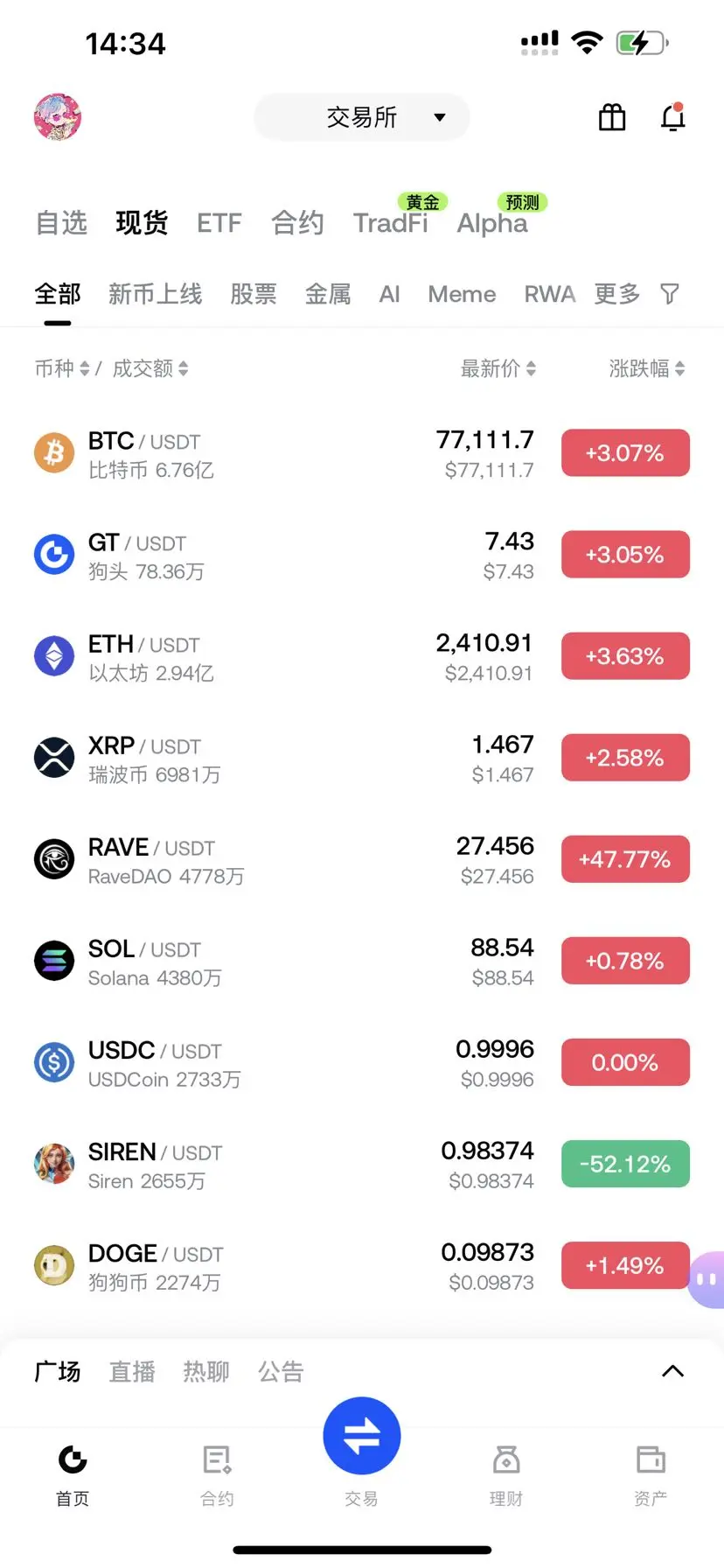
The most genuine market reaction in the past couple of days can actually be summed up in one sentence: first, cut off the worst-case expectations; then, reprice risk assets.
The Iranian Foreign Minister made a statement that the Strait of Hormuz is open to commercial ships, causing oil prices to fall in response. The market, which had been on edge for so long, finally relaxed. As crude oil prices dropped, inflation expectations also declined, and global stock markets and the crypto sector rebounded in sync, with BTC also surging toward around $77k. The chart looks like “bad news is exhausted,” but the issue is, this seems more like an emotional recovery rather than a complete resolution of risk.
Because the most critical contradiction still remains: on one side, Iran’s Foreign Minister signals easing, but on the other side, hardliners in Iran still haven’t truly loosened their stance. The Strait of Hormuz is said to be open, but control hasn’t been relinquished, and shipping isn’t back to pre-war free passage levels. The U.S. isn’t fully backing down either—Trump says the deal could be reached in a day or two, but also emphasizes that sanctions pressure will continue. In plain terms, it’s not that a ceasefire has been confirmed; rather, all parties are competing for narrative dominance and market expectations.
So, this BTC rally shouldn’t be simply understood as “geopolitical easing = direct surge.” More accurately, it’s trading three things: first, the macro pressure relief from falling oil prices; second, the market’s concentrated correction of risk aversion panic; third, funds flowing back into high-elasticity assets to switch risk preferences. But as long as the control dispute over Hormuz persists, as long as ceasefire agreements remain uncertain, and as long as U.S. and Iran keep throwing barbs at each other, the rise here still carries a heavy element of game theory.
My straightforward view: the current market isn’t a one-sided bullish outlook nor an immediate bearish turn, but a search for a new pricing equilibrium amid high volatility. BTC’s ability to retake $77k indicates that funds are willing to bet that “the situation won’t worsen further” for now. But if subsequent agreements face new uncertainties or the Hormuz issue escalates again, the tug-of-war between oil prices, the dollar, gold, and BTC will continue to swing violently.
This isn’t the end of risk; it’s just that risk has temporarily taken on a different form. The real determinant of the next phase of the market isn’t who’s louder today, but who can turn the verbal easing into actionable results. #美伊局势和谈与增兵博弈 @Gate广场_Official
repost-content-media
  • Reward
  • Comment
  • Repost
  • Share
To ensure blockchain games last long-term, they must first resemble games, then resemble economies, and only finally focus on token prices.
View Original
Furan86999
Over the past few years, the blockchain game industry has been stuck in an awkward cycle: first attracting people with high returns, then relying on new users to retain the old ones as they exit, until the model collapses, leaving behind a "sea of data" and a group of educated players. Many projects claim to be making games, but in reality, they are still conducting financial experiments. It’s precisely because of this that, when I look at Pixels again, I care less about its art style or short-term token price, and more about whether it has pushed blockchain gaming in a different direction.
In my view, the most noteworthy aspect of Pixels isn’t that it made a farming game, but that it attempts to bring "behavior" back to the center of the economic system. The biggest problem with traditional P2E is that it compresses everyone’s goals into maximizing profits. Players no longer care about experience, the world, or social interactions; all actions ultimately serve one purpose: converting time into tokens as quickly as possible, then turning tokens into money. On the surface, such a system seems lively, but it’s actually very fragile because once returns decline, behaviors collapse instantly, and everyone leaves simultaneously.
What’s relatively clever about Pixels is that it doesn’t base its economic model solely on a gold-farming logic. You can plant, harvest, build, complete tasks, and participate in trading; you can also develop your own management route around land and resources. Different types of players assume different roles within this system. Some are producers, responsible for resource supply; some are traders, making money through market efficiency; some are consumers, driving demand through purchases and upgrades; and others are essentially engaging in social and long-term development, bringing activity and stickiness to the entire world. Once roles are differentiated, the economy is no longer just a simple "reward distribution—token selling" closed loop but more closely resembles a real market.
That’s why I say the core of Pixels isn’t the game shell but the production relationships. It’s not just giving you a gameplay but providing a behavior structure that’s participatory, tradable, investable, and accumulative. Tokens are important here, but they shouldn’t be the whole story. The real value doesn’t come from a phrase like “it will rise in the future,” but from whether there are use cases within the system, whether there’s demand to support it, and whether it can sustain circulation. If a token can only be driven by sentiment, it’s essentially an old narrative; but if it begins to support consumption, trading, upgrades, identity, and resource allocation, it has the chance to transform from a pure financial symbol into a genuine ecological tool.
Another point that cannot be ignored is the significance of Ronin for Pixels. Many people attribute growth to lower gas fees and smoother chains, but I believe the deeper value lies in the fact that Ronin has already proven that blockchain games can have large-scale user recognition. In other words, Pixels isn’t re-educating a completely blank market but is meeting demand within an ecosystem that already has blockchain gaming culture and asset awareness. This directly lowers the conversion threshold and makes it easier for players to accept the logic of “assets, trading, and behavioral value.” Its growth isn’t explosive out of nowhere but built upon a verified user base, climbing steadily.
Of course, Pixels is far from a "sure win." The challenges it faces are very real: if new user growth slows, will resource demand decline accordingly? If players quickly find the optimal strategies, will behaviors converge into a single path again? If content updates can’t keep pace, can slow-paced gameplay like farming still sustain activity? These issues are still present, just not fully exposed yet.
But even so, I believe Pixels has given the industry something more important than a “short-term hit”: it has reignited discussions about whether blockchain games can shift from a financial narrative back to content-driven products, from airdrops to behavioral value, from crude subsidies to refined operations. If blockchain games are to have a next phase of growth, it’s likely not about who offers higher APY, but about who can create a more authentic world, a more stable cycle, and a longer-lasting reason for players to stay.
So, in my view, Pixels isn’t the endpoint or the answer; it’s more like a turning point. At least it shows the market that blockchain games don’t have to survive solely on bubbles—they can start to operate more like a real economy.
  • Reward
  • Comment
  • Repost
  • Share
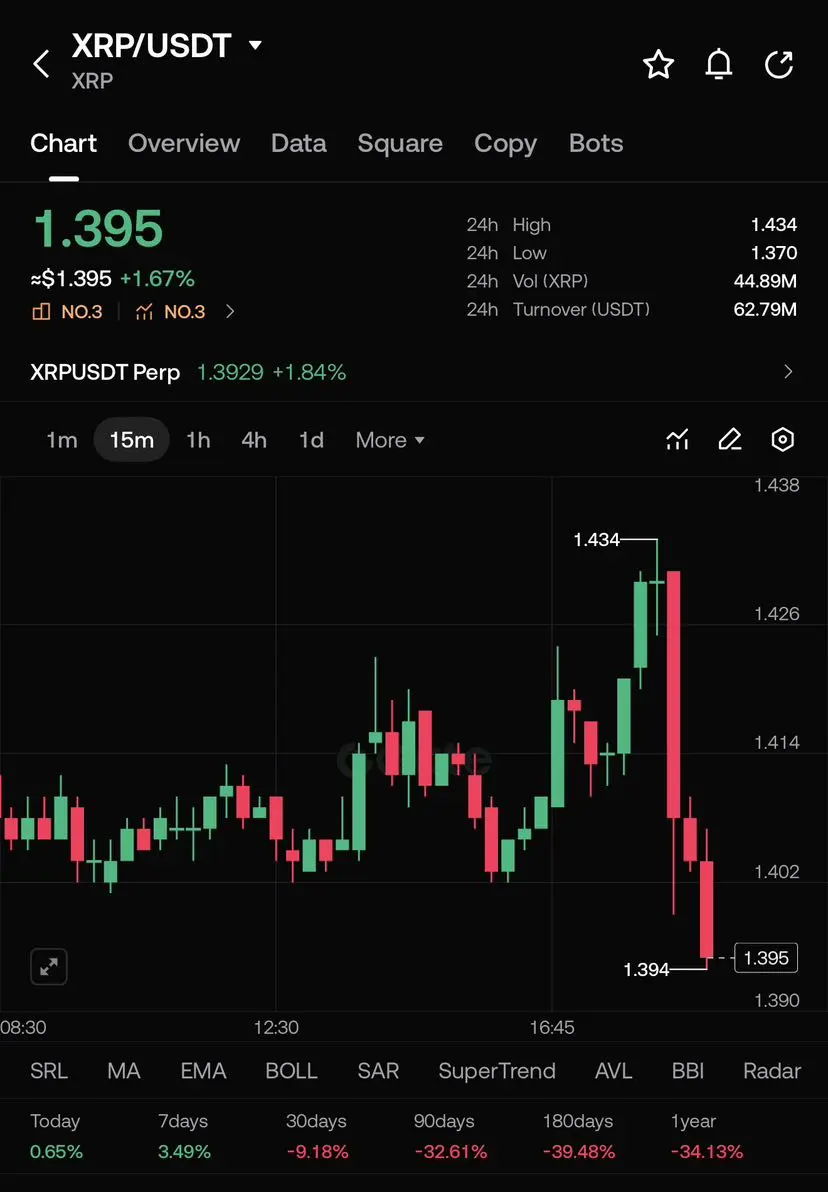
1.395-1.41 This range has a clear short entry idea; a sweep above 1.43 followed by a pullback looks more like distribution. Watch closely to see if it can recover the previous high.
View Original
LedgerBull
$XRP showing rejection from local highs with momentum shifting bearish.
Sellers gaining control as structure starts breaking down on lower timeframes.
EP
1.395 - 1.410
TP
TP1 1.370
TP2 1.340
TP3 1.300
SL
1.440
Liquidity above 1.43 was swept before a sharp reversal, indicating distribution. Weak follow-through on upside and strong bearish candles suggest continuation lower unless price reclaims the broken resistance.
Let’s go $XRP ‌
repost-content-media
  • Reward
  • Comment
  • Repost
  • Share
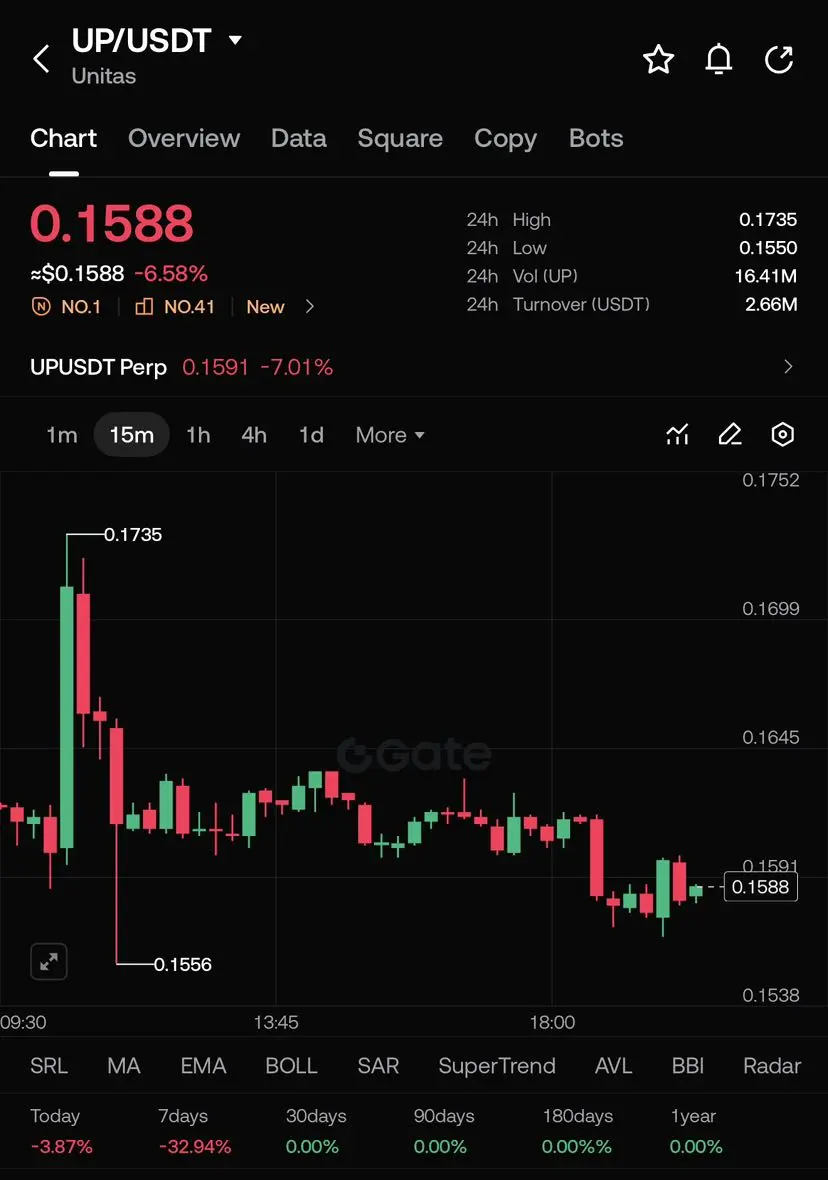
I am more concerned about whether it can reach around 0.155 first; if it does, take some profits, and see if the rest can continue.
View Original
LedgerBull
$UP showing sustained weakness after rejection from local highs.
Sellers in control with structure trending lower on intraday timeframes.
EP
0.158 - 0.162
TP
TP1 0.155
TP2 0.150
TP3 0.145
SL
0.170
Liquidity above 0.173 was swept before a strong downside move, confirming distribution. Weak recovery and consistent lower highs suggest continued downside unless price reclaims the range.
Let’s go $UP ‌
repost-content-media
  • Reward
  • Comment
  • Repost
  • Share
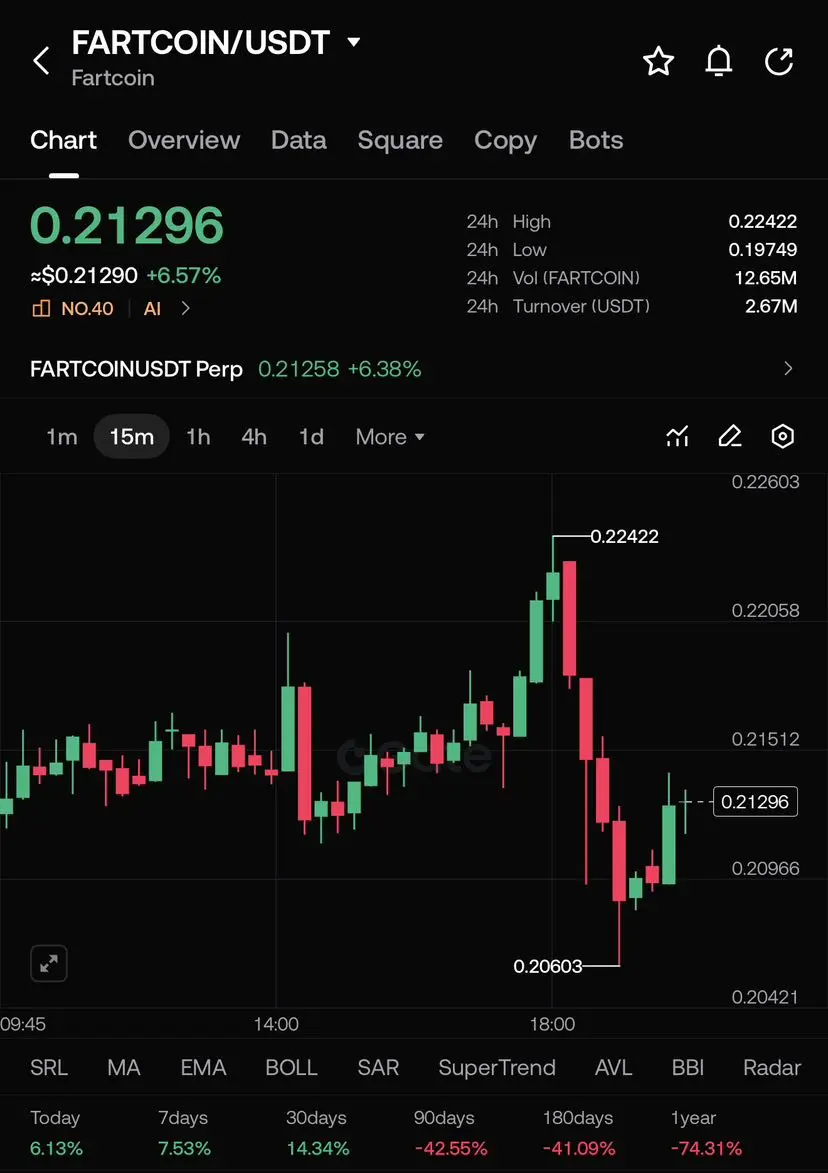
Weak rebound + lower highs, the bearish momentum remains unchanged, first target 0.205.
View Original
LedgerBull
$FARTCOIN showing rejection from local highs with momentum turning bearish.
Sellers stepping in as structure weakens on lower timeframes.
EP
0.213 - 0.218
TP
TP1 0.205
TP2 0.198
TP3 0.190
SL
0.225
Liquidity above 0.224 was tapped before a sharp sell-off, confirming rejection. Weak bounce and continued lower highs suggest downside continuation unless price reclaims the broken structure.
Let’s go $FARTCOIN ‌
repost-content-media
  • Reward
  • Comment
  • Repost
  • Share
Seeing the characters "Charge" (冲呀), you know something's about to happen.
View Original
Original content no longer visible
  • Reward
  • Comment
  • Repost
  • Share
I can't hold spot positions well, and I always think "just open a little" on contracts, then liquidation comes faster than food delivery... To put it simply, position management boils down to one sentence: the part you can sleep soundly over is your position, and the part you can't sleep over is gambling. Recently, everyone has been interpreting ETF capital flows, U.S. stock risk appetite, and crypto market rises and falls together, and I get caught up in the rhythm too, but when it comes to placing orders, I still have to pull back the "wanting to win it all back" hand. By the way, I see comp
View Original
  • Reward
  • Comment
  • Repost
  • Share
  • Pin