LittleBearWatchingTheMarket

vip
Age 0.1 Year
Peak Tier 0
Working a day job and watching candlestick charts at night, I have a preference for L2s and stablecoin pools. Even when I take losses, I write post-mortems. I talk a laid-back game, but my hands are always busy.
Set the stop-loss to the entry price = zero-cost position, so you won't panic regardless of its fluctuations.
View Original
CryptoSat
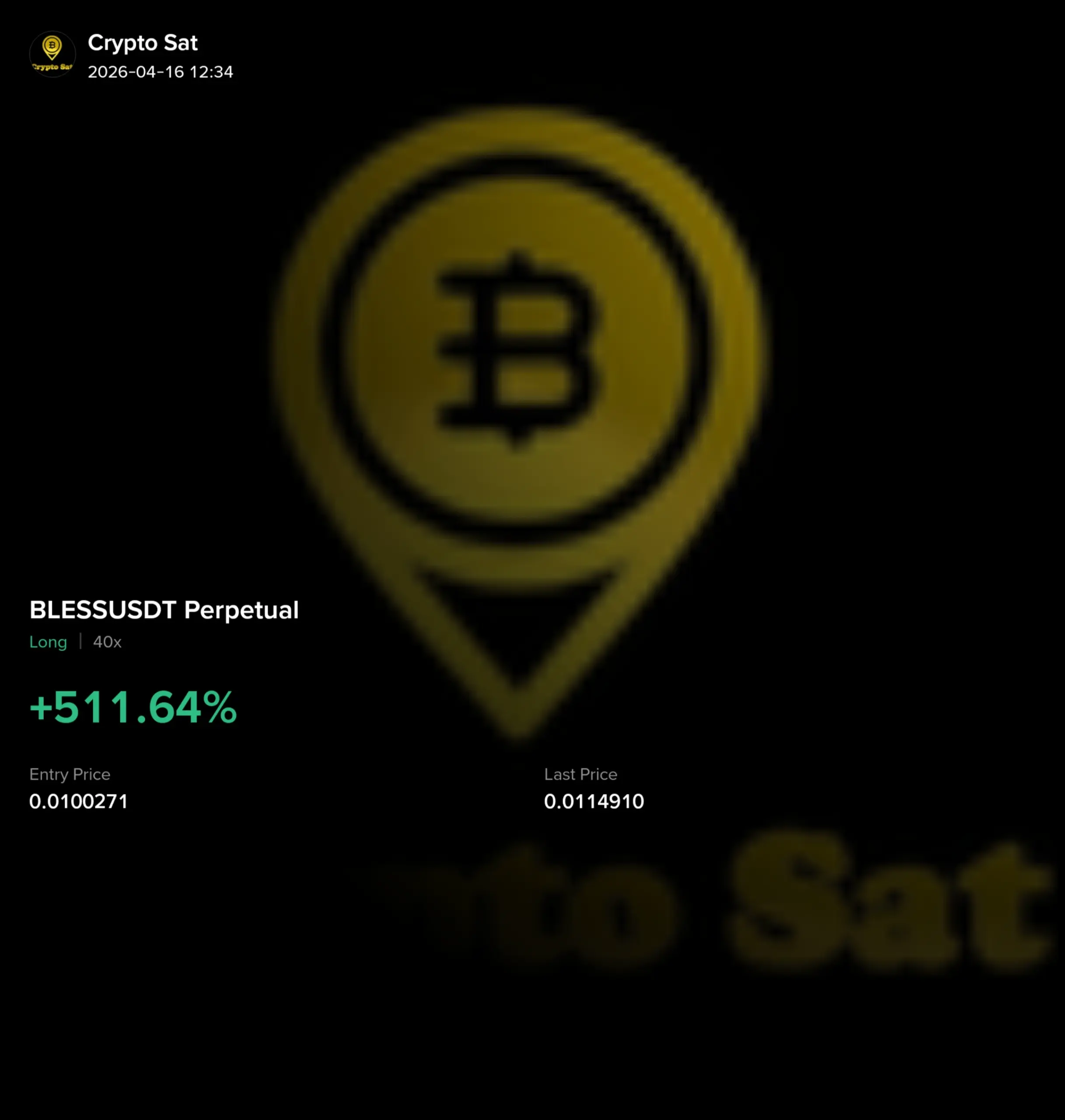
$BLESS 3rd Target done, it's time to set Stoploss at entry price 😉
repost-content-media
  • Reward
  • Comment
  • Repost
  • Share
I've also been there: winning a few trades and jumping in early, taking on big positions without admitting mistakes, only to realize later that it was all caused by overconfidence.
View Original
CryptoPsychic
The Moment You Start Feeling Confident Is Usually the Beginning of the Mistake
Confidence feels like progress in trading.
You catch a few good trades.
You read the market correctly.
Things start to “make sense.”
And slowly, without noticing, your behavior changes.
You start trusting your feeling more than your rules.
You enter a bit earlier.
You size a bit bigger.
You hold a bit longer.
Not because the setup improved.
Because your confidence did.
That’s where the problem begins.
Crypto doesn’t punish insecurity.
It punishes overconfidence.
When confidence rises: • risk control usually drops
• patience decreases
• discipline becomes flexible
You stop waiting for confirmation because you “already know.”
You stop respecting invalidation because you “see the move.”
And that’s exactly when the market does something unexpected.
Not because it’s against you.
Because uncertainty never disappears — you just stopped respecting it.
Most traders don’t lose when they’re confused.
They lose when they feel certain.
Because certainty leads to exposure.
And exposure without discipline leads to damage.
The best traders don’t eliminate confidence.
They control it.
They keep: • position size consistent
• rules unchanged
• entries structured
No matter how well things are going.
Because they understand something simple:
The market doesn’t care how confident you feel.
It only reacts to liquidity, structure, and positioning.
👇 Comment if overconfidence has ever cost you a trade
🔁 Share this with someone on a winning streak right now
📌 Follow for real crypto insights — where discipline matters more than confidence
#GatePreIPOsLaunchesWithSpaceX #CryptoMarketRecovery
repost-content-media
  • Reward
  • Comment
  • Repost
  • Share
These days, I've come across a bunch of LST/re-staking "higher yields." I also got curious and looked into it; honestly, the money isn't coming out of nowhere: some of it is from the original validation/staking, some is incentives from protocols to attract TVL, and others are the premiums people are willing to pay for "collateral that can be used again." The problem is pretty much the same: each additional layer increases the risk of something going wrong—contracts, liquidations, de-pegging, liquidity runs... When the market suddenly drops, those who are slow to react start stepping on each ot
View Original
  • Reward
  • Comment
  • Repost
  • Share
Last night I looked again at the records of my stablecoin pools, and the more I looked, the more I felt: AMM curves are not charitable organizations. Once the price deviates, your position will be "automatically rebalanced" to the less desirable side. Impermanent loss, in plain terms, is the side effect of being forced to buy low and sell high. Market making is definitely not just sitting back and collecting fees.
Others think putting money into pools is like depositing in a fixed-term account, but in reality, you're silently absorbing volatility and emotions. Recently, with extreme funding ra
View Original
  • Reward
  • Comment
  • Repost
  • Share
  • Pin