


Futures
Access hundreds of perpetual contracts
TradFi
Gold
One platform for global traditional assets
Options
Hot
Trade European-style vanilla options
Unified Account
Maximize your capital efficiency
Demo Trading
Futures Kickoff
Get prepared for your futures trading
Futures Events
Join events to earn rewards
Demo Trading
Use virtual funds to experience risk-free trading
Launch
CandyDrop
Collect candies to earn airdrops
Launchpool
Quick staking, earn potential new tokens
HODLer Airdrop
Hold GT and get massive airdrops for free
Launchpad
Be early to the next big token project
Alpha Points
Trade on-chain assets and earn airdrops
Futures Points
Earn futures points and claim airdrop rewards


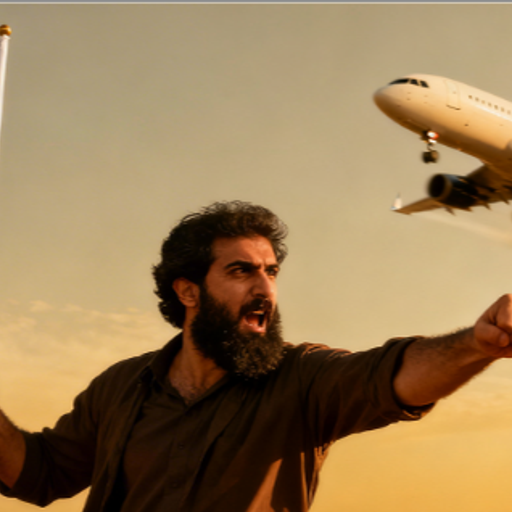




The Iran situation returns to the spotlight: new deadlock between diplomacy and military deterrence
Between late February and early March, the situation in the Middle East has further intensified. Tensions between the United States and Iran have reached critical levels, with American military deployment showing no signs of decreasing and Tehran’s response becoming increasingly uncompromising. This scenario resembles the most heated moments of nuclear negotiations, where diplomacy and the threat of armed conflict go hand in hand.
U.S. Military Deployment: The Standoff Continues
American actions have taken on increasingly decisive contours. On February 27, the president publicly reiterated that Iran will never be allowed to possess nuclear capabilities, while also expressing frustration with the progress of bilateral talks. Although he stated that no final decision has been made, he implied that “sometimes the use of force becomes unavoidable,” a clear warning to Tehran.
Militarily, the U.S. deployment has reached unprecedented levels in recent years. The USS Ford aircraft carrier arrived off the coast of Israel on February 27, creating what analysts call a “double carrier strike group” along with the USS Lincoln already positioned in the Arabian Sea. This deployment represents one of the largest U.S. military deployments in the Middle East since the Iraq War in 2003. Simultaneously, the State Department ordered the evacuation of non-essential personnel and their families from Israeli embassies, while nearly 20 tanker aircraft were transferred to the region to ensure prolonged operational capacity for the air forces.
Iran’s Countermeasure: Nuclear Deterrence and Strait Blockade
In response to this military pressure and ongoing negotiations with little progress, Iranian armed forces raised their alert level to maximum on February 27. The commander of the general staff publicly stated that any act of U.S. aggression would be met with a “decisive and devastating” response. Iran, constantly monitoring the movements of American and Israeli forces, also issued a clear warning: in case of attack, it will block the Strait of Hormuz, one of the key chokepoints for global oil trade.
On another front, Tehran reaffirmed that it does not pursue nuclear military objectives, refusing to export enriched uranium and claiming the right to civilian nuclear technology. These remain the core non-negotiable points of Iran’s position in the talks.
How the Situation Is Evolving: Brinkmanship and Vulnerability
The current situation embodies the classic brinkmanship scenario, where both actors escalate their stakes in the hope that the opponent will back down. However, the picture remains precarious: the margin between diplomacy and armed conflict narrows day by day. For the global market, the greatest risk lies in the potential closure of the Strait of Hormuz, through which about 20-25% of the world’s oil passes. Any significant escalation could have economic repercussions far beyond the Middle East.