

Trade
Basic
Futures
Futures
Hundreds of contracts settled in USDT or BTC
TradFi
Gold
Trade global traditional assets with USDT in one place
Options
Hot
Trade European-style vanilla options
Unified Account
Maximize your capital efficiency
Demo Trading
Futures Kickoff
Get prepared for your futures trading
Futures Events
Participate in events to win generous rewards
Demo Trading
Use virtual funds to experience risk-free trading
Earn
Launch
CandyDrop
Collect candies to earn airdrops
Launchpool
Quick staking, earn potential new tokens
HODLer Airdrop
Hold GT and get massive airdrops for free
Launchpad
Be early to the next big token project
Alpha Points
Trade on-chain assets and enjoy airdrop rewards!
Futures Points
Earn futures points and claim airdrop rewards
Investment
Simple Earn
Earn interests with idle tokens
Auto-Invest
Auto-invest on a regular basis
Dual Investment
Buy low and sell high to take profits from price fluctuations
Soft Staking
Earn rewards with flexible staking
Crypto Loan
0 Fees
Pledge one crypto to borrow another
Lending Center
One-stop lending hub
VIP Wealth Hub
Customized wealth management empowers your assets growth
Private Wealth Management
Customized asset management to grow your digital assets
Quant Fund
Top asset management team helps you profit without hassle
Staking
Stake cryptos to earn in PoS products
Smart Leverage
New
No forced liquidation before maturity, worry-free leveraged gains
GUSD Minting
Use USDT/USDC to mint GUSD for treasury-level yields

More




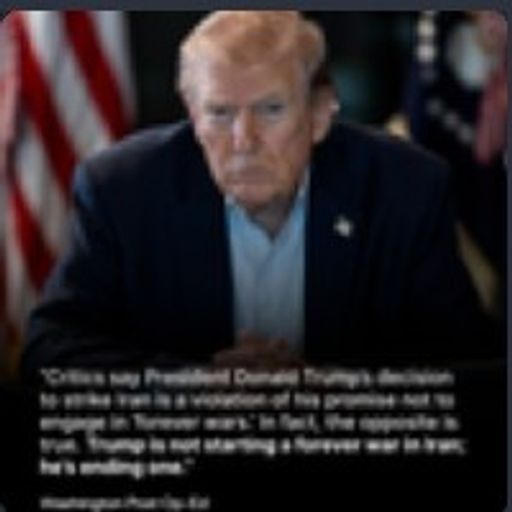

Insurance + Escort, Trump orders to secure maritime trade in the Gulf region, crude oil intraday gains narrow
U.S. President Trump announced a dual approach to address the energy supply crisis triggered by U.S. military strikes on Iran, promising to provide political risk insurance for commercial ships passing through the Gulf region and, if necessary, deploying the Navy to escort oil tankers through the Strait of Hormuz.
On Tuesday, March 3, during the midday trading session, Trump posted on his social media that he has instructed the U.S. International Development Finance Corporation (DFC) to offer “political risk insurance and financial security guarantees” at “very reasonable prices” for “all maritime trade passing through the Gulf, especially energy trade,” with a focus on energy.
Trump stated that these guarantees will be available to all shipping companies, “all shipping companies can obtain this insurance.”
He also said, “If necessary, the U.S. Navy will begin escorting oil tankers through the Strait of Hormuz as soon as possible,” adding, “In any case, the U.S. will ensure the free flow of energy to the world,” and touting America’s strongest economy and military power, stating, “More actions are coming.”
Following this announcement, U.S. stocks narrowed their gains during the midday session. However, market participants remain cautious about whether these measures can restore normal oil flow through the Strait of Hormuz in the short term.
European stocks hit a daily high, with WTI crude futures approaching $78 per barrel, up nearly 9.5% intraday, briefly nearing $71.70, with an intraday increase of less than 0.7%. On Tuesday, European stocks also rose nearly 9.5%, with Brent crude, the global benchmark, falling back to $78.54 after reaching close to $78 earlier, up 1% from Monday’s close.
War Disrupts Maritime Arteries, Crude Oil Prices Surge Over 10% in Two Days
Since the U.S. and Israel launched military strikes against Iran on Saturday, February 28, the Middle East has plunged into widespread chaos, with oil transportation through the Strait of Hormuz effectively halted. Known as the world’s energy “throat,” this strait accounts for about one-fifth of global energy supplies.
Following the U.S.-Israel attack on Iran, international crude futures surged over 10% on Monday and nearly 9.5% on Tuesday during trading hours. By Tuesday’s close, U.S. and Brent crude had respectively risen over 14% and 12% in the past two days.
Many of the world’s largest maritime insurance mutual aid organizations have withdrawn war risk coverage for ships entering the Persian Gulf. While some shipowners can obtain alternative coverage from other insurers, premiums have soared.
Media reports cite sources revealing that Trump’s announcement of these guarantees is partly a response to concerns that worsening insurance markets could push oil prices higher.
Iran Warns Ships Not to Transit “War-Time” Strait of Hormuz
Iranian media reported that the Islamic Revolutionary Guard Corps issued a statement saying the Strait of Hormuz is in a state of war, and ships passing through “may face risks from missiles or uncontrolled unmanned systems.”
The statement warned international shipping companies not to transit the strait. “The Strait of Hormuz is fully monitored and controlled by the Iranian Islamic Revolutionary Guard Corps.” It also stated that more than ten oil tankers have been attacked by Iran for ignoring warnings.
According to CCTV News, late on March 2 local time, an advisor to the Iranian Revolutionary Guard Corps commander said the Strait of Hormuz has been closed, and Iran will target all ships attempting to pass through.
Insurance Mechanism Still Unclear, Implementation Delayed
Trump did not specify the operational details of the insurance provided by the U.S. International Development Finance Corporation (DFC). This agency typically mobilizes private capital for developing countries and reduces investment risks there, which differs significantly from directly underwriting commercial shipping war risks.
Bob McNally, president of consulting firm Rapidan Energy Group and a former White House official, said that while the announcement might boost market confidence, both escorting and insurance mechanisms will take time to implement. “The U.S. military first needs to suppress Iran’s mine-laying capabilities and its ability to attack ships with anti-ship cruise missiles and drones.”
In an email, McNally stated, “Assuming the Iranian government decides to continue resisting, even with the announced insurance and escort plans, full restoration of oil flow through the Strait of Hormuz is expected to take weeks, not hours or days.”
Oil Prices Rise, White House Coordinates Multiple Agencies to Respond
Rising energy prices have put political pressure on the Trump administration. U.S. retail gasoline prices have reached a nearly five-month high, posing potential political risks ahead of the midterm elections in November.
Earlier this week, U.S. Secretary of State Blinken indicated that the Trump administration had anticipated rising energy prices, and Treasury Secretary Yellen and Energy Secretary Granholm would jointly introduce a relief plan. Trump is expected to meet with Yellen and Granholm at the White House on Tuesday to discuss this issue.
Risk Warning and Disclaimer
Market risks are present; investments should be cautious. This article does not constitute personal investment advice and does not consider individual users’ specific investment goals, financial situations, or needs. Users should consider whether any opinions, views, or conclusions herein are suitable for their particular circumstances. Investment is at your own risk.