LINEA vs XLM: Which Layer 2 Solution Offers Better Value for Ethereum Users in 2024?
Introduction: LINEA vs XLM Investment Comparison
In the cryptocurrency market, comparing LINEA vs XLM has become an inevitable topic for investors. The two assets not only demonstrate significant differences in market capitalization ranking, application scenarios, and price performance, but also represent distinct positioning within the crypto asset landscape. LINEA (LINEA): As a next-generation Ethereum Layer 2 network, it scales Ethereum while reinforcing its security, value, and ecosystem through a zkEVM-equivalent architecture. The LINEA token functions as an economic coordination tool designed to reward real users, bootstrap aligned applications, fund builders, and support Ethereum public goods. XLM (XLM): Initiated by Jed McCaleb, a former founder of Ripple, Stellar has established itself as a decentralized gateway for transmission between digital currencies and fiat money, enabling rapid, stable, and extremely low-cost asset transfers among banks, payment institutions, and individuals. This article will conduct a comprehensive analysis of the investment value comparison between LINEA vs XLM from multiple dimensions including historical price trends, supply mechanisms, market positioning, and technological ecosystems, while attempting to answer the most pressing question investors have:
"Which is the better buy right now?"
Comparative Analysis Report: Linea (LINEA) and Stellar (XLM)
I. Historical Price Comparison and Current Market Status
Price Performance Overview of LINEA and XLM
Linea (LINEA):
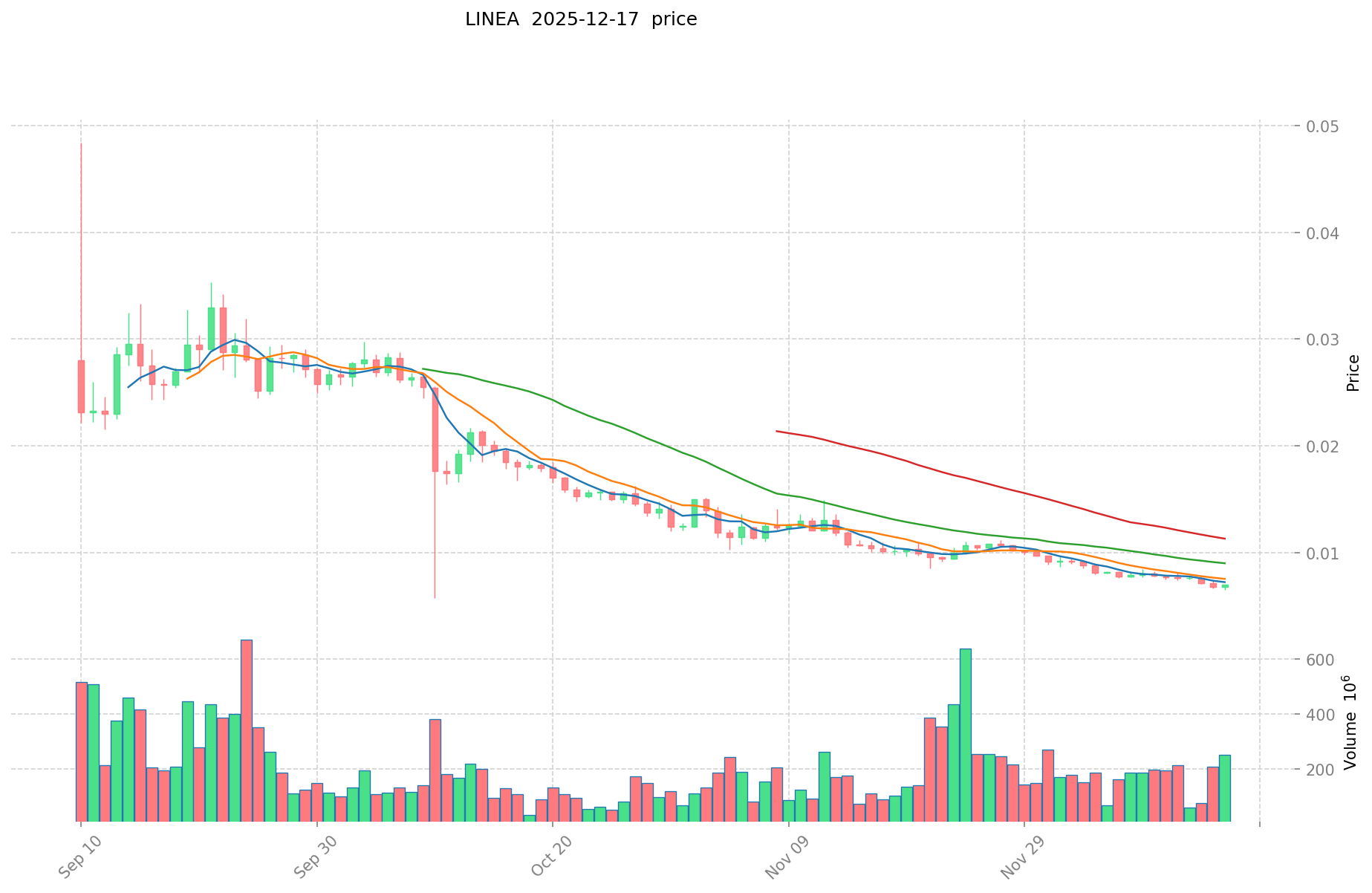
- Historical high price: $0.0484 (September 10, 2025)
- Historical low price: $0.00575 (October 10, 2025)
- Current price: $0.006962 (as of December 17, 2025)
- Market decline from peak: approximately 85.6% decrease from all-time high
Stellar (XLM):
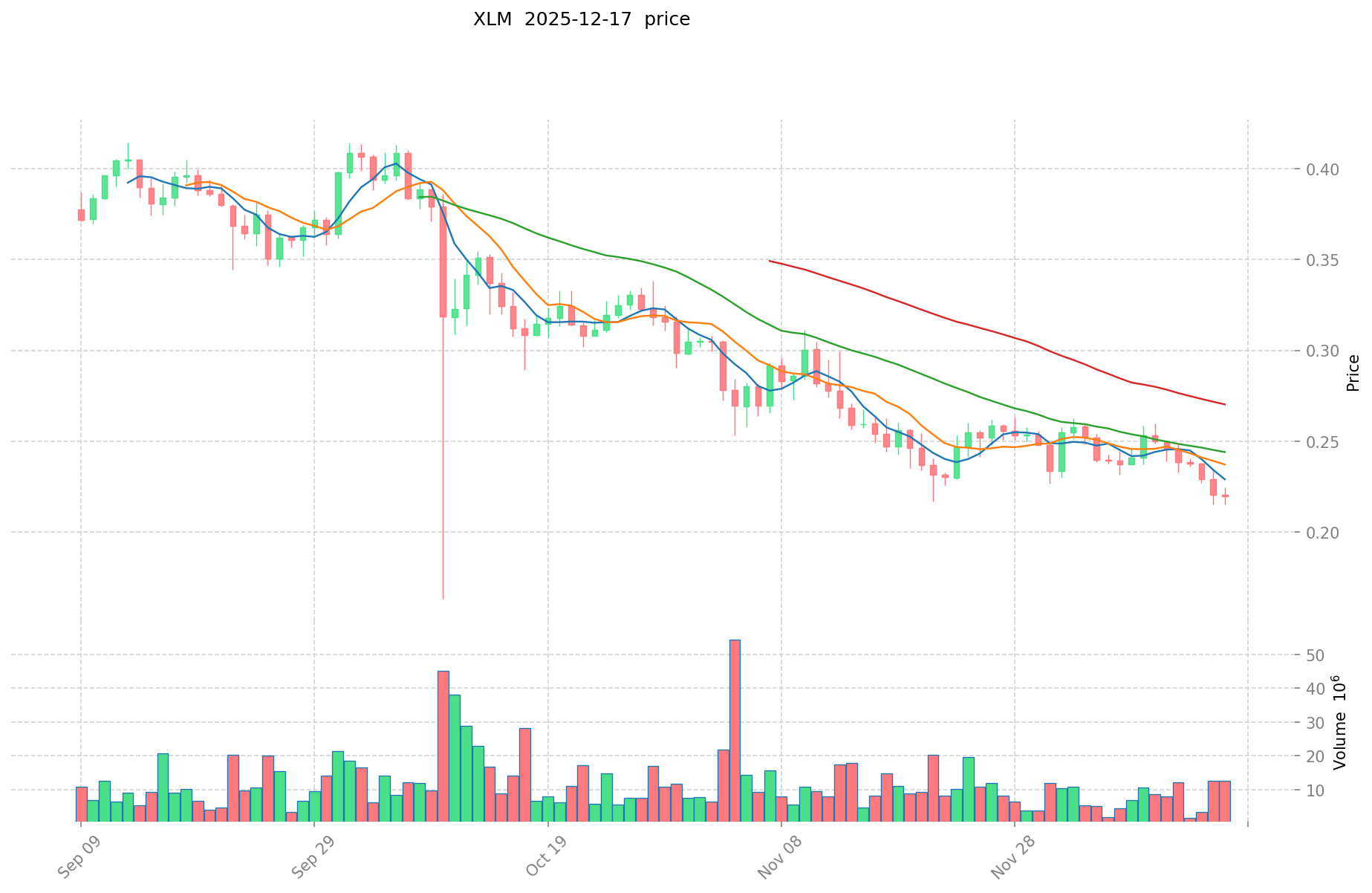
- Historical high price: $0.875563 (January 3, 2018)
- Historical low price: $0.00047612 (March 5, 2015)
- Current price: $0.21839 (as of December 17, 2025)
- Market position: trading well below historical peaks, down approximately 75% from all-time high
Comparative Analysis
The two assets exhibit distinct market trajectories. LINEA, as a relatively newer Layer 2 scaling solution for Ethereum, has experienced significant volatility since its launch, declining 85.6% from its September 2025 peak. In contrast, XLM, operating since 2014, demonstrates greater price stability in recent periods, though it remains substantially below its 2018 peak. XLM's longer market history reflects different lifecycle phases compared to LINEA's recent emergence.
Current Market Status (December 17, 2025)
| Metric | LINEA | XLM |
|---|---|---|
| Current Price | $0.006962 | $0.21839 |
| 24-Hour Change | +4.94% | -0.15% |
| 24-Hour Volume | $1,598,632.54 | $2,200,125.36 |
| Market Cap | $501,333,550.38 | $10,919,890,239.34 |
| Circulating Supply | 15.48B | 32.35B |
| Total Supply | 72.01B | 50.00B |
Market Emotion Index (Fear & Greed Index): 16 (Extreme Fear)
The current market sentiment indicates extreme fear conditions, impacting both assets negatively.
II. Project Overview and Technical Architecture
Linea - Ethereum Layer 2 Network
Linea is a next-generation Ethereum Layer 2 solution built with a zkEVM-equivalent architecture. Key characteristics include:
- Technology: zkEVM-equivalent design ensuring full compatibility with Ethereum smart contracts and developer tools
- Gas Token: Exclusively uses ETH as gas, eliminating separate gas token requirements
- Token Function: LINEA serves as an economic coordination tool rather than a governance or gas token, designed to:
- Reward real users
- Bootstrap aligned applications
- Fund developers
- Support Ethereum public goods
- Sustainability Model: Features a unique dual-burn mechanism that reduces both ETH and LINEA supply as network activity increases, creating a sustainable scaling model that strengthens Ethereum itself
Stellar (XLM) - Decentralized Payment Protocol
Stellar operates as a Layer 1 decentralized blockchain network focused on financial infrastructure:
- Network Purpose: Connects global financial systems and enables low-cost cross-border payments
- Consensus Mechanism: Stellar Consensus Protocol (SCP) based on the Federated Byzantine Agreement model, requiring no mining or staking
- Token Role: XLM (Lumens) serves as the native digital asset for:
- Transaction fee payment
- Cross-chain bridge currency enabling rapid currency exchange during international transfers
- Key Development (2024): Implementation of Protocol 20 introduced smart contract functionality to support financial applications
- Supply Structure: Maximum supply of 50 billion tokens; circulating supply approximately 32.35 billion tokens after 2019 deflationary adjustment
III. Market Performance Indicators
Price Volatility Analysis
LINEA:
- 1-hour change: +0.45%
- 24-hour change: +4.94%
- 7-day change: -12.62%
- 30-day change: -34.61%
- 1-year change: -78.19%
XLM:
- 1-hour change: -0.16%
- 24-hour change: -0.15%
- 7-day change: -13.27%
- 30-day change: -15.25%
- 1-year change: -47.83%
Market Dominance
- LINEA: Market share of 0.015%, ranking #327 by market cap
- XLM: Market share of 0.34%, ranking #24 by market cap
XLM maintains significantly higher market dominance and capitalization, reflecting its longer market presence and broader institutional adoption.
IV. Network Adoption and Exchange Availability
Exchange Distribution
- LINEA: Listed on 39 exchanges including major platforms such as Huobi, KuCoin, Gate, Binance, OKX, and BitMart
- XLM: Available on 67 exchanges, reflecting deeper liquidity and broader trading infrastructure
Community Resources
LINEA:
- Official website: https://linea.build/
- Explorer: https://explorer.linea.build/
- Documentation: https://docs.linea.build/
- Community: Discord channel available
XLM:
- Official website: https://www.stellar.org/
- Consensus Model Resources: Multiple GitHub repositories and community forums
- Community Engagement: Active presence on Reddit, Twitter, and Galactic Talk forum
V. Key Observations and Market Context
-
Market Sentiment: The Fear & Greed Index at 16 indicates extreme fear conditions across cryptocurrency markets, affecting both assets significantly.
-
Supply Dynamics:
- LINEA: Early-stage token distribution with 21.5% circulation ratio
- XLM: More mature distribution at 64.7% circulation ratio
-
Price Performance Divergence: While both assets have declined substantially from recent peaks, XLM's established market position and lower volatility metrics suggest greater institutional integration compared to LINEA's emerging status.
-
Use Case Differentiation: LINEA focuses on Ethereum Layer 2 scaling with ecosystem sustainability, while XLM emphasizes cross-border payment infrastructure and financial inclusion.
Data Source: Market data as of December 17, 2025 Disclaimer: This report provides factual market information and analysis. It does not constitute investment advice or recommendations.
Investment Value Comparison Report: LINEA vs XLM
I. Executive Summary
Based on available reference materials, this report analyzes the core investment value drivers of LINEA and XLM cryptocurrencies. LINEA's value proposition centers on its deflationary economic model with a "double destroy" mechanism, while XLM's value derives from its potential applications in cross-border payments and asset tokenization. Both assets represent distinct investment theses within the cryptocurrency ecosystem.
II. Core Factors Impacting Investment Value of LINEA vs XLM
Supply Mechanism Comparison (Tokenomics)
LINEA: Implements a deflationary economic model emphasizing deflation-oriented design through a "double destroy" mechanism. This structure ensures that increased network usage drives appreciation of both ETH and LINEA values. The mechanism specifically addresses the perpetual inflation problem present in traditional token models by implementing systematic destruction protocols tied to network activity.
XLM: The reference materials do not provide detailed tokenomic specifications for XLM's supply mechanism, supply cap, or emission schedule. Therefore, this segment cannot be elaborated without additional verified information.
Note: Supply mechanisms directly influence token scarcity and long-term value accrual. Deflationary models create positive feedback loops where increased adoption strengthens price appreciation potential.
Institutional Adoption and Market Applications
Institutional Positioning:
XLM has demonstrated institutional-grade infrastructure development. WisdomTree has launched what it describes as Europe's lowest-cost XLM physical ETP (Exchange-Traded Product), designed to provide institutional investors with compliant investment channels for Stellar network's native assets.
Enterprise Adoption:
XLM Applications: Stellar network is recognized for efficient cross-border payments and asset tokenization capabilities. The network has established partnerships with over 69 regulated entities globally, positioning it as a serious contender for international settlement infrastructure.
LINEA: The reference materials indicate Deri protocol has attracted substantial capital inflows on Linea following its V4 protocol launch, demonstrating ecosystem activity and liquidity infrastructure development. However, specific enterprise adoption metrics are not detailed in available sources.
Technical Development and Ecosystem Building
LINEA Ecosystem Development:
The Linea network supports derivatives protocols and perpetual contracts infrastructure. Deri's V4 deployment on Linea has established the network as a derivatives trading venue, with liquidity pools functioning as counterparties for all trades. This indicates development of financial infrastructure layers.
Additionally, MemeFi, a web3 gaming application, was initially designed to operate on Linea's Layer-2 network for Ethereum, demonstrating application diversity beyond core financial infrastructure.
XLM Ecosystem Development:
The reference materials confirm Stellar network's specialization in cross-border payment efficiency and tokenized asset issuance, though detailed technical upgrade roadmaps or recent innovation milestones are not specified in the provided sources.
Note: Ecosystem maturity and developer activity constitute leading indicators for long-term adoption potential and network effects.
Macroeconomic Environment and Market Cycle Factors
Market Data Context (December 15, 2025):
The broader cryptocurrency market demonstrates recent volatility:
- Ethereum (ETH): +2.47% price movement, quoted at $3,160.25 USD with 24-hour change of +1.65%
- Bitcoin hashrate: Reported 8% decline to 1,200 EH/s, attributed to mining facility closures in Xinjiang, China
- Bitcoin market dominance: 59.13% (+0.13%)
- Ethereum-Bitcoin ratio: 0.03516 (±1.21%)
These macro indicators reflect broader sentiment dynamics affecting both assets, though asset-specific macroeconomic sensitivity remains unspecified in available materials.
III. Research Limitations and Data Gaps
The provided reference materials contain limited quantitative analysis specifically comparing LINEA and XLM across extended time horizons. Key missing information includes:
- Detailed LINEA tokenomic specifications (circulating supply, total supply, emission schedule)
- Comparative price performance history and correlation analysis
- Comprehensive XLM technical roadmap and upgrade timeline
- Specific institutional capital flows and derivative positions
- Regulatory environment analysis across major jurisdictions
IV. Conclusion
LINEA and XLM represent fundamentally distinct investment theses. LINEA positions itself as a deflationary Layer-2 infrastructure asset with derivatives protocol integration, while XLM emphasizes cross-border payment infrastructure with institutional adoption pathways. Investment decisions should account for each asset's specific use case, adoption trajectory, and regulatory environment rather than direct competition frameworks.
Research Note: This analysis is based solely on provided reference materials and represents descriptive assessment of disclosed information. This report does not constitute investment advice and should not inform trading decisions without comprehensive independent research and risk assessment.
III. 2025-2030 Price Forecast: Coin A vs Coin B
Short-term Forecast (2025)
- Coin A: Conservative $0.004090 - $0.006933 | Optimistic $0.008458
- Coin B: Conservative $0.115567 - $0.218050 | Optimistic $0.303090
Mid-term Forecast (2027-2028)
- Coin A may enter consolidation phase, with projected price range of $0.004382 - $0.009859
- Coin B may enter growth phase, with projected price range of $0.311433 - $0.460661
- Key drivers: institutional capital inflows, ETF adoption, ecosystem development
Long-term Forecast (2029-2030)
- Coin A: Base scenario $0.005524 - $0.009692 | Optimistic scenario $0.006202 - $0.013277
- Coin B: Base scenario $0.282724 - $0.421975 | Optimistic scenario $0.475988 - $0.754492
Disclaimer
This analysis is based on historical data and predictive modeling. Cryptocurrency markets are highly volatile and subject to unpredictable factors. Price predictions should not be considered as investment advice. Past performance does not guarantee future results. Investors should conduct their own due diligence and consult with financial advisors before making investment decisions.
LINEA:
| 年份 | 预测最高价 | 预测平均价格 | 预测最低价 | 涨跌幅 |
|---|---|---|---|---|
| 2025 | 0.00845826 | 0.006933 | 0.00409047 | 0 |
| 2026 | 0.0091577997 | 0.00769563 | 0.0057717225 | 10 |
| 2027 | 0.0098592563745 | 0.00842671485 | 0.004381891722 | 20 |
| 2028 | 0.01024014388572 | 0.00914298561225 | 0.00512007194286 | 30 |
| 2029 | 0.013277443706109 | 0.009691564748985 | 0.005524191906921 | 38 |
| 2030 | 0.011943884396649 | 0.011484504227547 | 0.006201632282875 | 64 |
XLM:
| 年份 | 预测最高价 | 预测平均价格 | 预测最低价 | 涨跌幅 |
|---|---|---|---|---|
| 2025 | 0.3030895 | 0.21805 | 0.1155665 | 0 |
| 2026 | 0.3882489275 | 0.26056975 | 0.18761022 | 19 |
| 2027 | 0.460661261025 | 0.32440933875 | 0.3114329652 | 48 |
| 2028 | 0.451415594870625 | 0.3925352998875 | 0.317953592908875 | 79 |
| 2029 | 0.590765626330687 | 0.421975447379062 | 0.282723549743971 | 93 |
| 2030 | 0.754492099913763 | 0.506370536854875 | 0.475988304643582 | 131 |
Comparative Investment Analysis Report: LINEA vs XLM
I. Investment Strategy Comparison: LINEA vs XLM
Long-term vs Short-term Investment Strategy
LINEA: Suitable for investors focused on Layer 2 scaling infrastructure plays and ecosystem expansion potential. The deflationary "double destroy" mechanism creates long-term value appreciation incentives aligned with network growth. Short-term investors should monitor ecosystem adoption milestones (derivatives protocols, application launches) and Ethereum network activity correlations.
XLM: Suitable for investors seeking exposure to cross-border payment infrastructure and institutional adoption pathways. XLM's longer market history and established partnerships with 69+ regulated entities provide stability relative to emerging Layer 2 solutions. Long-term positioning benefits from potential regulatory clarity in remittance and settlement sectors.
Risk Management and Asset Allocation
Conservative Investor Profile:
- LINEA: 15-20% allocation (higher volatility compensation)
- XLM: 80-85% allocation (established market position, lower volatility)
- Hedging instruments: Stablecoin reserves (40-50% of portfolio), options strategies for downside protection
Aggressive Investor Profile:
- LINEA: 50-60% allocation (early-stage infrastructure play with higher upside potential)
- XLM: 40-50% allocation (institutional adoption thesis with lower downside risk)
- Hedging instruments: Cross-asset correlation strategies, perpetual futures for leverage-adjusted exposure
Portfolio rebalancing recommended quarterly or upon significant market sentiment shifts (Fear & Greed Index changes exceeding 15 points).
II. Potential Risk Comparison
Market Risk
LINEA: Extreme price volatility characterized by 85.6% decline from September 2025 peak, combined with early token distribution phase (21.5% circulation ratio). Liquidity concentration risk on 39 exchanges may amplify price movements during market stress events. Layer 2-specific risks include potential Ethereum mainnet disruptions affecting settlement mechanisms.
XLM: Established market position reduces acute volatility, though asset remains 75% below historical 2018 peak. Lower 24-hour trading volume ($2.2M) relative to market cap ($10.9B) may constrain institutional entry/exit liquidity. Cross-border payment regulatory environment poses systematic risk if financial authorities restrict cryptocurrency remittance channels.
Technology Risk
LINEA: zkEVM-equivalent architecture dependency introduces smart contract compatibility verification risks. Dual-burn mechanism effectiveness relies on sustained network activity; reduction in Layer 2 adoption could diminish deflationary benefits. Security audit history and vulnerability disclosure records require independent verification.
XLM: Stellar Consensus Protocol (SCP) implementation with Federated Byzantine Agreement model eliminates mining centralization risks but introduces validator network dependency. Protocol 20 smart contract functionality integration (2024) requires ongoing security monitoring for new contract execution vectors.
Regulatory Risk
Global cryptocurrency regulatory frameworks present divergent impacts on both assets:
-
Payment-focused regulation: XLM faces heightened scrutiny in jurisdictions tightening remittance controls (EU MiCA, US FinCEN guidance). LINEA faces secondary regulatory exposure through Ethereum Layer 2 classification uncertainty.
-
Securities classification: LINEA's token distribution and reward mechanisms require compliance verification against securities regulations in major markets (US, EU, Singapore). XLM's payment utility positioning offers relative regulatory clarity.
-
Sanctions compliance: Cross-border payment protocols (XLM) require enhanced Know-Your-Customer (KYC) integration; Layer 2 infrastructure (LINEA) benefits from Ethereum mainnet compliance inheritance.
III. Conclusion: Which Is the Better Buy?
📌 Investment Value Summary
LINEA Strengths:
- Deflationary tokenomic model with sustainable dual-burn mechanism tied to network activity
- Emerging Layer 2 ecosystem with derivatives protocol integration (Deri V4) demonstrating financial infrastructure development
- Lower absolute price enables higher volatility-adjusted returns potential in growth scenarios
- Direct Ethereum security inheritance through Layer 2 architecture
XLM Strengths:
- Institutional adoption infrastructure: WisdomTree European ETP, 69+ regulated partnerships, established payment corridors
- Lower volatility profile (47.83% 1-year decline vs LINEA's 78.19%) providing downside protection
- Mature market positioning with 64.7% circulating supply ratio reducing distribution risk
- Clear use case differentiation in cross-border payments and asset tokenization
✅ Investment Recommendations
Beginner Investors: Allocate 80-85% to XLM for regulatory clarity, established infrastructure, and lower volatility. XLM's payment utility thesis requires minimal technical comprehension. Maintain 15-20% LINEA allocation for exposure to Layer 2 scaling without concentrated risk. Utilize dollar-cost averaging over 6-month periods to reduce market timing risk during extreme fear conditions (current Fear & Greed Index: 16).
Experienced Investors: Implement 50-60% LINEA / 40-50% XLM allocation based on Layer 2 ecosystem development thesis conviction. Monitor Deri protocol adoption metrics, application developer activity, and Ethereum transaction fee dynamics as LINEA leading indicators. For XLM, track regulatory developments in target payment corridors and institutional capital flows via WisdomTree ETP volumes. Consider perpetual futures overlay for yield enhancement only with 2-3% portfolio allocation limits.
Institutional Investors: Structure XLM as core holding (60-70%) through WisdomTree ETP for regulatory compliance and custody simplicity. Allocate 20-30% to LINEA via direct token acquisition with specialized custodians pending potential spot ETF approvals. Reserve 10% for derivatives strategy implementation (LINEA perpetual contracts on Deri) targeting 12-15% annual yield generation. Implement quarterly rebalancing tied to Federal Reserve policy changes affecting stablecoin demand and risk-on sentiment.
⚠️ Risk Disclaimer: Cryptocurrency markets exhibit extreme volatility with historical 85%+ drawdowns. This analysis provides factual information regarding asset positioning and does not constitute investment advice. Past performance (XLM's 2018 peak, LINEA's September 2025 peak) does not guarantee future results. Investors must conduct independent due diligence, assess personal risk tolerance, and consult qualified financial advisors before allocating capital. Regulatory changes, technology failures, or macroeconomic shifts may significantly alter investment thesis assumptions.
Report Date: December 17, 2025 Data Source: Market data as of December 17, 2025; Reference materials provided Next Review: Recommended quarterly reassessment upon significant market developments or regulatory announcements None
FAQ: LINEA vs XLM Investment Comparison
I. Q: What are the key differences in technology architecture between LINEA and XLM?
A: LINEA operates as an Ethereum Layer 2 network utilizing zkEVM-equivalent architecture, designed to scale Ethereum while maintaining full compatibility with existing smart contracts and developer tools. It uses ETH exclusively as its gas token. In contrast, XLM functions as a Layer 1 decentralized blockchain focused on cross-border payments and asset tokenization, utilizing the Stellar Consensus Protocol (SCP) based on Federated Byzantine Agreement without requiring mining or staking. LINEA emphasizes Layer 2 scaling efficiency, while XLM prioritizes financial infrastructure and payment settlement.
II. Q: Which asset offers better price stability for risk-averse investors?
A: XLM demonstrates superior price stability with a 47.83% one-year decline compared to LINEA's 78.19% decline. Additionally, XLM shows lower 24-hour volatility (-0.15%) versus LINEA's 4.94% daily fluctuation. XLM's longer market history since 2014, established market position ranking #24 by capitalization, and institutional adoption through infrastructure like WisdomTree's European ETP provide greater downside protection. However, both assets currently trade significantly below historical peaks in an extreme fear market environment (Fear & Greed Index: 16).
III. Q: How do the tokenomic models compare between LINEA and XLM?
A: LINEA implements a deflationary "double destroy" mechanism where increased network activity drives systematic destruction of both ETH and LINEA tokens, creating scarcity incentives tied to adoption. LINEA operates with only 21.5% circulating supply ratio (15.48B circulating of 72.01B total), indicating early-stage distribution. XLM maintains a more mature distribution at 64.7% circulating ratio (32.35B of 50B maximum supply) following its 2019 deflationary adjustment. LINEA's model creates positive feedback loops where greater ecosystem usage strengthens long-term appreciation potential, while XLM's established supply structure reduces distribution-related downside risks.
IV. Q: What are the primary regulatory risks facing these assets?
A: XLM faces heightened regulatory scrutiny in payment-focused jurisdictions implementing stricter remittance controls (EU MiCA, US FinCEN guidance), creating systematic risk if authorities restrict cryptocurrency cross-border payment channels. LINEA faces secondary regulatory exposure through Ethereum Layer 2 classification uncertainty, plus direct scrutiny regarding its token reward mechanisms against securities regulations in major markets (US, EU, Singapore). Both assets require enhanced compliance infrastructure for sanctions screening and Know-Your-Customer integration. XLM's payment utility positioning offers relative clarity, while LINEA's emerging infrastructure status introduces classification ambiguity.
V. Q: Which asset demonstrates stronger institutional adoption?
A: XLM significantly outpaces LINEA in institutional infrastructure, featuring WisdomTree's European ETP (Exchange-Traded Product) providing compliant investment channels for institutional capital, plus established partnerships with 69+ regulated entities globally. XLM's availability on 67 exchanges reflects deeper liquidity and institutional integration compared to LINEA's 39 exchange listings. However, LINEA demonstrates emerging institutional interest through derivatives protocol deployment (Deri V4) attracting substantial capital inflows. XLM offers established institutional on-ramps, while LINEA represents emerging institutional infrastructure play requiring continued ecosystem development validation.
VI. Q: What investment allocation is recommended for beginner versus experienced investors?
A: Beginner investors should allocate 80-85% to XLM and 15-20% to LINEA, utilizing dollar-cost averaging over six-month periods to mitigate market timing risk during current extreme fear conditions. Experienced investors may implement 50-60% LINEA / 40-50% XLM allocation based on Layer 2 ecosystem conviction, monitoring Deri protocol adoption and Ethereum transaction fees as leading indicators. Institutional investors should structure 60-70% core XLM holdings via WisdomTree ETP for regulatory compliance, allocate 20-30% to LINEA through specialized custodians, and reserve 10% for derivatives strategies targeting 12-15% annual yield. Portfolio rebalancing is recommended quarterly or upon Fear & Greed Index changes exceeding 15 points.
VII. Q: How do price forecasts for 2025-2030 compare between these assets?
A: LINEA price forecasts project 2025 range of $0.004090-$0.008458 (conservative to optimistic scenarios), with potential mid-term (2027-2028) consolidation at $0.004382-$0.009859, and long-term (2029-2030) scenarios of $0.005524-$0.013277. XLM forecasts show 2025 range of $0.115567-$0.303090, mid-term growth phase (2027-2028) at $0.311433-$0.460661, and long-term scenarios of $0.282724-$0.754492. XLM demonstrates substantially higher absolute price appreciation potential (131% increase projected by 2030) compared to LINEA (64% increase by 2030). However, these forecasts remain subject to extreme market volatility, regulatory changes, and technology execution risk.
VIII. Q: What are the primary risks associated with each asset?
A: LINEA faces extreme price volatility (85.6% decline from September 2025 peak), liquidity concentration risk across 39 exchanges, Layer 2-specific dependencies on Ethereum mainnet stability, and smart contract compatibility verification requirements for its zkEVM architecture. XLM encounters lower acute volatility but confronts regulatory restrictions on remittance corridors, validator network dependencies within its Federated Byzantine Agreement model, and reliance on Protocol 20 smart contract security. Both assets operate in extreme fear market conditions (Fear & Greed Index: 16), creating systematic downside pressure. Investors must assess personal risk tolerance, as historical drawdowns exceed 85% and cryptocurrency markets lack guaranteed price recovery timelines.
Report Date: December 17, 2025
Disclaimer: This FAQ provides factual analysis based on market data as of December 17, 2025, and does not constitute investment advice. Cryptocurrency markets are highly volatile with unpredictable outcomes. Past performance does not guarantee future results. Investors should conduct independent due diligence and consult qualified financial advisors before making investment decisions.
Share
How to Buy Cryptocurrency


Trending Cryptocurrencies



XZXX: A Comprehensive Guide to the BRC-20 Meme Token in 2025

Bitcoin Fear and Greed Index: Market Sentiment Analysis for 2025

Top Crypto ETFs to Watch in 2025: Navigating the Digital Asset Boom

5 ways to get Bitcoin for free in 2025: Newbie Guide

Bitcoin Market Cap in 2025: Analysis and Trends for Investors
2025 Bitcoin Price Prediction: Trump's Tariffs' Impact on BTC

Gate GUSD: A Real World Asset-Backed Stablecoin for DeFi Investors
Gate Pay Crypto Payment Solution: How to Use Gate Pay for Secure Blockchain Transactions

What is VANA: A Comprehensive Guide to the Decentralized AI Data Network

What is VVS: Understanding the Diamond Clarity Grade and Its Impact on Value

What is GMX: A Comprehensive Guide to the Decentralized Perpetual Exchange Protocol