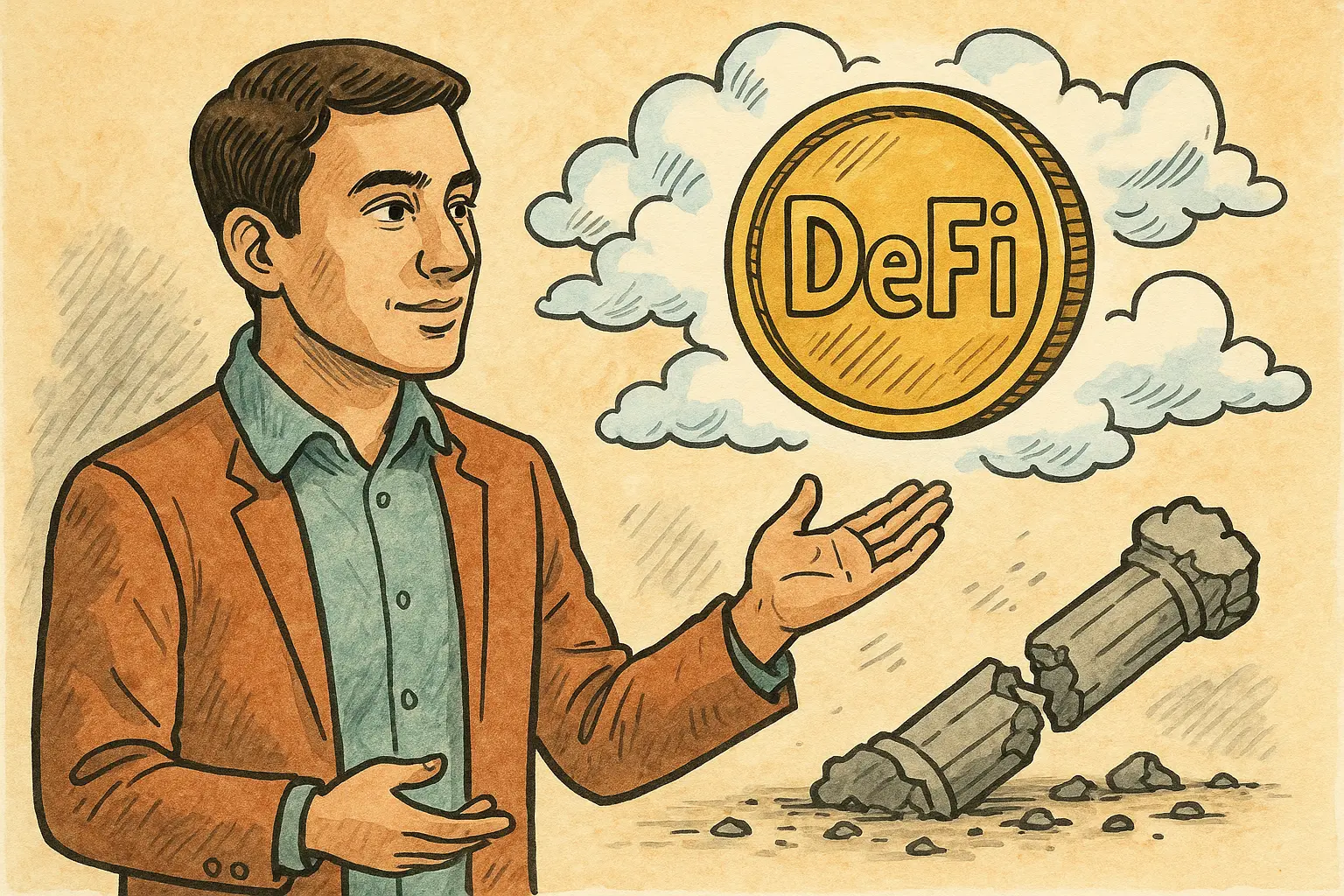
Dragonfly Managing Partner Haseeb posted on X on April 21 to respond to the market’s pessimism stemming from recent DeFi security incidents. He said that DeFi has made improvements following the Terra collapse, the failed auction process during the 2020 Black Friday, and the 2022 stETH depegging, stressing that DeFi won’t disappear and that the discussion around how to improve is itself part of DeFi’s progress.
Haseeb’s Core Argument: Failure Doesn’t Mean It’s Fatal
Haseeb’s case is built on a key distinction: repeated local failures do not equal a systemic collapse. He believes that each major failure in DeFi triggers discussions and improvements at the mechanism level. The Terra collapse drove a re-examination of stablecoin design and collateralization requirements; the auction mechanism failure of 2020’s “Black Thursday” led multiple protocols to optimize their liquidation processes; and the 2022 stETH depegging pushed improvements in risk assessment for liquidity-staking tokens as collateral.
This pattern indicates that DeFi’s self-correction mechanisms do exist and do operate— even if the cost is repeated, public failures.
A Historical Comparison of DeFi and Traditional Finance: Crises Drive Evolution
Haseeb uses the evolutionary history of traditional finance (TradFi) as an analogy, pointing out that TradFi also gradually matured through a series of crises. The 2008 global financial crisis prompted a major strengthening of Basel III’s capital adequacy standards for banks; the late 1980s U.S. S&L crisis drove reforms to the federal deposit insurance system. A maturing financial system should learn from failures in the first place, rather than judging viability based on “having no failures.”
The core message this analogy points to is that the development stage DeFi is currently in has structural similarities to the historical process TradFi went through on its way to maturity.
A Specific Assessment of Bad Debt at Aave
When addressing the recent event directly, Haseeb singled out Aave: “Aave may take on some bad debt, but it has enough equity to repay it.” This statement emphasizes Aave’s capital adequacy, not a structural vulnerability being attacked— the latter is a problem that needs to be resolved through mechanism improvements, while the former determines whether the system can absorb losses without collapsing. Haseeb believes that this capital buffer capable of absorbing losses is the real-world embodiment of DeFi’s “core is risk avoidance and robustness” argument.
Common Questions
What was the background for Haseeb’s comments?
This post was made after the Kelp DAO LayerZero cross-chain bridge was attacked (losses of over $290 million) and after Drift Protocol was hacked (losses of $285 million). Because Aave saw bad debt related to these issues, its TVL dropped significantly. Some voices in the market expressed concern about DeFi’s long-term viability, and Haseeb’s post is a positive response to this pessimism.
Which historical DeFi failures did Haseeb cite to argue its resilience?
Haseeb mentioned three specific cases: the Terra (LUNA) collapse (2022), the auction mechanism failure of Black Thursday in 2020, and the temporary stETH depegging in the Curve pool in 2022. Each event had raised widespread doubts about DeFi’s viability, but afterward all of them drove improvements to the relevant mechanisms, and DeFi’s overall scale continued to grow after each crisis.
Where is the core of DeFi resilience reflected?
According to Haseeb’s remarks, DeFi resilience has two core dimensions: first, rapid self-correction enabled by transparency— failures are publicly visible on-chain, and community discussion and improvements are immediate; second, the capital buffer design at the protocol level— taking Aave as an example, its reserve mechanism theoretically allows the protocol to absorb bad debt without collapsing, maintaining the system’s overall robustness.
Disclaimer: The information on this page may come from third parties and does not represent the views or opinions of Gate. The content displayed on this page is for reference only and does not constitute any financial, investment, or legal advice. Gate does not guarantee the accuracy or completeness of the information and shall not be liable for any losses arising from the use of this information. Virtual asset investments carry high risks and are subject to significant price volatility. You may lose all of your invested principal. Please fully understand the relevant risks and make prudent decisions based on your own financial situation and risk tolerance. For details, please refer to
Disclaimer.


