


Futures
Access hundreds of perpetual contracts
TradFi
Gold
One platform for global traditional assets
Options
Hot
Trade European-style vanilla options
Unified Account
Maximize your capital efficiency
Demo Trading
Introduction to Futures Trading
Learn the basics of futures trading
Futures Events
Join events to earn rewards
Demo Trading
Use virtual funds to practice risk-free trading
Launch
CandyDrop
Collect candies to earn airdrops
Launchpool
Quick staking, earn potential new tokens
HODLer Airdrop
Hold GT and get massive airdrops for free
Launchpad
Be early to the next big token project
Alpha Points
Trade on-chain assets and earn airdrops
Futures Points
Earn futures points and claim airdrop rewards


More


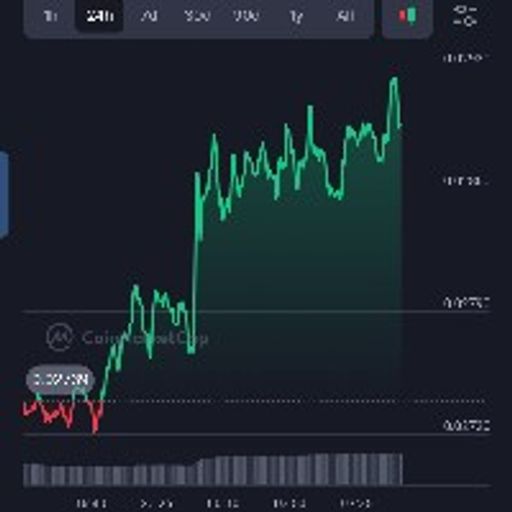



#CryptoMarketBouncesBack
After several sessions of uncertainty and sharp volatility, the cryptocurrency market has once again demonstrated its resilience as prices across major digital assets began to recover. The recent bounce in the market is not just a simple technical rebound; it reflects a deeper combination of macroeconomic shifts, investor sentiment, liquidity flows, and strong structural demand for digital assets. When we analyze the broader market behavior during this recovery phase, it becomes clear that the crypto ecosystem continues to mature and adapt to global financial conditions.
Bitcoin, which remains the dominant force in the crypto market, played the central role in this rebound. After facing selling pressure and consolidation phases, Bitcoin managed to regain strength and attract renewed buying interest near key support zones. Historically, Bitcoin has repeatedly shown that when it stabilizes after corrections, it tends to trigger a broader market recovery. This pattern appears to be repeating again as capital gradually flows back into the market.
Ethereum has also contributed significantly to the recovery momentum. Institutional interest in Ethereum continues to increase due to its role as the backbone of decentralized finance, staking infrastructure, and smart contract ecosystems. The growing attention around Ethereum’s network upgrades, staking participation, and developer activity has strengthened investor confidence. As Ethereum stabilizes, many altcoins that depend on its ecosystem tend to follow the recovery trend.
Another key factor behind the market bounce is liquidity returning to crypto exchanges and derivatives markets. During downturns, leveraged positions are often liquidated, which temporarily suppresses market activity. Once that phase passes and the market finds equilibrium, traders begin to re-enter positions. The recent increase in derivatives trading volume across major exchanges suggests that traders are once again positioning themselves for the next potential move.
From my own observation and experience in the market, rebounds like this often occur after the market goes through a period of excessive fear and pessimism. When sentiment reaches extreme negativity, many weak hands exit the market. This creates an environment where stronger investors and long-term participants begin accumulating assets at discounted levels. Once that accumulation phase progresses, the market naturally begins to recover as selling pressure declines.
In my opinion, the most important aspect of the current bounce is the behavior of institutional capital. Over the past few years, institutional involvement in crypto has grown significantly. Hedge funds, asset managers, and large financial institutions now view digital assets as part of a diversified portfolio strategy. When institutional buyers step in during market dips, it often provides a strong foundation for price recovery.
Another element worth noting is the macroeconomic environment. Global financial markets remain sensitive to interest rate policies, inflation expectations, and liquidity conditions. Whenever there are signs that monetary tightening may slow or liquidity may improve, risk assets like cryptocurrencies tend to react positively. This macro backdrop is one of the silent forces shaping the recent recovery in crypto markets.
Based on my market observation, one pattern that frequently emerges after a rebound is a period of consolidation before the next major move. The market rarely moves in a straight line. Even in bullish environments, temporary pullbacks and sideways phases are common. This is why traders who focus only on short-term price movements sometimes misinterpret healthy consolidations as weakness.
From my perspective, patience and disciplined strategy remain essential during these phases. Instead of chasing sudden price spikes, experienced traders often focus on identifying strong support levels, monitoring liquidity flows, and watching institutional behavior. These indicators tend to provide more reliable signals than emotional reactions to short-term market volatility.
Looking forward, if Bitcoin manages to maintain its stability and gradually push toward higher resistance levels, the broader market could see stronger momentum. Historically, when Bitcoin leads a recovery, altcoins eventually follow with even larger percentage gains. However, the timing of this rotation varies depending on market liquidity and investor sentiment.
In my personal view, the recent bounce serves as a reminder that the crypto market operates in cycles. Corrections, fear-driven selloffs, and sudden recoveries are all part of this evolving financial ecosystem. Investors who understand these cycles and maintain a long-term perspective are often better positioned to navigate the volatility.
The current recovery may not yet mark the final stage of a full bull cycle, but it clearly shows that demand for digital assets remains strong. As blockchain technology continues to evolve, institutional adoption increases, and global awareness of decentralized finance grows, the crypto market is likely to remain one of the most dynamic and transformative sectors in the global financial landscape.