


Futures
Access hundreds of perpetual contracts
TradFi
Gold
One platform for global traditional assets
Options
Hot
Trade European-style vanilla options
Unified Account
Maximize your capital efficiency
Demo Trading
Introduction to Futures Trading
Learn the basics of futures trading
Futures Events
Join events to earn rewards
Demo Trading
Use virtual funds to practice risk-free trading
Launch
CandyDrop
Collect candies to earn airdrops
Launchpool
Quick staking, earn potential new tokens
HODLer Airdrop
Hold GT and get massive airdrops for free
Launchpad
Be early to the next big token project
Alpha Points
Trade on-chain assets and earn airdrops
Futures Points
Earn futures points and claim airdrop rewards


More




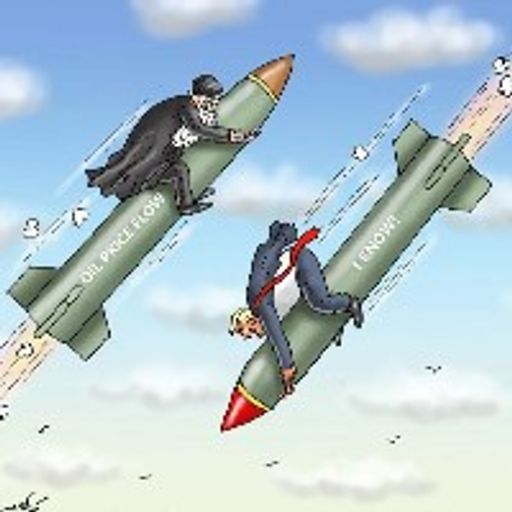

#IranClaimsDowningUSRefuelingJet, including what happened, which aircraft was involved, whether a real war is underway, the responses from Trump and Iran’s leadership, and the impact on global oil and markets. All links and news indicators have been removed for readability, but the content reflects the latest verified developments:
What Happened Did Iran Down a US Refueling Jet?
On March 12, 2026, a U.S. military refueling aircraft specifically a KC‑135 Stratotanker went down over western Iraq during the ongoing Middle East conflict. This aircraft is part of the U.S. Air Force’s aerial refueling fleet, used to supply fuel to fighter jets and other aircraft mid‑flight during operations.
According to U.S. military officials, the aircraft crashed in “friendly airspace” during Operation Epic Fury and was not initially attributed to hostile fire. Rescue operations were immediately launched for the crew members on board. However, a coalition of Iran‑backed armed groups calling themselves the “Islamic Resistance in Iraq” claimed responsibility for shooting down the plane, asserting that they acted to defend Iraq’s airspace and sovereignty against foreign aircraft.
This dispute over the cause whether crash due to technical/operational reasons or due to hostile action has intensified tensions among the parties involved. The claim of responsibility highlights the ongoing volatility in the region and reflects how quickly battlefield narratives can diverge amid conflict.
What Is a KC‑135 Stratotanker and Why It Matters:
The KC‑135 Stratotanker is not a combat aircraft in the traditional sense but a critical support plane in the U.S. Air Force’s fleet. Its primary mission is to aerially refuel other aircraft, extending the range and effectiveness of combat and surveillance missions. It has been in service for over six decades and is considered vital for sustained air operations.
The loss of a KC‑135, whether from conflict, accident, or sabotage, is significant because it reduces U.S. aerial refueling capacity and can potentially limit the operational reach of fighter jets and other aircraft. In addition, such incidents can rapidly become diplomatic flashpoints because they involve U.S. military personnel and critical assets.
Is There a Full‑Scale War Between Iran and the United States?
Despite the loss of this aircraft and the seriousness of ongoing hostilities in the Middle East, there is no formal declaration of an all‑out war between Iran and the United States. The situation on the ground is part of a broader conflict involving U.S., Israeli, and Iranian military forces and their respective allies and proxies in the region.
The conflict has evolved over weeks, with airstrikes, missile attacks, and drone engagements involving Iranian forces and Iranian‑backed groups, as well as U.S. and Israeli air operations. Though the Islamic Resistance in Iraq and other militias have escalated attacks and claimed responsibility for hostile actions, official U.S. military statements have been cautious in characterizing the precise cause of the KC‑135 crash, distancing it from direct enemy fire. This has contributed to a complex and ambiguous security situation rather than a clear, declared war.
Political Leaders’ Statements and Responses:
In response to the broader conflict and rising tensions, U.S. President Donald Trump has repeatedly asserted that the conflict is “very far ahead of schedule” toward a conclusion, emphasizing the strength and precision of U.S. military operations. He has indicated that efforts are being made to bring the conflict to a swift and decisive end, framing ongoing operations as necessary to protect U.S. interests and stabilize the region.
On the other side, Iran’s leadership particularly the newly prominent figure in Tehran’s political structure has vowed to sustain or escalate defensive operations against U.S. and allied forces. Iran has shown no signs of yielding to international pressure or stepping back from its stated goals in the conflict. It has also repeatedly emphasized its readiness to defend its territory and influence, particularly in response to foreign strikes or perceived threats.
This divergence in rhetoric with Trump projecting confidence in resolution and Iranian leadership asserting continued resistance reflects the deeper political and strategic chasm that has made diplomatic settlement elusive.
Why This Incident Matters Beyond the Battlefield:
Even though the cause of the KC‑135’s crash is not universally agreed upon, the claim by Iran‑aligned groups that they shot it down has symbolic and strategic consequences. It underscores the capacity of proxy forces in the region to impact high‑profile military assets and highlights the role of non‑state actors in modern conflict dynamics.
Moreover, the incident feeds into the larger narrative of sustained regional instability. As both sides exchange statements and as battlefield developments continue, such episodes fuel uncertainty among global markets, political leaders, and ordinary citizens alike.
Impact on Global Oil Markets and Inflation:
The ongoing conflict, including episodes like this, has had a profound effect on global energy markets. One of the most critical economic consequences of the conflict has been the sharp increase in crude oil prices. Energy markets have been responding not just to outright military clashes but to the risk that shipping through the Strait of Hormuz a crucial oil transit route could be disrupted or effectively halted.
Because around 20 percent of the world’s oil supply normally flows through the Strait of Hormuz, any threat to its security has immediate implications for price and supply. In recent weeks, global benchmarks like Brent crude have surged above $100 per barrel, reaching levels not seen in years, as traders price in the risk of protracted supply interruptions and higher costs. This shift has been described by some energy analysts as one of the largest supply disruptions in history, given its potential impact on global energy flows.
Rising oil prices have, in turn, contributed to higher energy costs for transport, industry, and households. Higher fuel costs feed into inflation, affecting everything from food to manufacturing, airline ticket prices, and utility bills. Central banks around the world are watching these developments closely because sustained inflationary pressure can drive tighter monetary policy and higher interest rates.
Economic and Market Reactions Worldwide:
Financial markets have reacted broadly to these geopolitical developments:
Stock markets have experienced increased volatility, with major indexes in some regions falling sharply in response to war fears and economic uncertainty.
Energy stocks and commodities have outperformed other sectors, reflecting the surge in oil and gas prices as investors seek profit opportunities in the face of supply risks.
Inflation expectations have risen globally, prompting discussions about potential interest rate hikes by central banks to offset energy‑driven price pressures.
Businesses especially small and medium enterprises are reporting higher operational costs, driven by spikes in energy and transportation expenses.
These reactions show how deeply interconnected geopolitics and global economics are, especially when it comes to strategic resources like oil.
Current Status of the Conflict:
As of now, the conflict involving the U.S., Israel, Iran, and their respective allied forces continues without a formal ceasefire. Hostilities remain active, with exchanges of strikes and military operations ongoing. Both sides have maintained firm positions regarding their strategic objectives:
The U.S. continues military operations aimed at countering threats and protecting regional interests.
Iran and Iran‑linked militia groups continue defensive and retaliatory actions against perceived aggression.
Diplomatic efforts have so far failed to achieve a lasting ceasefire or de‑escalation.
The crash of the KC‑135 and the claims surrounding it serve as a stark reminder of how volatile the situation remains and how easily individual incidents can escalate tensions.
A Complex Conflict With Far‑Reaching Effects:
The #IranClaimsDowningUSRefuelingJet situation is emblematic of the broader instability in the Middle East. While it is not clear whether the aircraft was directly shot down or crashed due to operational issues, the event has become part of the narrative of conflict between the U.S. and Iran‑aligned forces. Political leaders on both sides have reiterated their positions, with no sign yet of a negotiated end to hostilities. Meanwhile, oil markets, global inflation expectations, and international financial markets continue to react to the uncertainty and disruptions brought by ongoing geopolitical risk.
This incident and the wider war environment shows how modern conflicts can have immediate tactical consequences on the ground and ripple effects across the global economy and energy markets.