

Trade
Basic
Futures
Futures
Hundreds of contracts settled in USDT or BTC
TradFi
Gold
Trade global traditional assets with USDT in one place
Options
Hot
Trade European-style vanilla options
Unified Account
Maximize your capital efficiency
Demo Trading
Futures Kickoff
Get prepared for your futures trading
Futures Events
Participate in events to win generous rewards
Demo Trading
Use virtual funds to experience risk-free trading
Earn
Launch
CandyDrop
Collect candies to earn airdrops
Launchpool
Quick staking, earn potential new tokens
HODLer Airdrop
Hold GT and get massive airdrops for free
Launchpad
Be early to the next big token project
Alpha Points
Trade on-chain assets and enjoy airdrop rewards!
Futures Points
Earn futures points and claim airdrop rewards
Investment
Simple Earn
Earn interests with idle tokens
Auto-Invest
Auto-invest on a regular basis
Dual Investment
Buy low and sell high to take profits from price fluctuations
Soft Staking
Earn rewards with flexible staking
Crypto Loan
0 Fees
Pledge one crypto to borrow another
Lending Center
One-stop lending hub
VIP Wealth Hub
Customized wealth management empowers your assets growth
Private Wealth Management
Customized asset management to grow your digital assets
Quant Fund
Top asset management team helps you profit without hassle
Staking
Stake cryptos to earn in PoS products
Smart Leverage
New
No forced liquidation before maturity, worry-free leveraged gains
GUSD Minting
Use USDT/USDC to mint GUSD for treasury-level yields

More




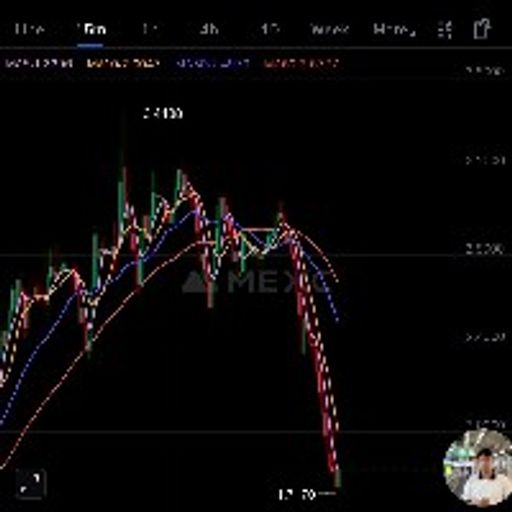


Mastering the Inverted Cup and Handle Pattern for Bearish Reversals
The inverted cup and handle pattern stands as one of the most reliable bearish reversal signals in technical analysis. Unlike its bullish counterpart, this formation appears at the peak of an uptrend and signals a transition toward selling pressure. Traders who recognize this pattern early can position themselves advantageously before the market shifts direction. Understanding its mechanics, formation stages, and practical application can significantly enhance risk management and trading decisions.
Understanding the Formation Process
The inverted cup and handle pattern develops through three distinct phases that paint a clear picture of market momentum reversal. In the first stage, price action reflects the end of a strong uptrend. The market rises to a peak, then experiences a sharp decline, creating what appears as an inverted U-shape. For example, price might advance from $100 to a summit, then fall back to $70, establishing the top of the “cup” formation.
Following this decline, the second phase begins with a recovery bounce. The price rebounds upward but with noticeably weaker momentum than the initial rally. Continuing the previous example, the price might recover to $95, but this rebound fails to breach the earlier peak. This is the critical distinction: the recovery creates what traders call the “handle,” and this handle must remain below the cup’s rim. The price $95 represents the handle level in our scenario.
The third and most significant phase occurs when price penetrates the support level established by the handle. This downward breakout signals the reversal is confirmed. The price drops through the $95 level and continues lower—perhaps to $85, $80, or beyond. This decisive break below the handle marks the transition from reversal signal to active bearish movement, making it the trigger point for executing sell strategies.
Trading Strategy and Entry Points
Profiting from the inverted cup and handle pattern requires precise timing and strategic positioning. The optimal entry point emerges when price breaks below the support level created by the handle. This breakout should ideally occur with elevated trading volume, which serves as confirmation that selling pressure has genuine market participation behind it. Volume acts as a validator—breakouts accompanied by declining volume are considerably weaker and more prone to false signals.
Once the breakout is confirmed, traders can calculate the profit target using a straightforward formula. Measure the vertical distance from the cup’s peak to its bottom (the depth of the decline), then subtract this distance from the breakout point. If the cup drops $30 (from $100 to $70), and the breakout occurs at $95, the target would be approximately $65. This methodology provides a structured approach to risk-reward planning.
Risk Management and Confirmation Signals
Implementing strong risk management separates successful traders from those who experience significant drawdowns. The stop-loss order should be positioned just above the handle level. Using our example, if the handle sits at $95, the stop-loss would be placed at $96 or slightly higher, ensuring that if price reverses prematurely, losses remain controlled and defined.
Confirmation signals enhance the reliability of the inverted cup and handle pattern significantly. Traders should not enter based solely on price structure; instead, corroborate the formation with additional indicators. The Relative Strength Index (RSI) should show weakening momentum at the handle stage. Moving averages can be analyzed to verify that shorter-term averages are crossing below longer-term ones, reinforcing the bearish bias. These layered confirmations reduce the likelihood of false breakouts and increase the probability of successful trades.
Practical Application Across Timeframes
The inverted cup and handle pattern demonstrates remarkable consistency across all trading timeframes. Whether analyzing hourly, daily, or weekly charts, the core principles remain constant. However, pattern reliability tends to strengthen on longer timeframes. A daily or weekly inverted cup and handle carries greater significance than an hourly version because it reflects deeper market positioning and institutional participation. Traders should adapt their position sizing and stop-loss placement based on the timeframe being analyzed, with longer-term patterns warranting larger positions given their more substantial reversals.
The inverted cup and handle pattern represents a powerful technical tool for anticipating bearish reversals before they fully materialize. By mastering its formation stages, recognizing the critical breakout moment, and applying disciplined risk management alongside indicator confirmation, traders can transform this pattern into a consistent source of trading edge.