

Trade
Basic
Futures
Futures
Hundreds of contracts settled in USDT or BTC
TradFi
Gold
Trade global traditional assets with USDT in one place
Options
Hot
Trade European-style vanilla options
Unified Account
Maximize your capital efficiency
Demo Trading
Futures Kickoff
Get prepared for your futures trading
Futures Events
Participate in events to win generous rewards
Demo Trading
Use virtual funds to experience risk-free trading
Earn
Launch
CandyDrop
Collect candies to earn airdrops
Launchpool
Quick staking, earn potential new tokens
HODLer Airdrop
Hold GT and get massive airdrops for free
Launchpad
Be early to the next big token project
Alpha Points
Trade on-chain assets and enjoy airdrop rewards!
Futures Points
Earn futures points and claim airdrop rewards
Investment
Simple Earn
Earn interests with idle tokens
Auto-Invest
Auto-invest on a regular basis
Dual Investment
Buy low and sell high to take profits from price fluctuations
Soft Staking
Earn rewards with flexible staking
Crypto Loan
0 Fees
Pledge one crypto to borrow another
Lending Center
One-stop lending hub
VIP Wealth Hub
Customized wealth management empowers your assets growth
Private Wealth Management
Customized asset management to grow your digital assets
Quant Fund
Top asset management team helps you profit without hassle
Staking
Stake cryptos to earn in PoS products
Smart Leverage
New
No forced liquidation before maturity, worry-free leveraged gains
GUSD Minting
Use USDT/USDC to mint GUSD for treasury-level yields

More





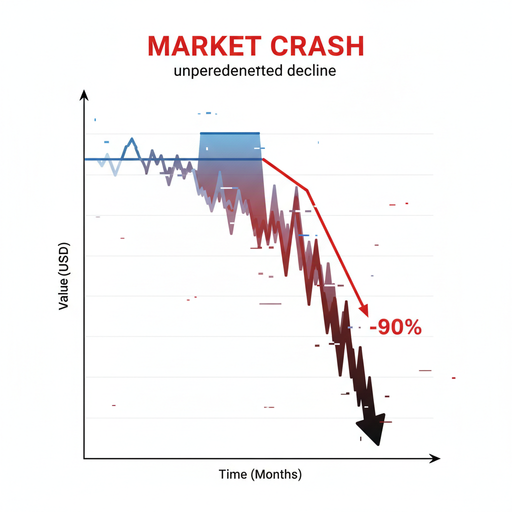
The Way of Simplicity: In trading, the simpler the approach, the more profitable you become.
Embrace straightforward strategies, avoid unnecessary complexity, and focus on clear, effective methods to maximize your gains in the market.
Most traders have experienced this: staring at a screen full of information, memorizing a bunch of trading rules and strategies, rushing to chase gains and cut losses, busy spinning in circles, while their accounts grow increasingly亏损. They always think it’s because their “techniques” aren’t good enough, so they desperately seek new skills and methods, only to realize after hitting a wall that the highest level of trading is never about perfecting techniques, but about reaching a point where “techniques are exhausted” and letting the “way” naturally grow. The saying “technique exhausted, the way emerges” doesn’t mean abandoning skills, but turning skills into instinct, allowing the mind to command the market, ultimately finding calmness amid the ups and downs.
The “technique” in trading is the foundation of entry and also an obsession many can’t let go of.
When newcomers enter the market, who doesn’t hold the hope of “finding a secret trick to make steady money”? They fill their screens with various indicators, patterns, and strategies, studying different models late into the night, believing that mastering these will enable precise predictions of rises and falls. It’s like a novice cook obsessed with knife skills and heat control, forgetting that the core of cooking is ingredients and seasoning. Techniques are tools, like a chef’s knife—some can create delicious home-cooked dishes, others burn even greens; similarly, some can profit from trading based on the 5-day moving average, while others get caught repeatedly by ignoring volume. Those obsessed with techniques always blame losses on “not having advanced enough skills,” constantly changing methods and chasing new tricks, but the more they learn, the more chaotic they become, and the more anxious they feel. Today they make money on quick trades, tomorrow they follow trends, and just when they think they’ve figured out a pattern, the market changes and it fails again.
It’s not that techniques are useless, but that they are often treated as everything, forgetting the most critical aspect of trading: understanding the big picture—when to buy, how much to buy, what to do when losing, how to sell when profitable.
At the end of technique is the realization that all skills have boundaries; the market always has unpredictable fluctuations. Relying solely on technicals can’t sustain long-term profits. At this point, one begins to let go of the obsession with “perfect skills,” learning to simplify—this is the beginning of “technique exhausted” and the prelude to “the way” emerging.
“Technique exhausted” doesn’t mean discarding all skills but boiling complex techniques down into simple rules.
I’ve seen many veteran traders who, after years, no longer have flashy indicators on their screens—only a moving average, a volume, and discipline. Their trading strategy is so simple it can be summarized in one sentence: “If the moving average is upward and volume breaks out, buy; if it breaks below the moving average, sell; stop-loss per trade no more than 1%.” They are not incapable of complex analysis, but through countless wins and losses, they understand that complicated methods can never be reliably replicated, only simple rules can fight the chaos of the market.
This “technique exhausted” stage is about active choice—abandon vague opportunities, only trade what you understand; discard conflicting indicators, stick to verified signals; no longer try to catch every rise and fall, but learn to “do what should be done and refrain from what shouldn’t.”
Like a fisherman, they no longer chase every fish but choose a good spot, guard a nest, use fixed bait, and wait for their own catch.
Trading rules don’t need to be many or complicated—just a logical closed loop that suits your personality and capacity is enough.
At this stage, techniques are no longer just catchy phrases but become ingrained habits—seeing signals, the hands naturally respond without hesitation or second-guessing.
The “way” that emerges is a deep respect for the market, mastery over oneself, and a mindset of following the trend.
When techniques are no longer an obsession and rules become instinctive, you’ll realize that the core of trading is never about beating the market but about understanding and accepting it—ultimately coexisting with the market.
The so-called “way” isn’t some mysterious principle; it’s insights forged from the daily grind of trading: understanding that “profit and loss come from the same source,” accepting losses as part of the cost, no longer denying a system after a single stop-loss; realizing that “slow is fast,” giving up the fantasy of overnight riches, and accumulating small, repeatable profits to compound over time; practicing “unity of knowledge and action,” where thoughts and actions are aligned with rules—no greed-driven holding, no fear-driven premature exits.
Traders who follow the “way” are less anxious when watching the market, more composed.
The rise and fall of candlesticks no longer feel like a roller coaster that stirs emotions but are as clear as traffic lights: red means stop, green means go—no emotional fluctuations, only mechanical execution.
They no longer rejoice over a limit-up or lament a loss, knowing that individual trades are insignificant; long-term stability is what truly matters.
Like a farmer observing the weather—sunny days for drying grain, rainy days for repairing storage—they don’t rejoice excessively in good weather nor panic in bad; everything follows natural laws, and they simply go with the flow.
More importantly, behind the “way” is a deep self-awareness.
In the end, trading is never about IQ or skills; it’s about temperament.
Market fluctuations are fundamentally a battle of human nature—greed, fear, luck, obsession—these weaknesses are the greatest enemies in trading.
In the stage of technique, we learn to fight the market; in the stage of “the way,” we learn to fight ourselves.
Learn to control your desires, face your fears directly, stay calm in temptation, and remain rational in setbacks.
When you can control your hands and your mind, let rules override instincts, and reason conquer emotion, that is the true essence of “the way.”
The journey of technique exhausted and “the way” emerging is never a sudden enlightenment but a step-by-step cultivation.
From obsessing over skills to letting go of attachments, from chaos to simplicity, from emotional trading to rule-based execution—each step involves countless wins and losses, reflections, and self-revolutions.
There are no shortcuts or secret tricks—only through battling in the market, learning from practical experience, turning every loss into growth nutrients, and viewing every profit as a validation of the rules.
Ultimately, the principle of “technique exhausted, the way emerges” is closely related to the principles of life.
When young, we always want to learn more skills, earn more money, fight and compete with all our might—this is obsession with technique.
With age, we realize that the true meaning of life isn’t about how much we possess but about making choices, letting go, and maintaining our rhythm—this is enlightenment.
The same applies to trading: when you reach the point of technique exhaustion, let go of all attachments and restlessness, stick to simple rules, keep a peaceful mind, follow the trend, and act within your capacity.
At this moment, profits are no longer the goal but a natural outcome.
“Technique exhausted, the way emerges” is about this: a mind free of distractions, actions within rules, market rises and falls, and I remain calm.
[Taoguba]