Polkadot Parachains are independent blockchains connected to the Relay Chain, capable of processing transactions in parallel under a shared security model while enabling cross-chain communication across the Polkadot network. Compared to traditional single-chain blockchains, Parachains offer greater scalability, lower security setup costs, and stronger interoperability. They are a core component of Polkadot’s multi-chain architecture and a key foundation for achieving cross-chain scalability.
2026-04-20 08:11:38
Polkadot (DOT) is a Layer0 blockchain network centered on cross chain interoperability. Through its Relay Chain and Parachain architecture, it enables data and assets to move across different blockchains. The DOT token is mainly used for network staking, governance voting, and parachain slot auctions. Compared with the traditional single chain model, Polkadot offers stronger scalability and a shared security framework, though it also faces challenges such as ecosystem competition and development complexity.
2026-04-20 08:05:40
In April 2026, the KelpDAO Bridge was attacked, with the attacker using abnormally minted rsETH as collateral on Aave to borrow a significant amount of WETH. This led to roughly $200 million in bad debt discussions and liquidity stress. This article provides an objective review of the event sequence and structural takeaways from the perspectives of mechanism, marketplace response, and governance framework.
2026-04-20 08:00:15
Through the MCP protocol, multi-chain data aggregation, and a Data Liquidity mechanism, SkyAI provides AI Agents with efficient on-chain data services. This article takes an in depth look at SkyAI’s technical architecture and its central role in AI + Web3 data infrastructure.
2026-04-20 07:54:24
SkyAI and Chainbase are both AI-driven Web3 data infrastructure protocols, but their core positioning differs. Chainbase focuses on building a multi-chain data indexing and standardized data service layer, while SkyAI goes further by introducing the MCP protocol and a Data Liquidity mechanism, aiming to provide AI Agents with callable and liquid on-chain data resources. In simple terms, Chainbase solves the problem of “data accessibility,” whereas SkyAI focuses on “data interactivity and circulation.” As AI Agents and automated Web3 applications continue to evolve, the two represent distinct development paths within the AI data infrastructure landscape.
2026-04-20 07:53:11
From ChatGPT to Physical AI, artificial intelligence is evolving from cognitive systems to real-world execution systems. This article breaks down the a16z framework, exploring how robotics, auto experimentation, and data flywheels are reshaping the AI value chain for its next stage.
2026-04-20 07:51:32
SkyAI (SKYAI) is a protocol focused on integrating AI with Web3 data infrastructure. By extending the MCP (Model Context Protocol), enabling multi chain data aggregation, and introducing a data liquidity mechanism, it delivers efficient on-chain data services for AI agents and decentralized applications. Its core goal is to transform fragmented on-chain data into callable and transferable resources, allowing AI models to better understand and utilize blockchain data. As AI agents and on-chain automation rapidly evolve, SkyAI is emerging as a key player in the AI and Web3 data infrastructure space.
2026-04-20 07:37:44
USDC is a USD stablecoin issued by Circle, maintaining price stability with a 1:1 USD reserve backing. It is widely adopted for cryptocurrency trading, DeFi lending, cross-border payments, and on-chain USD settlements. Recognized as one of the most important compliant stablecoins in the market, USDC stands out for its high transparency, robust liquidity, and Multichain Support, while also facing challenges such as depegging risk, regulatory risk, and reserve risk. As on-chain finance continues to evolve, USDC is steadily establishing itself as essential USD infrastructure within the Web3 World.
2026-04-20 04:10:47
USDC maintains its peg to the US dollar through a 1:1 reserve backing mechanism. When users deposit US dollars, Circle mints an equivalent amount of USDC on-chain. Conversely, when users redeem US dollars, the corresponding USDC is burned. This issuance and burn mechanism ensures that USDC’s circulation matches its reserve assets, establishing it as a critical stable asset for crypto trading, DeFi lending, and on-chain payments.
2026-04-20 04:10:10
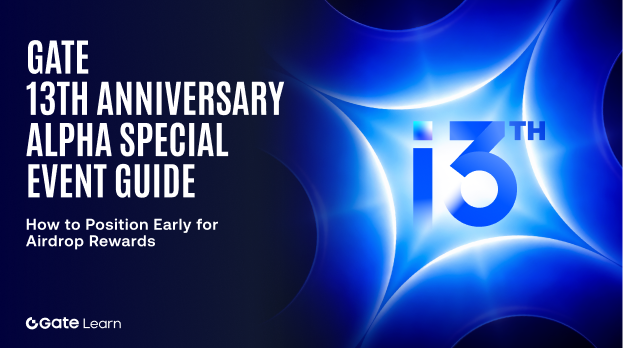
Gate is launching its 13th Anniversary Alpha Special Event, spotlighting Hot token trading opportunities in the Marketplace. This event integrates mystery box lucky draws and airdrop reward mechanisms, allowing users to unlock multi-level rewards step by step by participating in selected Hot token trades. Participants will benefit from both instant reward distribution and the experience of accumulating Returns.
2026-04-20 03:35:21
Odaily News On April 18th, Gate officially opened its outdoor cross-border special exhibition "Racing the Future" at the K11 MUSEA Harbourfront Promenade in Hong Kong's Victoria Harbour.
2026-04-20 03:08:42
Gate is hosting an F1 Red Bull Racing car display parade in Hong Kong, with the display cars appearing around Victoria Harbour and proceeding along a designated route, attracting market and public attention.
2026-04-20 03:08:30
Pendle and Notional are two leading protocols in the DeFi fixed return sector, each utilizing distinct mechanisms for generating returns. Pendle offers fixed return and yield trading features through its PT and YT yield-splitting model, while Notional enables users to lock in borrowing rates via a fixed interest rate lending marketplace. Comparatively, Pendle is better suited for return asset management and interest rate trading, whereas Notional specializes in fixed interest rate lending scenarios. Together, they advance the DeFi fixed return market, each distinguished by unique approaches to product structure, liquidity design, and target user segments.
2026-04-20 02:00:11
Pendle divides yield assets into PT (Principal Token) and YT (Yield Token), offering users a range of strategies such as fixed return, enhanced return, and return risk management. Users can lock in fixed returns by purchasing discounted PT, speculate on future ROI growth by buying YT, or secure current returns by selling YT. With these mechanisms, Pendle creates a versatile on-chain return marketplace, empowering users to tailor return strategies according to their risk appetite and achieve more efficient return management within DeFi.
2026-04-20 01:57:19
Pendle delivers fixed income by dividing yield-bearing assets into Principal Tokens (PT) and Yield Tokens (YT). Users may buy discounted PT and redeem them at face value upon expiry, securing a fixed ROI. YT, on the other hand, represents future return rights and is freely tradable. This yield separation mechanism enables Pendle to create an on-chain interest rate marketplace, making fixed income, yield speculation, and interest rate risk management possible within DeFi. As a result, Pendle serves as a foundational piece of infrastructure for the DeFi fixed income market.
2026-04-20 01:56:23