Why Grayscale Research Believes Bitcoin Could Reach a New All-Time High in 2026

Since early October 2025, Bitcoin has seen an approximately 32% decline, sparking investor concerns that a bear market may have arrived. Traditionally, Bitcoin’s price has been thought to follow a four-year cycle: halving, bull market, major correction, and then bear market. However, Grayscale Research’s latest report makes it clear that this model is losing its effectiveness. The firm now suggests that Bitcoin could reach new highs in 2026.
Why Is the “Four-Year Cycle Theory” Breaking Down?
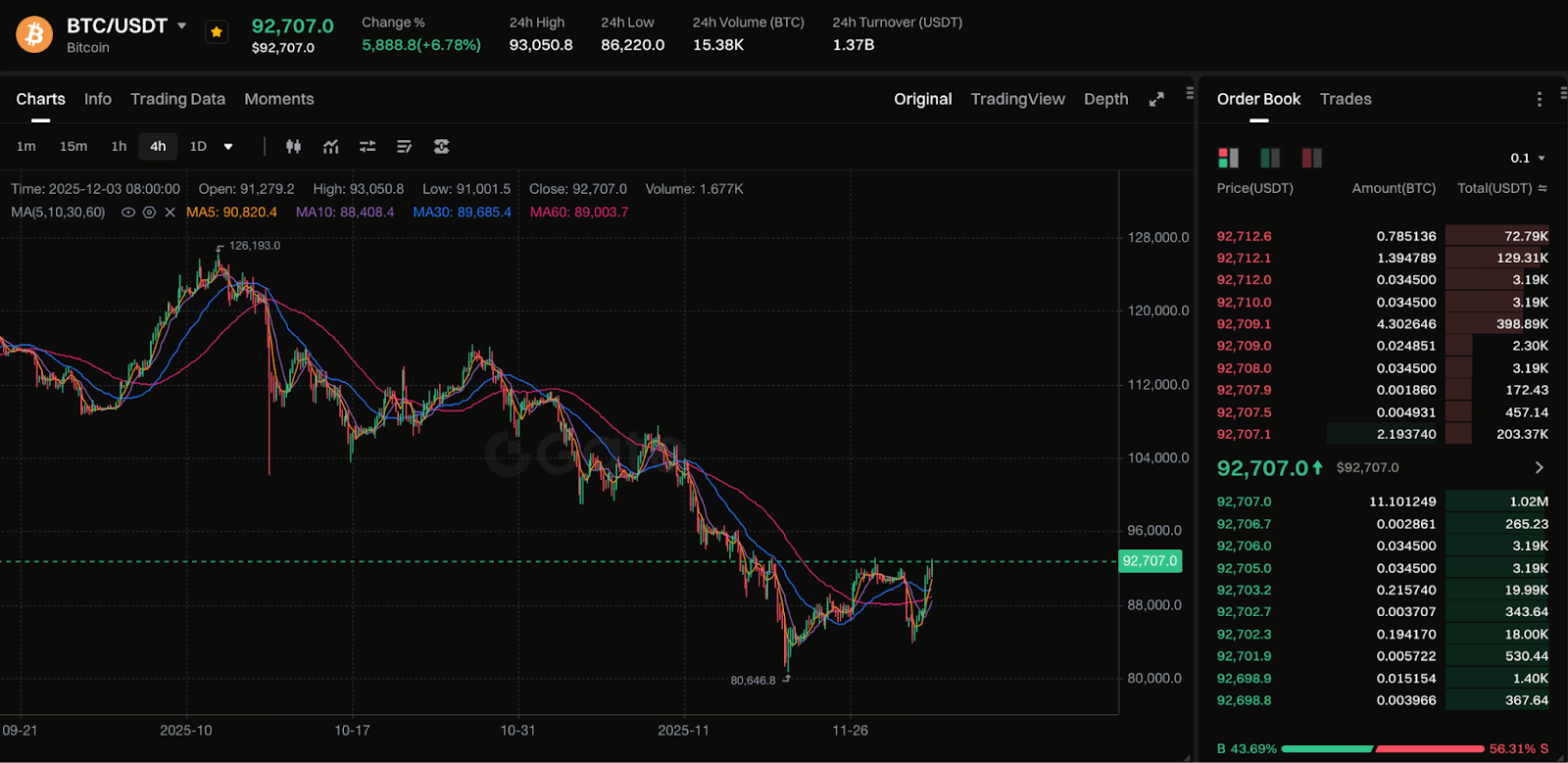
Chart: https://www.gate.com/trade/BTC_USDT
Historically, Bitcoin’s bull and bear phases were seen as closely tracking the halving cycle. Grayscale points out that this time, the market’s structure is fundamentally different. Notably, Bitcoin has not shown the classic “parabolic surge”—that is, a sharp, rapid rise followed by a steep crash—over the past year. Without this hallmark, the market has not entered the “mania phase” described in traditional cycle models, so the traditional model is no longer applicable.
Additionally, the market structure has fundamentally changed. Past bull markets were mainly driven by retail spot buying. In this cycle, however, institutional capital—flowing steadily through ETPs (Exchange-Traded Products) and DATs (Digital Asset Trusts)—has taken the lead. This shift in market participants has made Bitcoin’s price action more stable and fundamentally changed how the market operates.
Key Traits of This Bull Market: Institutional Leadership Over Retail Mania
Institutional involvement has a far-reaching impact. Unlike the sharp swings fueled by retail sentiment, institutional capital brings scale, stability, and longer holding periods. This steady inflow has fortified Bitcoin’s market bottom and provided stronger price support.
At the same time, the macroeconomic and policy environment is also favorable. Expectations of prolonged low global interest rates, progress in US crypto legislation, and rising digital asset adoption all serve as potential catalysts. Compared to the last cycle, the current drivers of Bitcoin’s rally are more systemic and structural, rather than short-term, sentiment-driven capital.
Macro Environment Is Removing the Ceiling for Digital Assets
Grayscale notes that if major economies continue to ease monetary policy—with ongoing rate cuts, a falling US Dollar Index, and clearer regulatory frameworks—Bitcoin will face less competition from traditional financial assets. At the same time, more institutions are adding Bitcoin to their portfolios, treating it as “digital gold” or a potential safe-haven asset. Growing demand for long-term investment is a key driver of Bitcoin’s revaluation.
Corrections Are Not Bear Market Signals—They’re a Normal Part of Bull Markets
While Bitcoin’s recent 30%+ correction may seem dramatic, such moves are common in past bull markets. History shows that mid-cycle corrections usually reflect profit-taking and capital rotation rather than a reversal of the broader trend.
Selling in response to short-term volatility may result in missing subsequent gains.
How Should Investors View the Current Market?
From a medium- and long-term perspective, as long as institutional inflows continue, the macro backdrop improves, and policy risks decline, Bitcoin reaching a new all-time high in 2026 is well within reach.
That said, crypto’s inherent volatility means no forecast is certain. A sounder approach is to use gradual allocation and long-term holding, avoid chasing rallies, stay calm during short-term turbulence and manage overall portfolio risk appropriately.
Conclusion: Structural Logic Is Redefining Bitcoin
Grayscale’s latest analysis presents a new framework, moving beyond the traditional four-year cycle. It reexamines Bitcoin’s future in light of structural capital, macro policy, and institutional participation. If you believe in the long-term potential of digital assets, now may be a critical time for careful evaluation and strategic positioning.
Share
Content
Why Is the “Four-Year Cycle Theory” Breaking Down?
Key Traits of This Bull Market: Institutional Leadership Over Retail Mania
Macro Environment Is Removing the Ceiling for Digital Assets
Corrections Are Not Bear Market Signals—They’re a Normal Part of Bull Markets
How Should Investors View the Current Market?
Conclusion: Structural Logic Is Redefining Bitcoin


Related Articles

2025 BTC Price Prediction: BTC Trend Forecast Based on Technical and Macroeconomic Data

Pi Coin Transaction Guide: How to Transfer to Gate.com

Flare Crypto Explained: What Is Flare Network and Why It Matters in 2025

How to Use a Crypto Whale Tracker: Top Tool Recommendation for 2025 to Follow Whale Moves

What is N2: An AI-Driven Layer 2 Solution