











SoominStar

vip
Age 1.2 Year
Peak Tier 1
No content yet
Pin
Gate 13th Anniversary is now live! Complete global boarding tasks to unlock exclusive tickets, join daily draws to win physical gold tickets, and enjoy daily rewards from the mega prize pool. https://www.gate.com/activities/13th-anniversary?ref_type=165&utm_cmp=iymOULZt&ref=gate-KatjjkaK
post-image
  • Reward
  • 13
  • Repost
  • Share
Eudora柒:
Just charge it 👊
View More
I've joined WCTC S8. Join me now to compete and share 8,000,000 USDT. Trade beyond limits and conquer the future. https://www.gate.com/competition/wctc-s8?page=teamCompetition&ref=UFRFAQ0M&ref_type=165&teamId=52468&utm_cmp=qK2FsaYI
post-image
  • Reward
  • 1
  • Repost
  • Share
HighAmbition:
good information 👍👍
#JaneStreetBets$7BonCoreWeave There are moments in financial markets where a single headline doesn’t just describe a transaction—it reveals a deeper shift in how capital, technology, and intelligence systems are converging. #JaneStreetBets$7BonCoreWeave feels like one of those moments. On the surface, it looks like a large-scale bet by a sophisticated trading firm on a high-growth infrastructure company. But underneath, it reflects something much broader: the increasing fusion of quantitative capital, AI infrastructure demand, and the new competitive geometry of the digital economy.
When I fir
post-image
  • Reward
  • 1
  • Repost
  • Share
HighAmbition:
good information 👍
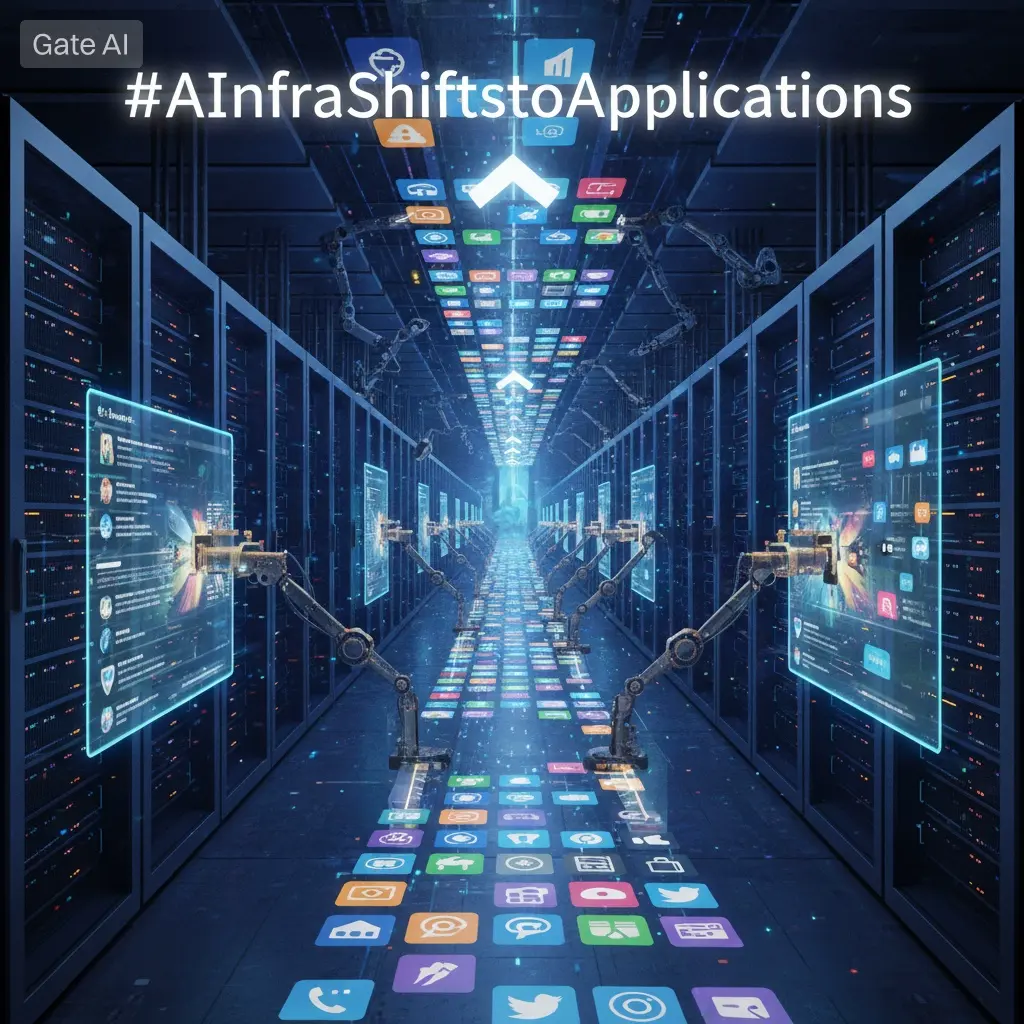
#AIInfraShiftstoApplications The phrase #AIInfraShiftstoApplications might look like a simple tech narrative at first glance, but it actually represents one of the most important structural transitions happening in the global technology economy right now. It is not just about artificial intelligence becoming more advanced—it is about where the real economic value of AI is beginning to concentrate.
For the last several years, the dominant story in AI has been infrastructure. That meant massive investment in GPUs, data centers, cloud platforms, high-performance computing clusters, and the supply
post-image
  • Reward
  • 1
  • Repost
  • Share
HighAmbition:
good information 👍👍
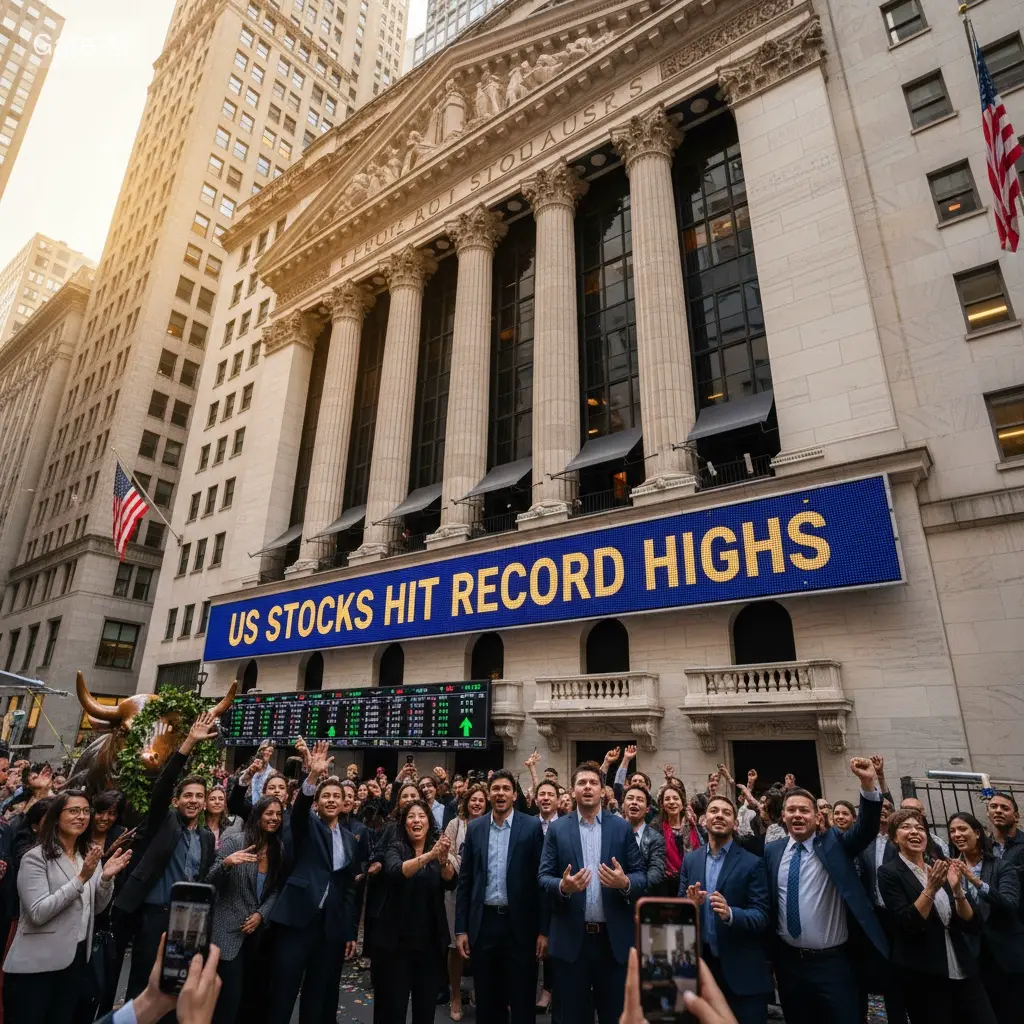
#USStocksHitRecordHighs When you see a headline like #USStocksHitRecordHighs, it sounds simple on the surface—markets are up, confidence is strong, and investors are celebrating new peaks. But underneath that simplicity is a far more layered reality. Record highs are never just about “good news.” They are about liquidity, expectations, positioning, and sometimes even contradiction. Because in modern markets, prices don’t just reflect what is happening—they reflect what people believe will happen under different future scenarios.
What makes this moment interesting is not only that stocks are at
post-image
  • Reward
  • 1
  • Repost
  • Share
HighAmbition:
good information 👍
#WCTCTradingChallengeShare8MUSDT In today’s market environment, very few things reveal the true psychology of traders as clearly as structured trading competitions with high prize pools. #WCTCTradingChallengeShare8MUSDT is not just a hashtag about a trading event—it represents a microcosm of how modern speculative ecosystems function: fast incentives, aggressive participation, short-term volatility bursts, and a constant search for edge in an increasingly crowded field.
What makes trading challenges like this interesting is that they temporarily reshape market behavior. Under normal conditions
post-image
post-image
  • Reward
  • 1
  • Repost
  • Share
HighAmbition:
good information 👍👍
#US-IranTalksVSTroopBuildup There are moments in global markets where one headline stops being just news and starts becoming a pressure point for everything else—currencies, commodities, equities, crypto, even sentiment across retail traders. The current tension captured in #US-IranTalksVSTroopBuildup feels exactly like one of those moments where diplomacy and military signaling are not just political tools anymore, but direct inputs into global pricing behavior.
What stands out to me first is how quickly markets now react to signals instead of events. In earlier cycles, traders waited for con
post-image
  • Reward
  • 1
  • Repost
  • Share
HighAmbition:
good information 👍
#KalshiFacesNevadaRegulatoryClash ⚖️🔥
Regulation is often the quiet force behind the loudest market moves. While traders usually focus on charts, price action, and narratives, the real structural direction of any emerging industry is ultimately shaped by legal frameworks. The ongoing tension between prediction markets like Kalshi and state-level regulators such as Nevada is a perfect example of how innovation and regulation constantly collide in the early stages of new financial systems. And in my view, this is not just a legal dispute—it is a defining moment for how future information market
post-image
  • Reward
  • 2
  • Repost
  • Share
HighAmbition:
Just charge forward 👊
View More
#AnthropicvsOpenAIHeatsUp 🤖🔥
The competition between AI giants is no longer just a tech headline—it’s becoming one of the most important narratives shaping the future of both artificial intelligence and the broader digital economy. When we talk about this rivalry, we’re not just comparing two companies; we’re looking at two different philosophies, two different approaches to scaling intelligence, and two different visions for how AI will integrate into everyday life. And from my perspective, this battle is still in its early stages, which makes it even more important to pay attention now rat
post-image
  • Reward
  • 5
  • Repost
  • Share
Yusfirah:
2026 GOGOGO 👊
View More
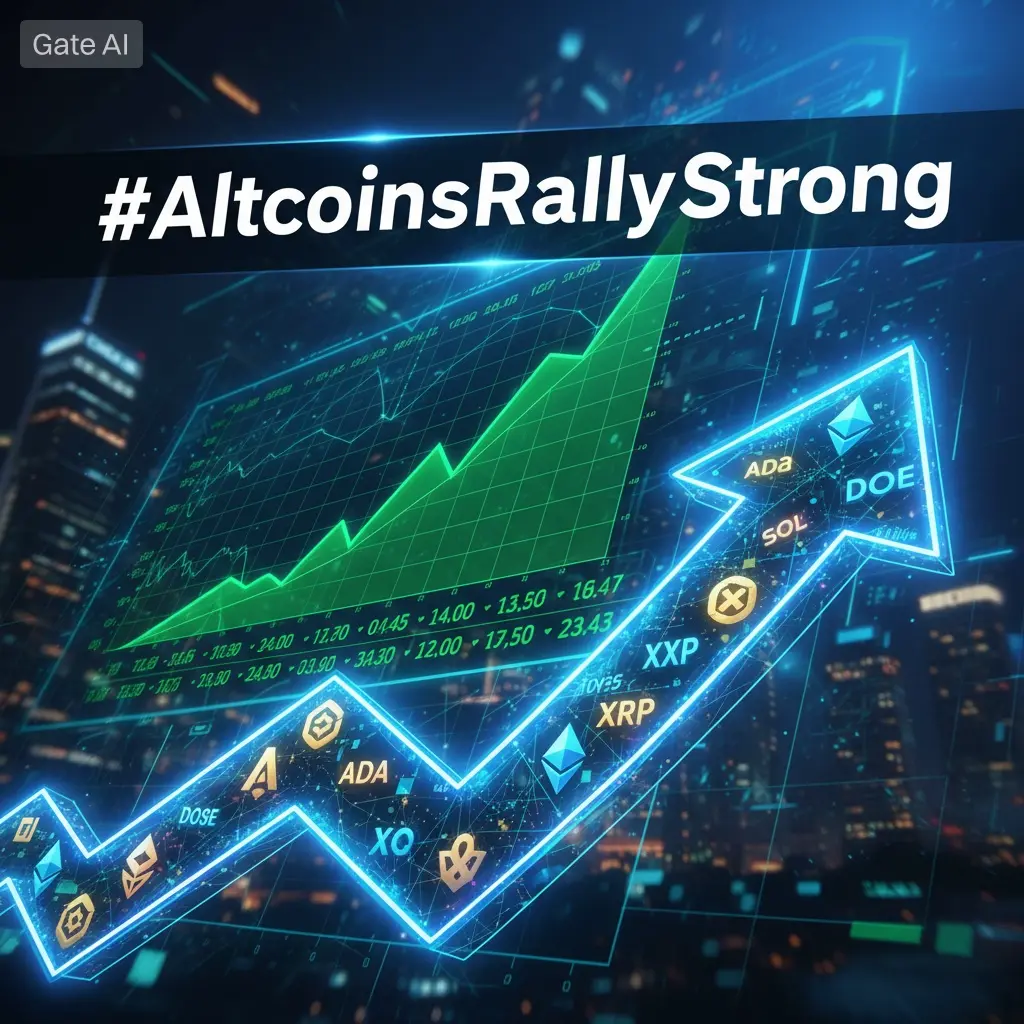
#AltcoinsRallyStrong 📈🔥
The current momentum in altcoins is not just another short-lived spike—it feels like the beginning of a deeper capital rotation that many traders wait for but only a few truly understand. When altcoins start gaining strength, it usually signals a shift in market behavior, where investors move beyond the relative safety of Bitcoin and begin exploring higher-risk, higher-reward opportunities. But this time, the rally carries a different tone. It’s not purely speculative—it’s narrative-backed, sector-driven, and increasingly strategic.
From where I stand, one of the bigg
BTC-2.19%
post-image
  • Reward
  • 1
  • Repost
  • Share
HighAmbition:
Just charge forward 👊
#Gate13thAnniversaryLive 🎉🔥
Anniversaries in crypto are rarely just about celebration—they are checkpoints of survival, evolution, and dominance in one of the most unforgiving industries in the world. When a platform reaches another year, especially in a space as volatile and competitive as crypto, it tells a deeper story: adaptation, resilience, and strategic growth. This is exactly how I see the narrative behind this trend. It’s not just about marking time; it’s about understanding how far the ecosystem has come and where it is heading next.
From my perspective, one of the most underrated
post-image
post-image
post-image
  • Reward
  • 3
  • Repost
  • Share
Yusfirah:
2026 GOGOGO 👊
View More
#GatePreIPOsLaunchesWithSpaceX 🔥
The idea behind this narrative is far bigger than a trending hashtag—it represents a shift in how financial power is being distributed in the digital age. When you combine the concept of Pre-IPO access with a name as powerful and symbolic as SpaceX, it immediately signals one thing: the walls that once separated elite investors from the general public are starting to crack. For decades, early-stage investment opportunities were locked behind closed doors, accessible only to venture capital firms, institutional players, and ultra-high-net-worth individuals. Now
post-image
  • Reward
  • 1
  • Repost
  • Share
HighAmbition:
Just charge forward 👊
#AnthropicvsOpenAIHeatsUp
April 17, 2026 The AI race has quietly transitioned from a product war into a full-scale economic and infrastructure conflict. What appears on the surface as a rivalry between and is, in reality, a deeper shift in how value is created, captured, and sustained in the artificial intelligence economy.
Twelve months ago, the narrative was simple. OpenAI dominated mindshare, distribution, and consumer adoption. It was the default gateway into AI. Anthropic, while respected, was positioned as a technically strong but commercially secondary player.
That narrative has now
GT-1.37%
MAVIA-6.05%
Yusfirah
#AnthropicvsOpenAIHeatsUp
April 17, 2026 The AI race has quietly transitioned from a product war into a full-scale economic and infrastructure conflict. What appears on the surface as a rivalry between and is, in reality, a deeper shift in how value is created, captured, and sustained in the artificial intelligence economy.
Twelve months ago, the narrative was simple. OpenAI dominated mindshare, distribution, and consumer adoption. It was the default gateway into AI. Anthropic, while respected, was positioned as a technically strong but commercially secondary player.
That narrative has now fractured.
Anthropic’s rise is not just about revenue growth — it is about revenue quality. This distinction is critical and often overlooked. Not all revenue is equal. Consumer-driven revenue tends to be volatile, price-sensitive, and heavily dependent on continuous engagement. Enterprise revenue, on the other hand, is contract-based, recurring, and deeply embedded into operational systems.
Anthropic optimized for the latter.
By focusing on high-value enterprise clients — organizations willing to spend millions annually — it built a revenue base that is not only larger but structurally more stable. This explains why its growth appears explosive: it is scaling through concentrated, high-impact relationships rather than mass-market adoption.
At the same time, its product philosophy aligns perfectly with enterprise psychology. Reliability over creativity. Safety over experimentation. Integration over exposure.
This is not accidental. It is strategic alignment.
OpenAI, in contrast, expanded rapidly across multiple fronts — consumer applications, experimental media tools, broad API access, and global brand positioning. This approach created unmatched visibility, but it also introduced fragmentation. When a company tries to lead in every direction, it risks diluting focus in the segments that generate the highest long-term value.
What we are seeing now is a correction of that strategy.
OpenAI’s internal shifts — reducing exposure to uncertain consumer initiatives and reallocating resources toward enterprise — signal recognition of where the real battle is being fought. However, strategic pivots take time, and in fast-moving markets, timing is often more important than intention.
The most critical layer of this competition, however, is infrastructure asymmetry.
OpenAI’s projected compute expansion represents a belief in scale dominance. The assumption is clear: larger models, more compute, and broader deployment will eventually outpace more efficient but smaller-scale systems. If this assumption holds, OpenAI’s long-term position remains strong.
Anthropic, however, is challenging this assumption indirectly.
Instead of competing on absolute scale, it is maximizing output per unit of compute. In other words, it is not trying to win the race by building the biggest engine — it is trying to build the most efficient one.
This introduces a fundamental question for the market:
Will the future of AI be defined by raw computational power, or by optimized, enterprise-aligned performance?
The answer will determine the winner of this cycle.
Another dimension that cannot be ignored is distribution control.
Anthropic’s integration into workplace environments — coding systems, enterprise tools, and productivity platforms — transforms it into embedded infrastructure. Once AI becomes part of daily workflows, it transitions from a tool to a dependency. And dependencies are extremely difficult to replace.
OpenAI still leads in global recognition, but recognition does not guarantee retention. The companies that win in enterprise AI are those that integrate so deeply that switching becomes operationally expensive.
This is where Anthropic is quietly building an advantage.
There is also a geopolitical and institutional layer emerging.
Large-scale contracts, including defense and government partnerships, are no longer just about revenue — they are about influence. Winning these contracts establishes credibility, secures long-term funding, and positions a company as part of national-level infrastructure. The reported intensity of competition in this area suggests that both companies understand the stakes extend far beyond the private sector.
From a market structure perspective, this situation mirrors early-stage competitive shifts seen in other industries, including cloud computing and even crypto infrastructure.
A dominant player builds the initial ecosystem.
A focused competitor identifies inefficiencies and captures high-value segments.
The market then enters a phase of rapid rebalancing.
We are now in that rebalancing phase.
My perspective is not that one company will eliminate the other. Instead, the market is likely to bifurcate:
OpenAI may continue to dominate in scale-driven applications, broad ecosystems, and consumer-facing innovation.
Anthropic may solidify its position as the enterprise-standard layer for reliable, integrated AI systems.
However, the risk for OpenAI is clear: if enterprise dependency shifts too far toward Anthropic, regaining that ground becomes exponentially harder over time.
The risk for Anthropic is equally significant: if it cannot match the pace of compute expansion, it may eventually face limitations in model capability and scalability.
This creates a high-stakes equilibrium.
Final insight
The next phase of this competition will not be decided by model releases or headline features. It will be decided by three core variables:
Control over compute infrastructure
Depth of enterprise integration
Consistency of execution under scale
Everything else is secondary.
From my point of view, this is one of the most important competitive dynamics to watch, not just within AI, but across the entire tech landscape. Because the outcome here will influence capital flows, innovation direction, and even how digital economies — including crypto — evolve in relation to AI infrastructure.
This is no longer a race for attention.
It is a race for control.
And for the first time, the leader is being forced to defend — not expand.
$GT $CAD $MAVIA
repost-content-media
  • Reward
  • 1
  • Repost
  • Share
HighAmbition:
Just charge forward 👊
#US-IranTalksVSTroopBuildup
#美伊局势和谈与增兵博弈
April 17, 2026 Global markets are once again standing at a delicate crossroads where geopolitics and liquidity are colliding. The current situation between the United States and Iran reflects a classic dual-track strategy: diplomacy on the surface, military pressure underneath. While negotiations intensify in Tehran, the parallel troop buildup by the Pentagon signals that this is not a simple peace process — it is a high-stakes leverage game.
The market’s recent reaction, particularly the rally in the S&P 500, suggests that investors are leaning towar
BTC-2.19%
Yusfirah
#US-IranTalksVSTroopBuildup
#美伊局势和谈与增兵博弈
April 17, 2026 Global markets are once again standing at a delicate crossroads where geopolitics and liquidity are colliding. The current situation between the United States and Iran reflects a classic dual-track strategy: diplomacy on the surface, military pressure underneath. While negotiations intensify in Tehran, the parallel troop buildup by the Pentagon signals that this is not a simple peace process — it is a high-stakes leverage game.
The market’s recent reaction, particularly the rally in the S&P 500, suggests that investors are leaning toward a favorable outcome. However, from a strategic perspective, this optimism appears premature and potentially fragile.
1️⃣ Will the US and Iran Compromise or Escalate?
In my view, a temporary compromise is more likely than a full resolution.
Both sides are operating under economic and political constraints:
The US is navigating election-cycle sensitivities and cannot afford a prolonged conflict that disrupts global markets and oil supply chains.
Iran, under sustained sanctions pressure, has strong incentives to negotiate limited relief, particularly if it can retain partial control over uranium enrichment levels.
However, the key issue lies in uranium enrichment limits, which are deeply tied to national sovereignty and long-term strategic security. This makes a complete agreement unlikely in the near term.
What we are more likely to see is:
A short-term de-escalation framework
Partial sanctions relief
Ambiguous technical compromises that allow both sides to claim victory domestically
This is not peace — it is controlled tension.
2️⃣ If Talks Succeed: Correction or Continuation?
Here’s where market psychology becomes critical.
The rally in risk assets indicates that “peace” is already priced in. This creates two possible scenarios:
Scenario A: “Sell the News” Correction
If a deal is announced, markets may initially spike but then correct sharply. Why?
Liquidity-driven rallies often front-run narratives
Once the uncertainty is removed, profit-taking begins
Overextended indices like the S&P 500 become vulnerable to pullbacks
Scenario B: Trend Continuation
If the agreement includes:
Clear long-term de-escalation
Stable oil supply outlook
No hidden geopolitical triggers
Then the market could extend its bullish momentum, especially in equities and crypto.
My View:
I lean toward a short-term correction followed by continuation.
Markets rarely move in straight lines. Even in bullish macro conditions, resets are necessary to sustain long-term growth.
3️⃣ Asset Allocation During This Volatile Period
This is where disciplined strategy matters most. Blind optimism is dangerous in geopolitically sensitive environments.
My approach right now:
1. Maintain Core Exposure (But Reduce Leverage)
Stay invested in strong trends (equities, BTC, major altcoins)
Avoid overleveraged positions — volatility spikes can liquidate even correct trades
2. Increase Cash or Stable Reserves
Keeping 20–30% liquidity allows flexibility to capitalize on sudden dips
3. Hedge Against Uncertainty
Gold and oil often react sharply to Middle East tensions
Short-term hedging strategies can protect portfolios from downside shocks
4. Focus on Reaction, Not Prediction
Markets are currently narrative-driven, not purely data-driven
React to confirmed developments instead of anticipating headlines
Final Perspective
From my standpoint, what we are witnessing is not a clear path toward peace, but a strategic balancing act between diplomacy and deterrence.
The phrase “Fog of War” is more accurate than “Ceasefire Agreement” at this stage.
The market’s current optimism feels like “liquidity-driven confidence” rather than conviction-backed stability. That distinction matters. Because when sentiment shifts, it does so fast — and without warning.
As a trader, I am not positioning for certainty. I am positioning for asymmetry — protecting downside while staying open to upside.
In this environment, survival and adaptability matter more than aggressive conviction.
repost-content-media
  • Reward
  • 1
  • Repost
  • Share
HighAmbition:
Just charge forward 👊
#USStocksHitRecordHighs
The recent breakout of the S&P 500 above the 7,000 level, combined with a historic US Treasury bond buyback operation, reflects a deeper structural shift in global liquidity conditions rather than a simple news-driven rally. On the surface, markets reacted strongly to geopolitical de-escalation following a ceasefire in the Middle East, which immediately reduced energy-related risk premiums and restored investor confidence. However, the speed and intensity of the rally suggest that the real driver is not just sentiment improvement, but a synchronized liquidity and posit
BTC-2.19%
Yusfirah
#USStocksHitRecordHighs
The recent breakout of the S&P 500 above the 7,000 level, combined with a historic US Treasury bond buyback operation, reflects a deeper structural shift in global liquidity conditions rather than a simple news-driven rally. On the surface, markets reacted strongly to geopolitical de-escalation following a ceasefire in the Middle East, which immediately reduced energy-related risk premiums and restored investor confidence. However, the speed and intensity of the rally suggest that the real driver is not just sentiment improvement, but a synchronized liquidity and positioning reset occurring across institutional markets.
When markets correct sharply and then recover in a V-shaped structure, it usually indicates that the initial sell-off was driven more by fear and hedging than by fundamental deterioration. In this case, the earlier 9 percent decline in the S&P 500 was largely fueled by geopolitical uncertainty and defensive positioning across global funds. Once the ceasefire narrative emerged, that entire hedging structure began to unwind rapidly. What followed was not organic buying alone, but forced buying as short positions across futures, ETFs, and volatility hedges became increasingly unsustainable. This type of forced repositioning creates an acceleration effect where each price breakout triggers additional covering, producing a cascading upward move.
At the same time, the Treasury’s large-scale bond buyback operation added a second and more structural layer to the rally. When sovereign institutions remove bonds from circulation, they are effectively altering the supply-demand balance in fixed income markets. This does not just stabilize bond prices; it also releases liquidity that was previously locked in defensive assets. That liquidity does not remain idle. It flows into higher-risk segments of the financial system, particularly equities and, by extension, crypto assets. This is why equity rallies that coincide with liquidity injections tend to be more powerful and more sustained compared to purely sentiment-driven moves.
Another important factor is the volatility regime shift. As uncertainty declined, volatility across equity markets compressed rapidly. This matters because many institutional strategies, including risk parity funds and systematic models, adjust exposure based on volatility levels. When volatility falls, these models automatically increase equity allocation, effectively adding mechanical buying pressure into the market. This creates a feedback loop where rising prices reduce volatility, and lower volatility then fuels additional buying. In such environments, markets often trend more aggressively than fundamentals alone would justify.
From a positioning perspective, hedge funds were heavily skewed toward downside protection before the reversal. Once the market began to recover sharply, these positions turned into liabilities. The result was a wave of short covering that amplified upside momentum. This is why the rally did not occur gradually but instead accelerated in a near-vertical structure once key resistance levels were broken. In modern markets dominated by derivatives and leverage, positioning imbalances often matter more than traditional valuation metrics in the short term.
The broader macro implication of this move is that global risk appetite has re-entered an expansion phase. Historically, when the S&P 500 experiences a strong V-shaped recovery from a geopolitical shock, it signals that investors are willing to re-engage with risk assets despite lingering uncertainty. In previous cycles, similar behavior has often preceded broader multi-asset rallies, where capital begins rotating from defensive instruments into equities, credit, commodities, and eventually digital assets.
This is where crypto becomes relevant. Bitcoin and other digital assets tend to sit at the far end of the risk spectrum in institutional allocation hierarchies. Capital typically flows into equities first, then into higher-beta assets once confidence stabilizes. That is why crypto often lags major equity recoveries by a few weeks. If the current equity momentum continues and liquidity conditions remain supportive, crypto markets usually enter a secondary expansion phase characterized by stronger volatility and faster percentage gains, particularly in altcoins.
However, it is also important to recognize that such rapid recoveries can create fragile market structures. When positioning becomes overcrowded on the long side and volatility remains suppressed, markets become vulnerable to sudden corrections triggered by minor macro shocks or profit-taking waves. This means that while the trend may remain upward in the short term, the path is unlikely to be smooth.
Overall, the current environment reflects a transition from uncertainty-driven correction to liquidity-driven expansion. The combination of geopolitical stabilization, sovereign liquidity operations, forced institutional repositioning, and volatility compression has created conditions for a strong risk-on phase. Whether this evolves into a sustained bull trend or a temporary overshoot will depend on how long liquidity support and risk appetite remain aligned in the coming weeks.
repost-content-media
  • Reward
  • 1
  • Repost
  • Share
HighAmbition:
Just charge forward 👊
#AIInfraShiftstoApplications
The Era of Building Is Ending. The Era of Deployment and Execution Has Begun.
The global AI cycle is undergoing a structural transition that will define the next decade of technology value creation. For the past three years, the dominant narrative was infrastructure—GPUs, data centers, cloud expansion, and compute scaling. That phase created the physical foundation of AI, but it is no longer the primary source of competitive differentiation. In 2026, the center of gravity is shifting decisively from infrastructure accumulation to application-layer monetization and
TAO-4.08%
Yusfirah
#AIInfraShiftstoApplications
The Era of Building Is Ending. The Era of Deployment and Execution Has Begun.
The global AI cycle is undergoing a structural transition that will define the next decade of technology value creation. For the past three years, the dominant narrative was infrastructure—GPUs, data centers, cloud expansion, and compute scaling. That phase created the physical foundation of AI, but it is no longer the primary source of competitive differentiation. In 2026, the center of gravity is shifting decisively from infrastructure accumulation to application-layer monetization and autonomous system deployment. The question is no longer who can build the largest compute stack, but who can convert that compute into scalable, governed, production-grade intelligence embedded directly into economic workflows.
The scale of infrastructure investment has already reached historic proportions. Hyperscalers including Microsoft, Amazon, Alphabet, and Meta are collectively guiding toward nearly $700 billion in AI-related capital expenditure in 2026, overwhelmingly focused on compute infrastructure, networking, and data center expansion. Amazon alone is operating at roughly $200 billion annual capex, explicitly signaling that AI infrastructure is now a core industrial operating layer rather than a discretionary investment cycle. At the macro level, global AI spending is projected to exceed $2.5 trillion in 2026, with more than half still concentrated in infrastructure buildouts. However, this phase represents saturation of supply-side capability rather than expansion of value creation. Once compute becomes abundant, scarcity shifts toward orchestration, integration, and deployment efficiency.
The defining structural shift underway is the rise of agentic AI systems. Gartner projects that nearly 40% of enterprise applications will embed autonomous AI agents by the end of 2026, compared to negligible adoption just two years earlier. This is not incremental feature adoption; it is a redefinition of enterprise software architecture. Venture capital activity confirms this transition, with agentic AI startups raising over $24 billion in 2025 alone, representing a dominant share of multi-year AI venture flows. Capital is no longer betting on model training improvements alone but on systems that can execute multi-step tasks, interact with enterprise tools, and autonomously manage workflows.
Across the enterprise ecosystem, a synchronized shift is already visible. Microsoft is embedding persistent Copilot agents across its productivity stack, transforming static applications into continuous execution environments. AWS is building structured governance layers for agent fleets through Bedrock Agent frameworks, effectively creating an operating system for enterprise AI coordination. Google Cloud is expanding multimodal agent capabilities across its enterprise suite, while Oracle is integrating agentic workflows directly into Fusion applications across finance, HR, and supply chain systems. Meanwhile, Cloud-native ecosystems are evolving toward treating agents as first-class compute entities rather than API-driven extensions. The strategic race is no longer about model superiority but about control over the orchestration layer where agents operate, interact, and execute decisions.
This shift is fundamentally altering AI economics. The earlier phase was dominated by training scale, parameter growth, and inference optimization. The current phase is driven by execution density—how many meaningful tasks can be automated per unit of compute. Value is migrating from model providers toward systems that own workflows, integrate deeply into enterprise operations, and reduce decision latency. In this new structure, software is no longer a passive toolset but an active operational layer capable of executing business logic continuously. The winners are those who control not just intelligence, but deployment surfaces where intelligence acts.
A parallel signal is emerging in digital asset markets, where AI-linked tokens have shown relative strength compared to broader crypto weakness. AI-focused sectors remained among the few positive performers in early 2026 even as major assets declined significantly. Decentralized AI networks such as Bittensor and related ecosystems are experimenting with incentive structures for distributed intelligence, compute contribution, and model coordination. While still highly experimental and volatility-driven, this reflects an early-stage attempt to build open coordination layers for AI systems outside centralized cloud control. At the institutional level, convergence between traditional compute infrastructure and formerly crypto-native firms is accelerating, reinforcing the idea that AI, compute, and incentive networks are beginning to intersect structurally.
Looking forward, the next evolution is the emergence of agent economies, where AI systems not only execute tasks but coordinate with other agents, allocate resources, and optimize multi-system workflows autonomously. In such an environment, humans define objectives while agents handle execution, negotiation, and optimization across enterprise and digital systems. This marks a shift from software-assisted decision-making to autonomous operational loops embedded across industries.
Ultimately, the winners of this cycle will not be defined by who built the most advanced models or deployed the most GPUs. They will be defined by who owns the deepest integration into real-world workflows, who controls agent orchestration layers, and who enables autonomous systems to operate safely, reliably, and at scale inside production environments. Infrastructure enabled AI. Applications are monetizing it. Agents are transforming it into an autonomous economic layer.
The shift is not a prediction. It is already in motion.
repost-content-media
  • Reward
  • 1
  • Repost
  • Share
HighAmbition:
Just charge forward 👊
#JaneStreetBets$7BonCoreWeave
AI Liquidity Expansion, Compute Capitalization, and the Structural Shift in Market Intelligence
The reported multi-billion-dollar engagement between Jane Street and CoreWeave marks a deeper transformation in the global AI and capital markets landscape. This is not simply another large infrastructure deal. It reflects a structural convergence where financial institutions are beginning to directly integrate artificial intelligence compute into their core revenue-generating systems. What was once considered cloud infrastructure is now evolving into a foundational la
Yusfirah
#JaneStreetBets$7BonCoreWeave
AI Liquidity Expansion, Compute Capitalization, and the Structural Shift in Market Intelligence
The reported multi-billion-dollar engagement between Jane Street and CoreWeave marks a deeper transformation in the global AI and capital markets landscape. This is not simply another large infrastructure deal. It reflects a structural convergence where financial institutions are beginning to directly integrate artificial intelligence compute into their core revenue-generating systems. What was once considered cloud infrastructure is now evolving into a foundational layer of financial performance itself.
For years, AI infrastructure expansion was driven primarily by hyperscalers and frontier model developers. The narrative centered around GPU shortages, data center expansion, and cloud capacity scaling. That phase established the physical backbone of artificial intelligence. However, the market is now transitioning from building capacity to monetizing intelligence at the application and execution level. The emergence of large-scale commitments from financial institutions signals that this transition is no longer theoretical but actively underway.
Jane Street operates in one of the most sophisticated quantitative trading environments in the world, where microsecond execution, probabilistic modeling, and machine learning-driven signal detection define competitive advantage. A multi-billion-dollar commitment to dedicated AI compute infrastructure indicates that artificial intelligence is no longer an auxiliary tool in this ecosystem. It is becoming embedded directly into the production of financial returns. Compute is no longer a cost center but a performance multiplier integrated into trading infrastructure itself.
CoreWeave, on the other hand, represents a new category of infrastructure provider that is increasingly difficult to classify using traditional cloud computing definitions. It operates in a space where compute capacity is pre-allocated through long-term contractual agreements rather than consumed purely on demand. This creates a hybrid model that blends cloud computing with infrastructure finance, where revenue is increasingly underwritten by committed demand rather than variable usage. In effect, compute becomes forward-sold capacity, structurally similar to long-duration infrastructure assets in energy or telecommunications markets.
The scale of the engagement highlights an important macro shift. AI compute demand is no longer concentrated within technology companies alone. It is expanding into financial institutions, hedge funds, trading firms, and enterprise risk systems. This diversification of demand sources fundamentally changes the structure of the AI infrastructure market. It reduces cyclicality, increases utilization stability, and strengthens long-term pricing power across the compute ecosystem.
A critical dynamic emerging from this shift is the feedback loop between compute and financial performance. As firms deploy AI systems powered by large-scale compute resources, those systems enhance trading efficiency, signal generation, and decision-making speed. Improved performance generates higher returns, which in turn justifies additional investment in compute infrastructure. This creates a compounding cycle where capital is continuously recycled into intelligence production systems. Over time, this loop transforms compute from a supporting resource into a core driver of financial output.
At a broader market structure level, this evolution introduces a new macro variable into global financial systems. Compute availability and allocation efficiency are beginning to influence not only technology companies but also financial institutions that rely on AI-driven decision systems. As artificial intelligence becomes more deeply embedded in trading strategies, risk modeling, and portfolio optimization, the underlying availability of compute capacity starts to act as an indirect determinant of financial market efficiency.
Even though hyperscalers remain central to infrastructure development, the demand expansion into financial markets adds a new layer of structural resilience to the AI cycle. GPU supply chains, long-term contracts, and high-performance compute infrastructure are increasingly tied to non-tech sector demand, reinforcing sustained utilization levels across the ecosystem. This broadens the foundation of the AI economy beyond its original concentration in model development companies.
The significance of this shift is not limited to individual firms or contracts. It reflects a deeper transformation in how intelligence is produced, consumed, and monetized within modern markets. Financial institutions are no longer just users of technology platforms. They are becoming direct consumers of machine intelligence at scale, integrating it into the core mechanics of capital allocation and market participation.
In this environment, the distinction between financial systems and computational systems is beginning to blur. Artificial intelligence is no longer operating as an external enhancement to financial infrastructure. It is becoming embedded within it. The compute layer is evolving into a financial layer, and financial markets are increasingly behaving like distributed computational systems.
The Jane Street and CoreWeave development should therefore be understood not as an isolated transaction but as part of a broader structural realignment. It signals the transition of AI from a technology investment cycle into a foundational component of global market architecture. The infrastructure phase enabled scale, the application phase enabled adoption, and the current phase is enabling direct financial integration.
The shift is already in motion, and its implications extend far beyond the AI sector into the structure of global capital itself.
repost-content-media
  • Reward
  • Comment
  • Repost
  • Share
The SOON Futures Trading Challenge is now live on Gate. Check in daily and share 50,000 USDT in total rewards. Simple trading, exciting airdrops – don't miss out. https://www.gate.com/campaigns/4597?ref=VLJNBLTXUG&ref_type=132
SOON-14.79%
post-image
  • Reward
  • 1
  • Repost
  • Share
HighAmbition:
Just charge forward 👊
🚀 Gate $SOON Contract Trading Competition Now Live!
Check in daily to earn 370 USDT, participate now: https://www.gate.com/campaigns/4597
A prize pool of 50,000 USDT waiting for you to share
🎯 Daily check-ins for rewards, recharge for airdrops, plus exclusive benefits for all members, surprises nonstop~
Announcement link: https://www.gate.com/announcements/article/50769
SOON-14.79%
post-image
Gate广场_Official
🚀 Gate $SOON Contract Trading Competition Now Live!
Check in daily to earn 370 USDT, participate now: https://www.gate.com/campaigns/4597
A prize pool of 50,000 USDT waiting for you to share
🎯 Daily check-ins for rewards, recharge for airdrops, plus exclusive benefits for all members, surprises nonstop~
Announcement link: https://www.gate.com/announcements/article/50769
repost-content-media
  • Reward
  • Comment
  • Repost
  • Share
Limited-time rewards are now open for Convert and Auto-Invest participants. Join now to claim triple rewards: New users get a 500 USDT Dual Investment Trial Fund on their first order, and users who complete the daily check-in streak can earn up to 600 USDT in additional Trial Funds. https://www.gate.com/campaigns/4586?ch=2107&ref=VLJNBLTXUG&ref_type=132
post-image
  • Reward
  • Comment
  • Repost
  • Share
TradFi Referral Program: Unlock Rewards for Account Opening and Trading, Earn Up to 2,400 USDT per User https://www.gate.com/campaigns/4577?ch=2097&ref=VLJNBLTXUG&ref_type=132&utm_cmp=HYyfS32T
post-image
  • Reward
  • Comment
  • Repost
  • Share
  • Pin