

Trade
Basic
Futures
Futures
Hundreds of contracts settled in USDT or BTC
Options
HOT
Trade European-style vanilla options
Unified Account
Maximize your capital efficiency
Demo Trading
Futures Kickoff
Get prepared for your futures trading
Futures Events
Futures Mall
Participate in events to win generous rewards
Demo Trading
Use virtual funds to experience risk-free trading
Earn
Launch
CandyDrop
Collect candies to earn airdrops
Launchpool
Quick staking, earn potential new tokens
HODLer Airdrop
Hold GT and get massive airdrops for free
Launchpad
Be early to the next big token project
Alpha Points
NEW
Trade on-chain assets and enjoy airdrop rewards!
Futures Points
NEW
Earn futures points and claim airdrop rewards
Investment
Simple Earn
Earn interests with idle tokens
Auto-Invest
Auto-invest on a regular basis
Dual Investment
Buy low and sell high to take profits from price fluctuations
Soft Staking
Earn rewards with flexible staking
Crypto Loan
0 Fees
Pledge one crypto to borrow another
Lending Center
One-stop lending hub
VIP Wealth Hub
Customized wealth management empowers your assets growth
Private Wealth Management
Customized asset management to grow your digital assets
Quant Fund
Top asset management team helps you profit without hassle
Staking
Stake cryptos to earn in PoS products
Smart Leverage
NEW
No forced liquidation before maturity, worry-free leveraged gains
GUSD Minting
Use USDT/USDC to mint GUSD for treasury-level yields

More




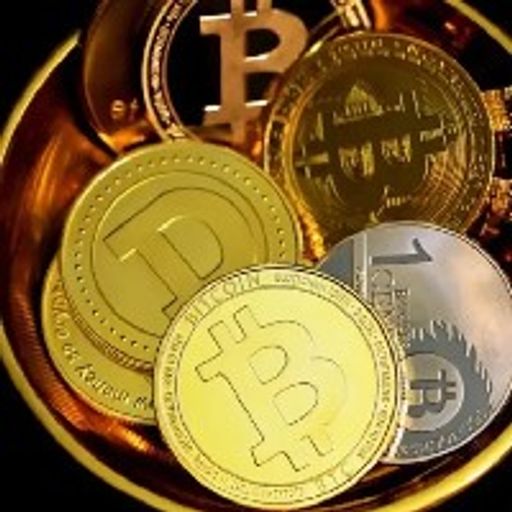


Understanding What a Store of Value Really Is
At its core, a store of value answers a fundamental question: how do we keep our money safe and growing? Whether you’re saving for retirement, protecting against inflation, or building long-term wealth, understanding what qualifies as a true store of value is essential in today’s economic landscape.
Why Value Storage Matters More Than You Think
A store of value refers to any asset or currency that can hold its purchasing power over time without significant loss. Think of it as your financial insurance policy—something you can trust to be worth roughly the same (or more) in five years, ten years, or even decades from now.
The need for reliable value storage has never been more urgent. Traditional fiat currencies, backed only by government decree, depreciate steadily through inflation, typically losing 2-3% of their purchasing power annually. In extreme cases like Venezuela, South Sudan, and Zimbabwe, hyperinflation has rendered currencies nearly worthless, wiping out citizens’ savings almost overnight. Even in developed nations, this erosion of wealth is relentless. Consider that your dollar buys less groceries, less gas, and less of everything each year.
This is why people seek alternatives. Without a dependable mechanism to preserve wealth, saving becomes pointless—why accumulate money that loses value automatically? A solid store of value solves this problem by maintaining or appreciating in purchasing power regardless of inflation rates or government monetary policy.
The Three Critical Properties of Reliable Value Preservation
Not everything that claims to be valuable actually preserves value well. Assets that truly function as stores of value share three essential characteristics:
Scarcity: Limited Supply Creates Real Worth
Computer scientist Nick Szabo coined the term “unforgeable costliness” to describe scarcity—when something cannot be easily replicated or mass-produced. If an asset’s supply is unlimited, its value inevitably diminishes. Bitcoin exemplifies this principle with a hard cap of 21 million coins, making it mathematically impossible to inflate its supply like governments do with fiat currency. Gold operates similarly; you cannot simply create more of it, which is why it has maintained value relative to the dollar for centuries. Asset inflation happens when policymakers print more currency—suddenly, each unit buys less because more units exist chasing the same goods and services.
Durability: Withstanding the Test of Time
A store of value must physically or digitally survive extended periods without deteriorating. Gold doesn’t rust or decay. Bitcoin exists as encrypted data protected by cryptographic proof-of-work systems and economic incentives that make tampering practically impossible. Real estate maintains its structural integrity (under normal circumstances). Food, by contrast, expires; concert tickets become valueless after the event ends. These perishable items fail as stores of value precisely because they don’t last.
Immutability: Permanence You Can Trust
Once a transaction involving a store of value is confirmed and recorded, it should be irreversible and tamper-proof. Bitcoin’s blockchain achieves this through its distributed ledger system—once a transaction receives network confirmation, altering it becomes computationally infeasible. With traditional assets like gold or real estate, immutability means the ownership record cannot be arbitrarily revoked. This matters enormously in a digital age where trust and security determine whether people will actually hold wealth in a given form.
Comparing Assets: Which Ones Truly Preserve Wealth
The Gold Standard Benchmark
One fascinating measure of value retention is the “gold-to-decent-suit ratio.” In Ancient Rome, a high-quality toga cost roughly one ounce of gold. Fast-forward 2,000 years, and a premium men’s suit still costs approximately one ounce of gold. This stability across millennia demonstrates gold’s remarkable store-of-value function.
The oil price comparison tells a starkly different story. In 1913, one barrel of oil cost $0.97. Today, it costs roughly $80—a roughly 8,000% increase in nominal terms. However, one ounce of gold purchased 22 barrels of oil in 1913 and buys approximately 24 barrels today. The gold price barely moved, while the dollar collapsed in purchasing power. This example powerfully illustrates why fiat currency fails as a store of value while commodities succeed.
Bitcoin: The Digital Alternative
Bitcoin has evolved from a speculative experiment to a genuine competitor for store-of-value status. Initially dismissed as highly volatile and risky, it increasingly demonstrates the properties investors seek. With its finite 21-million-coin supply, bitcoin resists the arbitrary inflation that plagues traditional currencies. Its digital, immutable design ensures transactions cannot be reversed or altered once recorded on the blockchain. The proof-of-work consensus mechanism makes the ledger economically secure against tampering. In short, bitcoin embodies all three essential properties—scarcity, durability, and immutability—making it a potent store of value for the digital age.
Precious Metals: The Proven Track Record
Gold, palladium, and platinum have functioned as stores of value for thousands of years. Their perpetual shelf life, limited natural supply, and industrial demand create genuine scarcity. However, storing large quantities of physical precious metals presents practical challenges and security costs. Many investors opt for digital alternatives like gold-backed securities or stocks in mining companies, though these introduce counterparty risk—the risk that the intermediary fails or acts dishonestly. Gemstones like diamonds and sapphires offer similar properties with easier portability.
Real Estate: Tangible but Illiquid
Real estate appeals to many because it is tangible and often generates rental income. Since the 1970s, property values have generally appreciated. Before then, real estate roughly maintained pace with inflation, delivering near-zero real returns. The major drawback? Illiquidity. If you urgently need cash, selling a property takes months. Moreover, real estate is not censorship-resistant—governments can seize it, levy prohibitive taxes, or impose regulations that dramatically reduce value. It also requires ongoing maintenance and property taxes.
Stocks and Market Investments: Market-Dependent
Stocks on exchanges like NYSE, LSE, and JPX have historically appreciated over long periods, making them decent stores of value for patient investors. However, they exhibit higher volatility than commodities, driven by company performance, economic cycles, and investor sentiment. Index funds and ETFs provide easier diversification than individual stocks and offer better tax efficiency than mutual funds, but they still depend on underlying market health.
Niche Collectibles: Passion Meets Preservation
Fine wines, classic cars, luxury watches, and art can serve as stores of value if demand remains robust. Their worth often appreciates over time, but markets are less liquid, pricing is subjective, and storage may be challenging. These work best as stores of value when the holder has genuine interest and expertise.
Poor Performers: What Fails as a Store of Value
Why Fiat Currency Falls Short
Fiat money—government-issued currency backed only by decree rather than physical commodity reserves—loses purchasing power relentlessly through inflation. Every year, the same dollar buys less because central banks increase the money supply faster than economic growth, gradually draining value from savers’ accounts while prices rise in concert.
Perishable Goods: Built-In Obsolescence
Food expires. Concert tickets expire. These items transform from valuable to worthless on a fixed schedule. They cannot serve any store-of-value function since deterioration is guaranteed.
Speculative Cryptocurrencies: Most Don’t Survive
Research from Swan Bitcoin analyzed 8,000 cryptocurrencies since 2016 and found disturbing results: 2,635 underperformed against bitcoin, and a staggering 5,175 no longer exist. Most altcoins prioritize trendy features or functionality over the core properties that make money reliable—scarcity, security, and censorship resistance. Their poor economic models and weak use cases make them speculative investments similar to penny stocks, not legitimate stores of value.
Penny Stocks: High Risk, High Loss Potential
Small-cap stocks trading below $5 per share exhibit extreme volatility. They can soar or collapse rapidly due to thin trading, low institutional interest, and speculative fervor. This makes them unsuitable for anyone seeking to preserve wealth.
Government Bonds: The Fading Appeal
U.S. Treasury bonds and similar government securities once seemed like ultra-safe stores of value simply because governments backed them. Negative interest rates in Japan, Germany, and other developed economies have undermined this appeal. Even inflation-protected bonds like TIPS and I-Bonds depend on government accuracy in calculating inflation—a process subject to potential manipulation or misreporting. They offer no protection against policy decisions by authorities.
The Bottom Line
The market constantly tests which assets genuinely preserve value. Supply and demand ultimately determine whether something maintains purchasing power. Bitcoin, despite its short history compared to gold or real estate, has proven it possesses all the attributes required for reliable value storage. While many still view it as experimental, its technical design and economic incentives align perfectly with the three critical properties: scarcity through hard-coded supply caps, durability through immutable distributed ledgers, and immutability through proof-of-work security.
The question “what is a store of value” has as many answers as there are investors, but the best ones share common traits: they resist inflation, survive time, and inspire confidence that tomorrow’s holder will still recognize their worth. Whether that store of value is bitcoin, gold, productive real estate, or a combination of assets depends on individual risk tolerance, investment horizon, and personal circumstances—but understanding these principles ensures your wealth-preservation strategy rests on solid ground.